
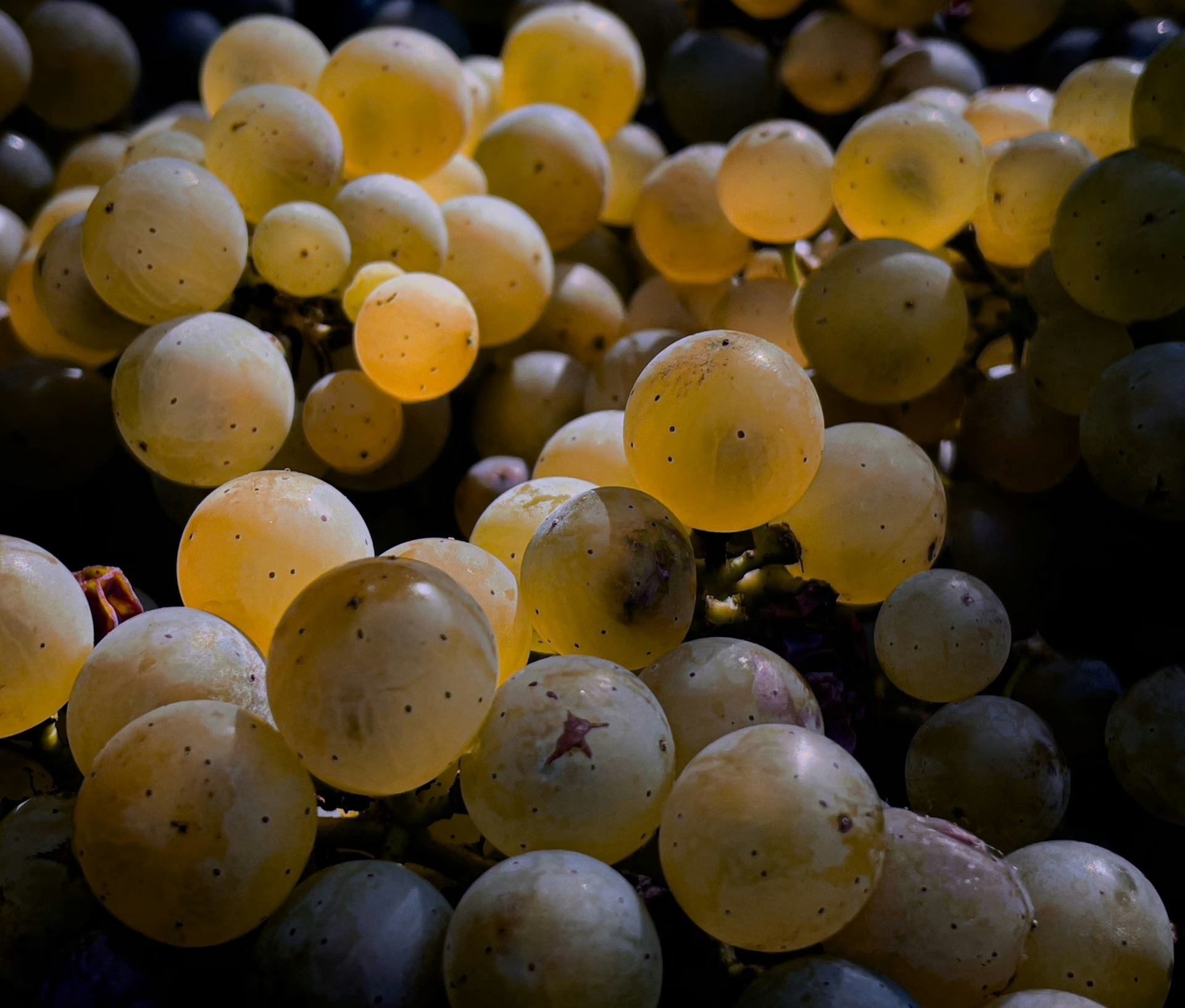
PINOT GRIS / PINOT GRIGIO
(the pink diva)
IT: – body / complexity, + acidity
Origin:
Burgundy, FR (year 1300), now planted internationally
Family and Name:
Genetic mutation of Pinot Noir, an “error” that turned the skin “grey” → hence the name (originally called “Fromenteau”)
Soil:
• Limestone + Clay (Alsace style) → rounder taste, full body, smooth/oily• Volcanic Soils (USA Oregon) → high acidity• Schist + Granite → flinty aromas and more mineral
wet soil!
Harvest:
standard → “Gris” style (smooth and richer)
late → “vendanges tardives” or affected by noble rot (botrytis), resulting in sweet dessert wines.
# HARVEST WINDOW ~ 24h !
# GRAPES COLLECTED AT NIGHT / DAWN (to prevent the loss of fresh fruit and floral aromas)
Winemaking:
1. PRESSING: whole cluster, juice separated from the skin as quickly as possible to prevent coloring (pink pigments)
2. FERMENTATION:
• Cold (12-16°C) → Grigio style• Warm (18-22°C) → Gris style
3. VESSEL:
• Stainless steel (neutral) | • Large oak (foudres) | • Small oak (rare)
4. SUR LIE AGING: the wine remains in contact with dead yeast cells.
5. MALOLACTIC CONVERSION: rare, as it blocks primary aromas.
Color, Temperature, and Profile:
PALE STRAW YELLOW (7-10°C)
“Grigio” style
DEEP GOLD / LEMON (8-10°C)
riper grapes
COPPER / PINK (10-12°C)
“The true color…”
Regions:
FRANCE: Alsace
PINOT BLANC
(the easy-drinking one)
Origin:
Burgundy, FR (but moved to its “spiritual” home in Alsace, FR)
Name:
Mutation of Pinot Noir, the skin is white (often confused with Chardonnay)
Pinot Grigio
Pinot Bianco
for Blanc de Blancs
100% Pinot Blanc
Soil:
- • Limestone + Chalk (loves calcium)
- • Clay + Loam (richer)
- • Loess (especially in Pfalz + Baden, very aromatic)
Harvest: (early morning harvest)
very early, low sugar, high acidity
moderate ripeness, rounder and richer
late harvest, extremely sweet
Winemaking:
1. FERMENTATION:
• Cold: 14-17°C (Italian style)• Warmer: 18-20°C (Germany, France, Austria)
2. MALOLACTIC CONVERSION: Unlike its “Grigio” cousin, malolactic fermentation is encouraged ➝ notes of butter and yogurt.
3. VESSEL:
• Stainless steel: pure, “naked” wine (Italy)• Foudres (Alsace): rounder• Oak / Small barrique: richer texture (Germany)
4. SUR LIE AGING + BÂTONNAGE: Adds complexity.
Regions:
FRANCE: Alsace
ITALY: Friuli, Alto Adige
GERMANY: Baden, Pfalz
USA: Oregon
CHARDONNAY
(easy going / easy to drink)
Origin:
Burgundy (base), FR
Name:
Derived from the Latin “Cardonnacum” ➝ a place full of thistles (Chardonnay village in Mâconnais)
Family:
Accidental cross between Pinot Noir + Gouais Blanc
Soil:
Limestone / Chalk / Clay — ideal for drainage, retains acidity and adds minerality
Harvest:
for green aromas
for tropical aromas
Winemaking:
- Whole cluster pressing
- Aging on lees (Sur lie)
- Bâtonnage: The process of stirring the lees to increase creaminess, nutty notes, and bread aromas
- Malolactic Conversion / Diacetyl: (primarily for oaked versions ➝ buttery aromas)
- Oak: Adds aromas of coconut, vanilla, and smoke
Color:
• Unoaked ➝ pale straw (7-10°C)
• Oaked ➝ lasting gold (10-13°C)
Profile: Single varietal or blend
Profile by Climate:
Apple, lemon, pear, wet stone
HIGH ACIDITY
Light/Medium Body
Lemon, peach, melon
Medium Acidity & Body
Peach, banana, pineapple
FULL BODY
Medium Acidity
Global Regions:
Burgundy (Bourgogne 56%), Chablis (unoaked, high acidity), Côte d’Or, Côte de Beaune (Meursault, Puligny-Montrachet), Mâconnais (Pouilly-Fuissé)
US: Los Carneros, Sonoma, Napa Valley, Santa Barbara. Chile: Casablanca Valley, Central Valley
AU: Adelaide Hills, Yarra Valley, Margaret River. NZ: Marlborough, Hawke’s Bay
Western Cape (blend with Chenin Blanc), Walker Bay
SAUVIGNON BLANC
(the taste of terroir)
“3rd most planted globally / Notes of gooseberries and boxwood”
Origin:
Loire Valley, FR (though the Bordeaux region also claims it)
Name:
Sauvage (wild) + Blanc (white)
• Blanc Fumé in Bordeaux
• Muskat-Silvaner in Germany
Family:
The official parent, “Savagnin”, is found south of Burgundy in the Jura region. It has cousins like Chenin Blanc, Silvaner, and Sémillon, and a famous “child” (result of a cross with Cabernet Franc): Cabernet Sauvignon 
Soil (Crucial!):
If you plant SB in 3 different soils, you will get 3 very distinct wines (Terroir-driven wines):
Winemaking:
- CO₂ / N: Used to protect grapes from oxidation (fresh aromas must be preserved)
- Malolactic Conversion: Very rare; wines must remain sharp (high acidity)
- Vessel: Most SB is fermented in stainless steel. Only Fumé style or premium variants use oak barrels, usually large, to avoid strong vanilla notes
- Aging on lees (Sur Lie): Sometimes in Bordeaux, to provide texture and bready notes
- Blending: Mostly a single varietal, but in Bordeaux (Pessac-Léognan) it is blended with Sémillon for balance, body, flavors, and aging potential
Profile & Serving Temperature:
Greenish (7-10°C)
Sancerre, Marlborough (early harvest)
Super sharp, crisp, mineral. Notes of green apple, lime, lemon zest, white peach, wet stone, flint
Straw Yellow (10-13°C)
Warmer climate (California, Australia)
Rounder, bready notes. Passion fruit, gooseberry, guava, pink grapefruit
Intense Gold (13°C)
Clearly indicates oak usage!
Color taken from the barrel or skin contact. Vanilla, bready notes, beeswax, almonds, dried apricots
Key Regions:
CHENIN BLANC
(the shape shifter or chameleon)
Origin & Family:
- Origin: Loire Valley, 9th century.
- Name: Noble variety descended from Savagnin (the father of Sauvignon Blanc).
- Family: Related to Trousseau and Sauvignon Blanc; takes its name from Mount Chenin.
- Alternative Names: Originally called “Plant d’Anjou” in France; in South Africa (its 2nd home) it is called “Steen” (rock).
Soil (Terroir):
- Limestone + Schist / Chalk (FR): Mineral and floral notes.
- Slate (FR – Vouvray): Structured wines, intense notes of wool and flint.
- Clay + Silex (Anjou): Gunpowder and smoky notes.
- Granite + Shale (SA – Stellenbosch/Paarl): High acidity and minerality.
- Sand: Produces “fruit bombs,” very easy-to-drink wines.
Harvest:
SUPER CHALLENGING: Due to uneven ripening (green, golden, and brown berries in the same cluster!), the winemaker must pass through the vineyard up to 6 times to harvest only the ripe grapes.
Style Profile:
High acidity; green apple, pear, lime, quince, wool, jasmine.
Color: Pale Straw / Lemon (0-3 years).
Quince, pear, honey, melon, pineapple, mango.
Color: Golden Yellow (5-10 years).
Dried apricots, mango, orange marmalade.
Color: Deep Gold / Amber / Copper (15+ years).
Winemaking:
- Temperature Control: Fermentation at low temperatures (12-17°C) to preserve fruit aromas.
- Vessel: Stainless Steel (fresh style), Neutral Oak/Foudres (softens acidity), New French Oak (in SA for structure), Concrete Eggs (creaminess).
- Sur Lie: Gives the wine specific bread/yeast aromas.
- Malolactic Conversion: Rarely used, mainly to avoid blocking fresh aromas.
Key Regions:
FRANCE (Loire): Vouvray, Saumur, Anjou, Savennières, Coteaux du Layon.
SOUTH AFRICA: Western Cape (produces both dry and sweet styles).
*Note: Due to its high acidity, Chenin has remarkable aging potential.
