
BULGARIA
Blagodarya Bulgariya!
PUBLISHED ON
April 13, 2026
BY
Last year, while reading an article about wine capitals, I was surprised to discover that Plovdiv held the title of Best Wine Capital in 2025. I had a vague memory of the city from my transit trips through Bulgaria toward the Greek islands, but nothing more .
.
I started researching online and was amazed to find so many interesting facts, not just about the city, but about the region it belongs to: Thrace. Between Spartacus, Dionysus, and that memorable Iliescu quote, “the ducks (dacs) come from the tracks,” Plovdiv quickly made it onto my 2026 city break list.
No sooner said than done; here we are, crossing the Friendship Bridge at Giurgiu-Ruse. We did our homework beforehand: lists of wine bars, vineyards and wineries, grape varieties, restaurants, and sights to see… oh, so many things!
Plovdiv
The former capital of the Roman province of Thrace and officially the oldest continuously inhabited city in Europe (8,000 years old, meaning older than Athens  ), Plovdiv is about the size of Cluj-Napoca, Bulgaria’s second largest city after Sofia.
The entrance to the city is identical to any other post-Soviet town: high-rise apartment blocks on the horizon, Russian Renaissance architecture, somber colors, and semi-abandoned industrial zones that likely share memories similar to our own.
However, as we move toward the city center, the landscape shifts. We see wide boulevards, villas decorated in the alafranga style, impressive historical buildings, and a wealth of Roman ruins. I must admit, I did not expect to find a Little Rome, as Plovdiv is often called, right here in Bulgaria.
I was obsessed with one question: how were these ruins in such impeccable condition in a city like this? I am not referring to Bulgaria itself, but rather to the political regimes that unfortunately gripped almost all Eastern Bloc countries, where leaders tended to erase any trace of culture or identity that opposed their ideology.
Later, I decoded the mystery: history settled here layer by layer. The Roman ruins and artifacts (the Roman Forum, the Ancient Stadium, and the Roman Theatre) were simply buried over the centuries. Mosques and other buildings from the Byzantine and Ottoman periods were built on top of them, followed by yet another layer of modern buildings, flats, and houses. It is, quite literally, layers of history.

We learned that the city holds another European record: the longest pedestrian street at 1.8 km.
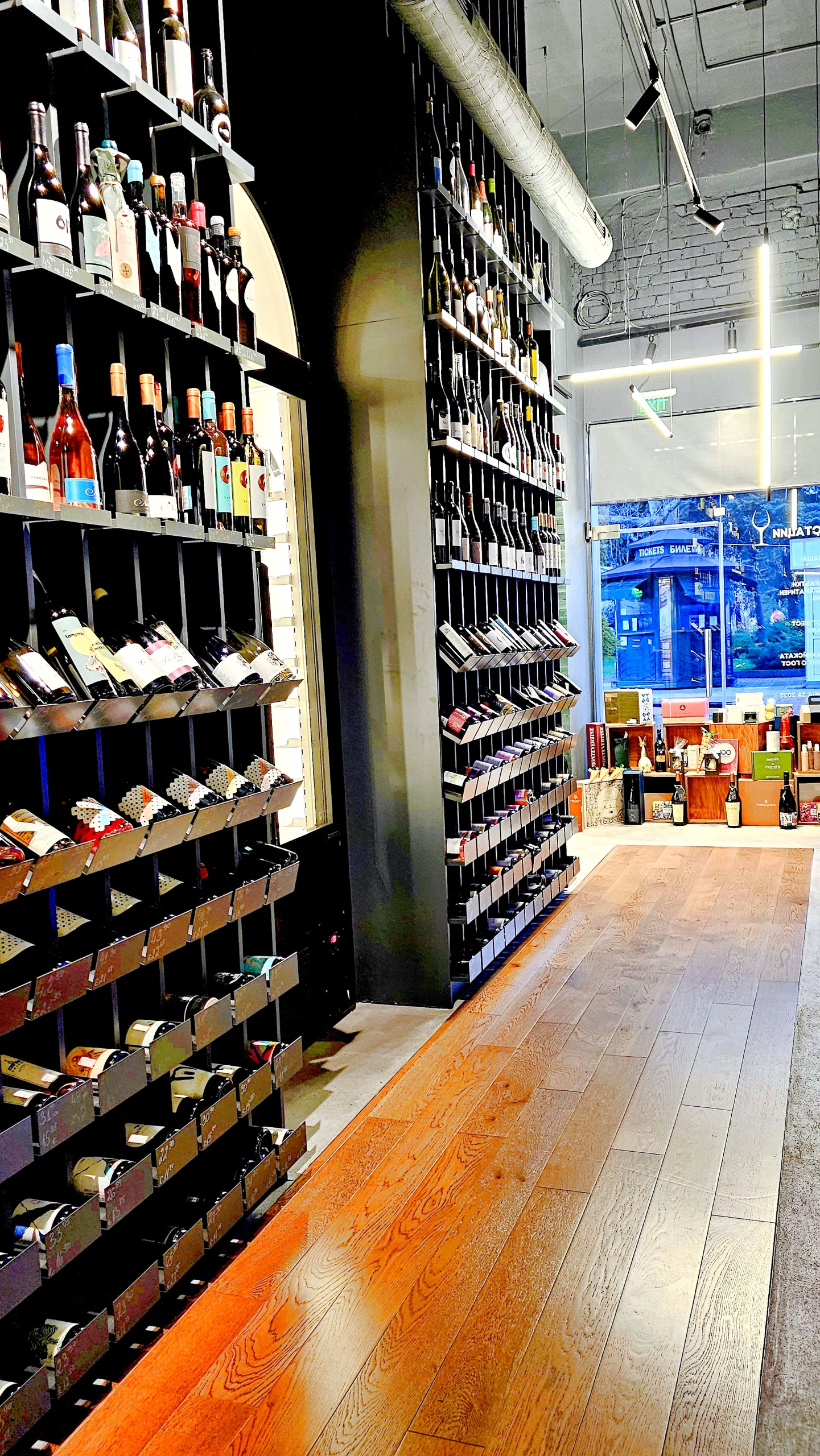
We walked up and down this pedestrian street looking for wine bars and unanimously decided that by far the best is SeeWines. We had others on our list (Cork & Fork, Barrel Wine Corner, and 5Nat Bar, but they were either closed—despite the schedule saying otherwise—or the experience was not memorable), but at SeeWines we found the most premium collection of local wines, a boutique design, and on-site sommeliers who explained everything we drank in great detail. And we went, of course, for a tasting of  local wines
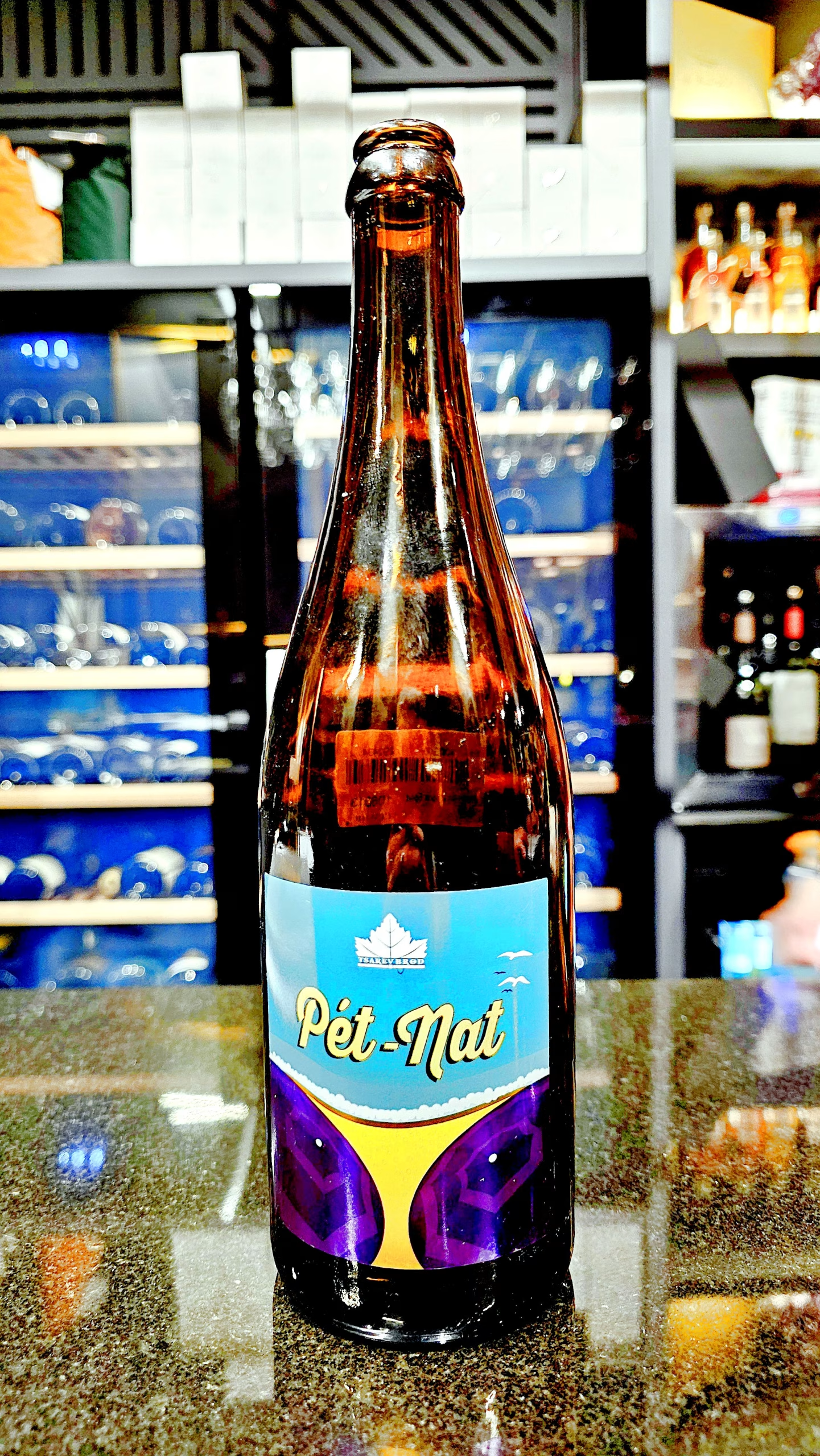
We started with the most unique Pet-Nat I have ever had, not only Bulgarian but made from Riesling grapes: fine bubbles, delicate aromas of green apple, pear, and biscuit, sufficiently mineral—a total delight 
Gergana Danube Plain 2024 (we learned that Gergana is actually a cross between Muscat & Dimyat): greenish-yellow with intense floral aromas of honeysuckle, lilies, and elderflower, followed by apricots and peaches… a little honey. Very successful 
We changed the color palette and tested the first rose, a blend of local varieties: Mavrud, Rubin, and Gamza. Although I am not a fan of rose, I left with 2 bottles  because the delicacy of the bouquet won me over. I sensed some bubblegum but very discreetly, wild strawberries, and baked apple (the sommelier compared it to the candied apples children usually eat at the fair
 )
)
The heavy artillery began with a Syrah from one of the most famous vineyards in Thrace—Dragomir Winery: a delicious cocktail of black fruits and a light peppery touch, followed by a “Danube” Merlot (I say Danube, though the wine region is actually called the “Danube Plain”) that blew our minds  . So much so that on our way back home, we did the impossible and visited them
  . A Merlot so velvety and elegant that it reminded me of last year’s visit to St Emilion
  .
.




VINEYARDS, WINERIES, AND TASTINGS
TIPCHENITZA – Danube Plain
The vineyard is somewhat fragmented, with plots located around the village of Tipchenitza in the Danube Plain area—practically between the capital, Sofia, and the city of Montana.
The road gave us some trouble, being a mix of country and forest paths, but once we arrived at our destination, we all agreed that the area is absolutely superb.
The vines are planted on the hills above the village at an altitude of 600m; there are 30ha in total, but only 12ha are effectively used due to capacity limits.
The project was born quite recently—2017—with EU support, and although it fits the boutique winery category, we noticed a strong emphasis on technology and innovation.
I discovered Tipchenitza through that Merlot I mentioned earlier, which prompted me to write to them on Instagram and post a story. They reacted quickly and very positively, and the next day we were welcomed by the vineyard’s own sommelier: Nadya Mineva.
The Merlot was great… but what other wonders we found 😍
Sauvignon Blanc… oaked 👀
After an intense week of WSET 3 where you learn that almost all SB is kept in inert vessels to maintain its fresh aromas and high acidity, here we were testing an SB matured in French oak for the first time.
Aromas of grass, green apple, and rhubarb splendidly intertwined with notes of oak and butter—insane 💯
Then came an orange wine with a pleasantly deceptive bouquet: apricot jam, beeswax, and honey, yet dry with high acidity and extremely well-balanced.
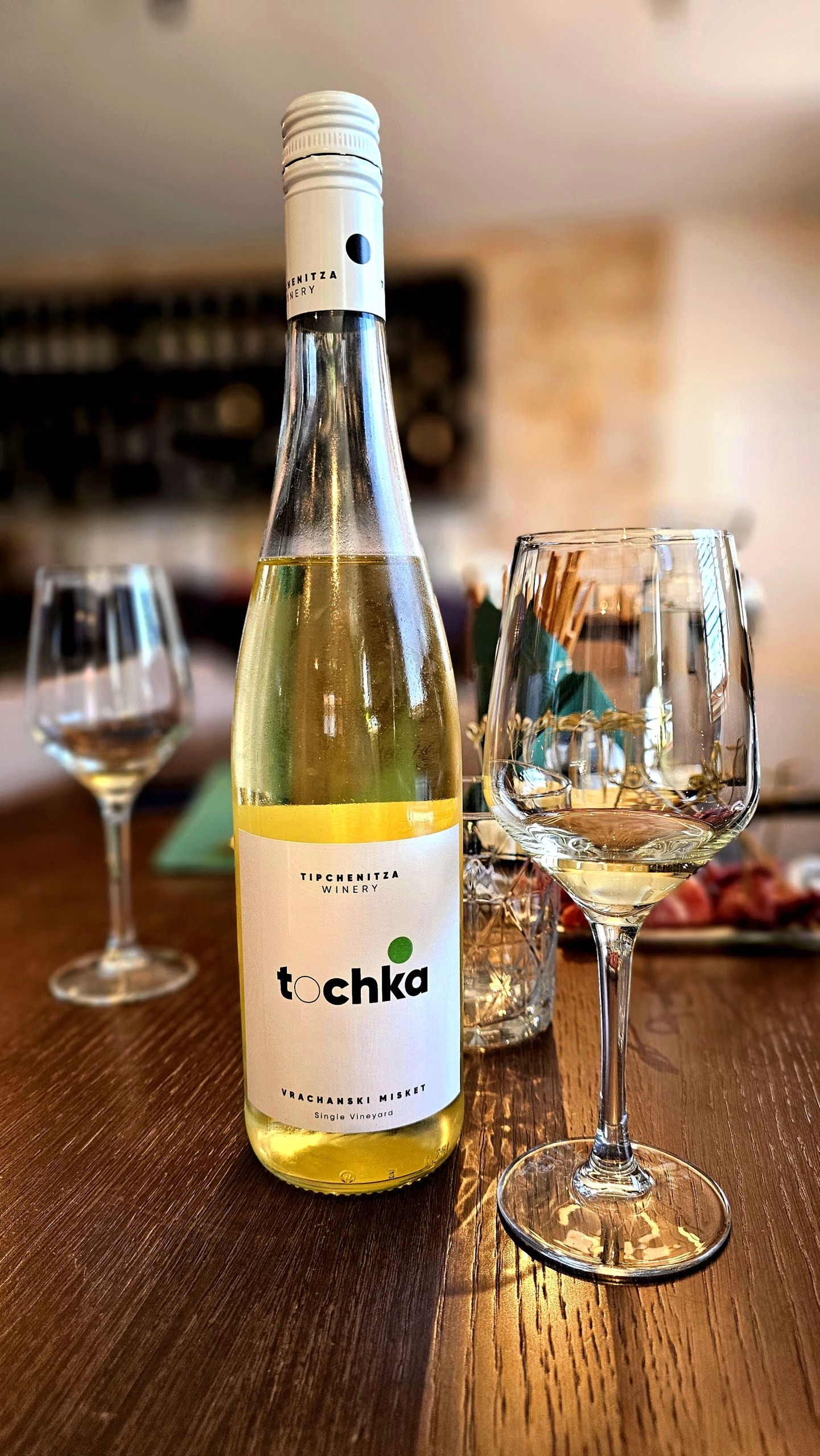
We concluded with my desire to test a monovarietal Rubin (I had only tasted blends until then). You could say Rubin is a bit of a “nepo baby” of grapes with such famous parents: Nebbiolo & Syrah. It delivered beyond expectations: the Rubin from the Tochka range (which means “point”) is aged in Bulgarian oak, an essence that adds a touch of masculinity: tobacco, leather, and smoke, while blackcurrant and cherry aromas remain omnipresent.
Tipchenitza winery was a revelation, with a great vibe and a focus on sustainability and the unconventional; I only hope we can visit them again in the future or taste their elixir once more 🍷.




ZAGREUS – Thrace
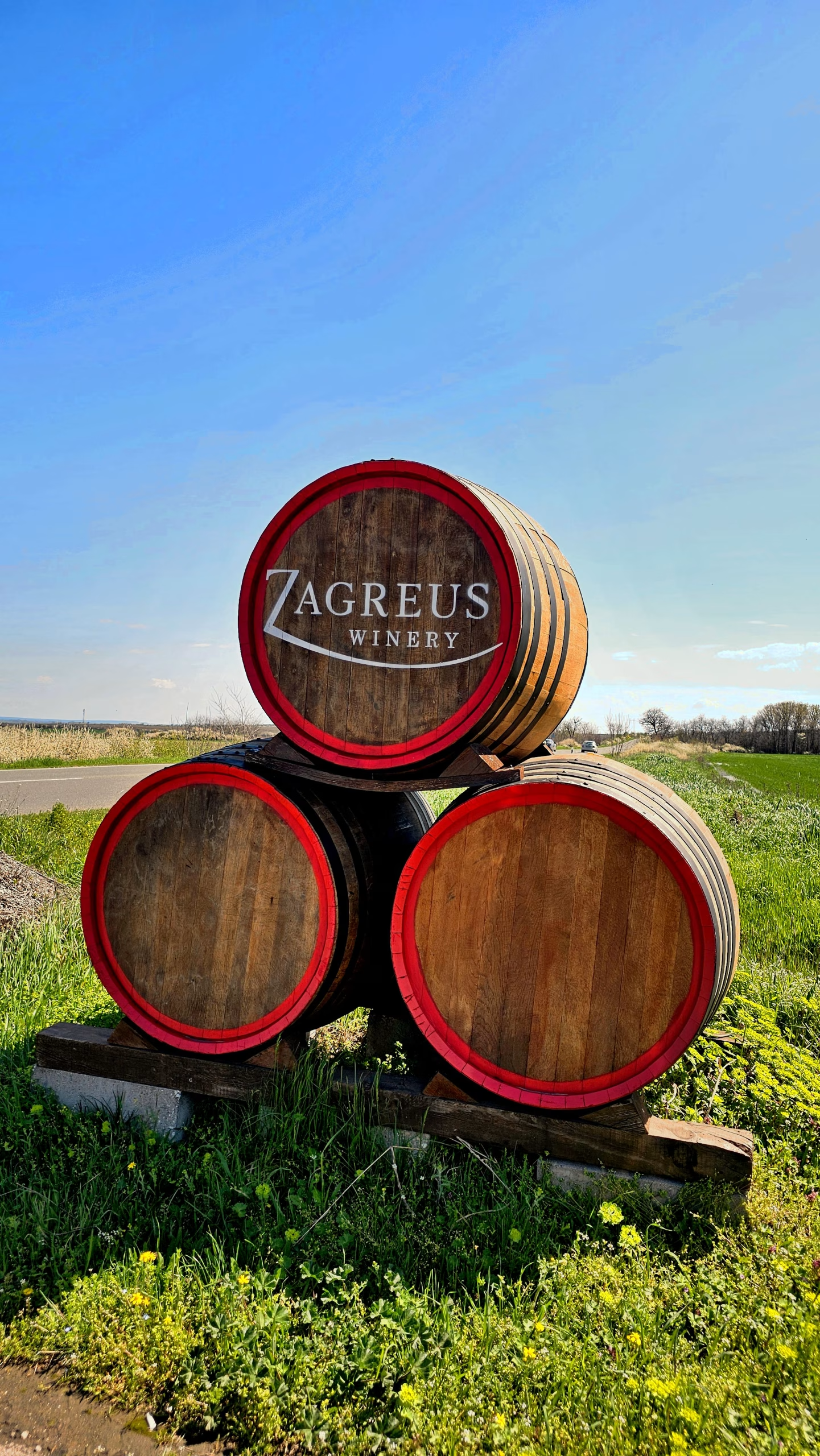
Zagreus = a divinity from Thracian mythology (present-day Bulgaria), son of the goddess Heptis, and protector of vegetation, wine, and fertility. Later adopted by Greek mythology as Dionysus, the son of Zeus and Persephone, who was killed by the Titans on the orders of a jealous Hera (in case you haven’t realized, I’m a huge mythology fan 🤓).
Taking the name of this local divinity, the Zagreus vineyard is not only one of the most famous in the region but also its first organic winery.
Across its 130 hectares, Zagreus focuses mostly on red varieties like Mavrud (the star of Thrace), Syrah, Merlot, and Cabernet Sauvignon, but also a few local whites: Dimyat (100% 🇧🇬) and Rkatsiteli (borrowed from 🇬🇪), along with the international Sauvignon Blanc.
On the way to the vineyard, I was surprised by the lack of elevation, the fairly flat terrain, and the brown soil. Our host, Grozdena Nikolova, later confirmed that the soil is indeed agricultural and very rich in nutrients. Another unique curiosity 🤔.
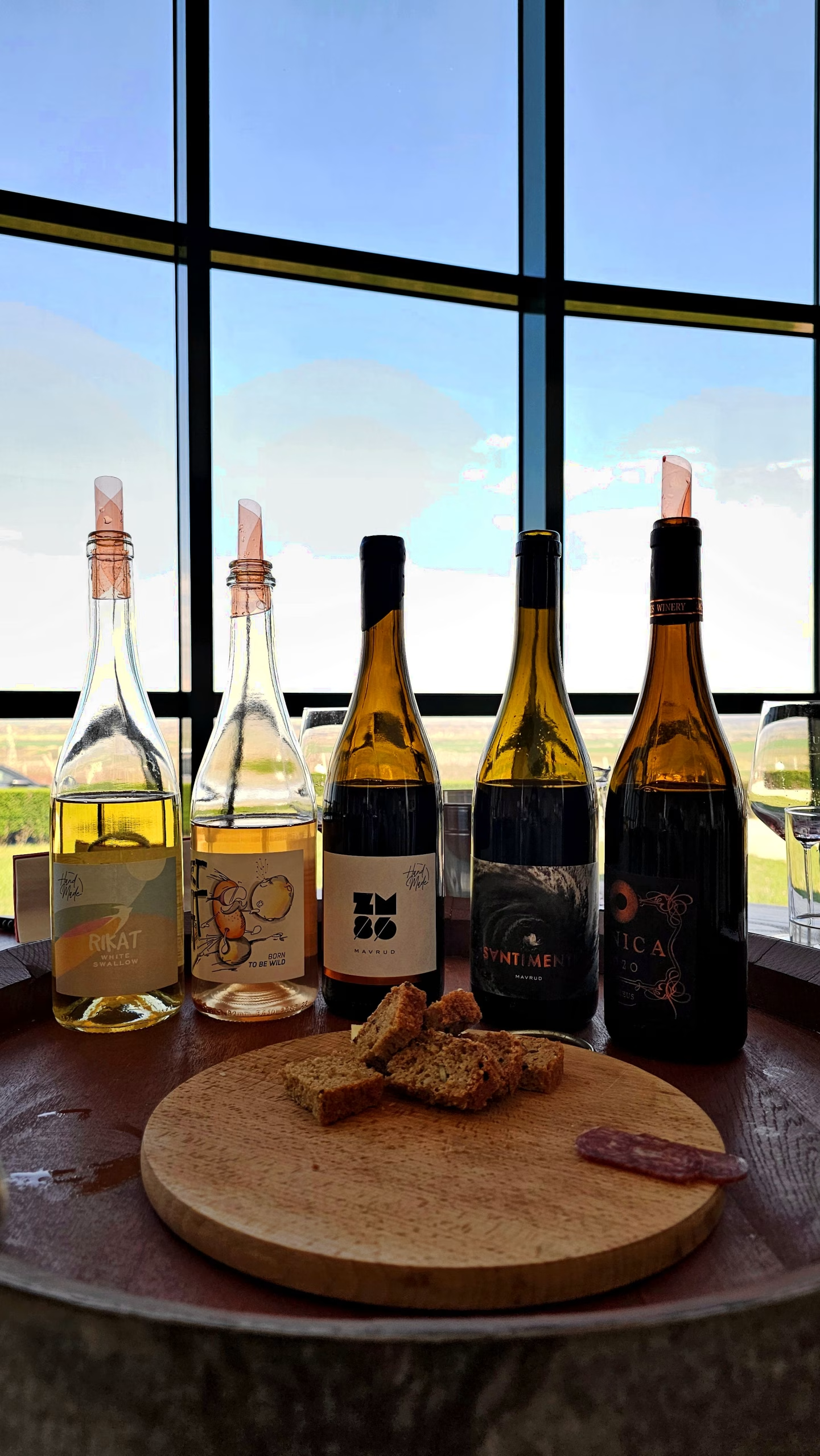
After a tour of the winery, we returned to the reception hall and proceeded with a tasting of five wines: a Mavrud Pet-Nat (which is apparently growing in popularity), Rkatsiteli (the first I’ve tested in the Bulgarian style, extremely aromatic—practically the essence of quince, very successful), and then three types of Mavrud: Santimenti 2023 (with minimal intervention), oaked Mavrud 2022, and the icing on the cake (literally and figuratively): Mavrud Appassimento. This wine is produced using the famous technique that involves drying the Mavrud grapes for 60 days to achieve a high concentration of aromas. In my notes: chokeberry, ripe rosehips, black cherries, cocoa, dark chocolate, and leather.
The tasting was 10/10, especially since it was on a Sunday and organized by Grozdena—a superb host with perfect English and extensive winemaking knowledge. She told us she was somewhat destined to work in viticulture, as her name comes from “grozde,” which means “grape” in Bulgarian 🍇.




VILLA YUSTINA – Thrace
At the third winery, we arrived more than an hour late because we got the address wrong—we had headed in the completely opposite direction (a word of advice: there are several locations around Plovdiv, so if you want to visit the winery, aim for the village of Ustina).
The vibe here is a bit different: a 42-hectare winery officially launched in 2006, now expanded to include a hotel, an event hall (specializing in weddings), and a restaurant. We learned that the owner entered the world of viticulture thanks to his original business, which involves producing stainless steel tanks for the alcoholic beverage industry.
Since the vineyard is on the opposite side of the city about 35 km away, they boast a different type of soil: limestone. And this was truly reflected in what we tested afterward.
We enjoyed a Chardonnay aged in French oak, a fresh and crisp Dimyat, and a 2019 Special Reserve—a marriage of local and international varieties that was extremely full-bodied and spicy.


Overall, it was a getaway full of (pleasant) surprises; we were glad to add another country with deep roots in the wine world, the vast majority of which were exceptional 👌.
Plovdiv is a museum-like city, 100% worth visiting, but would we have realized it was the Wine Capital in 2025? …mmm, not really.
Would we go back? Absolutely! But we would choose a winery with on-site accommodation.
Nazdrave 🥂
