
MOSEL
Home of the Riesling
 6 min
6 minNot long ago…
I used to associate Riesling with peach tea. Lipton, to be more precise. Ultra-fragrant, kinda sweet, and heavy. What definitely didn’t help was that I don’t like peaches at all… one more reason to shove it to the very bottom of my preference list. That was until I started choosing more carefully, doing my homework, and realizing I’d judged it too soon and totally wrong. One of the most versatile and resilient grape varieties, Riesling “was born” in chilly Germany, its first documented mention is from 1453 in the Rhine region, in a small town in the Rheingau area called Rüsselsheim.Germany still holds the crown, producing over 45% of the world’s Riesling, but you’ll find the grape, most often as a single-varietal wine, in France (Alsace, to be exact), Austria (especially the Wachau region), and also in the US (Washington state) and Australia (in the two famous valleys, Eden and Clare).
We’ll get into how crucial the terrain is for Riesling, but in short:
Super versatile in terms of the huge range of styles it can be made in, from sparkling to dry, off-dry, semi-sweet, and sweet.
Even though it’s rarely aged in oak, it has fantastic aging potential thanks to its high acidity (from the cooler temps), sugar levels, and the way it can pick up complex notes of ginger, honeycomb, beeswax, and that famous petrol or kerosene aroma (sounds weird, I know… but that’s how you’ll spot some of the best examples).
Versatile again because it pairs easily with tons of dishes (from white meats, salads, and soft cheeses to Asian cuisine and foie gras), and expressive because it perfectly captures and conveys the characteristics of where it grows (aka the terroir).
- Soil: most common is slate-clay (known for trapping and holding daytime heat, helping the vine survive when temps drop at night), which gives delicate, almost smoky mineral notes, but you’ll also find volcanic soils, loess, and limestone.
- Acidity: high because of the cooler climate, but this is a grape that loves the cold.
On one hand, you get delicate green fruit and citrus notes the cooler it is, and on the other, intense peach and tropical fruit aromas the warmer it gets* (of course, winemaking techniques play a role too).
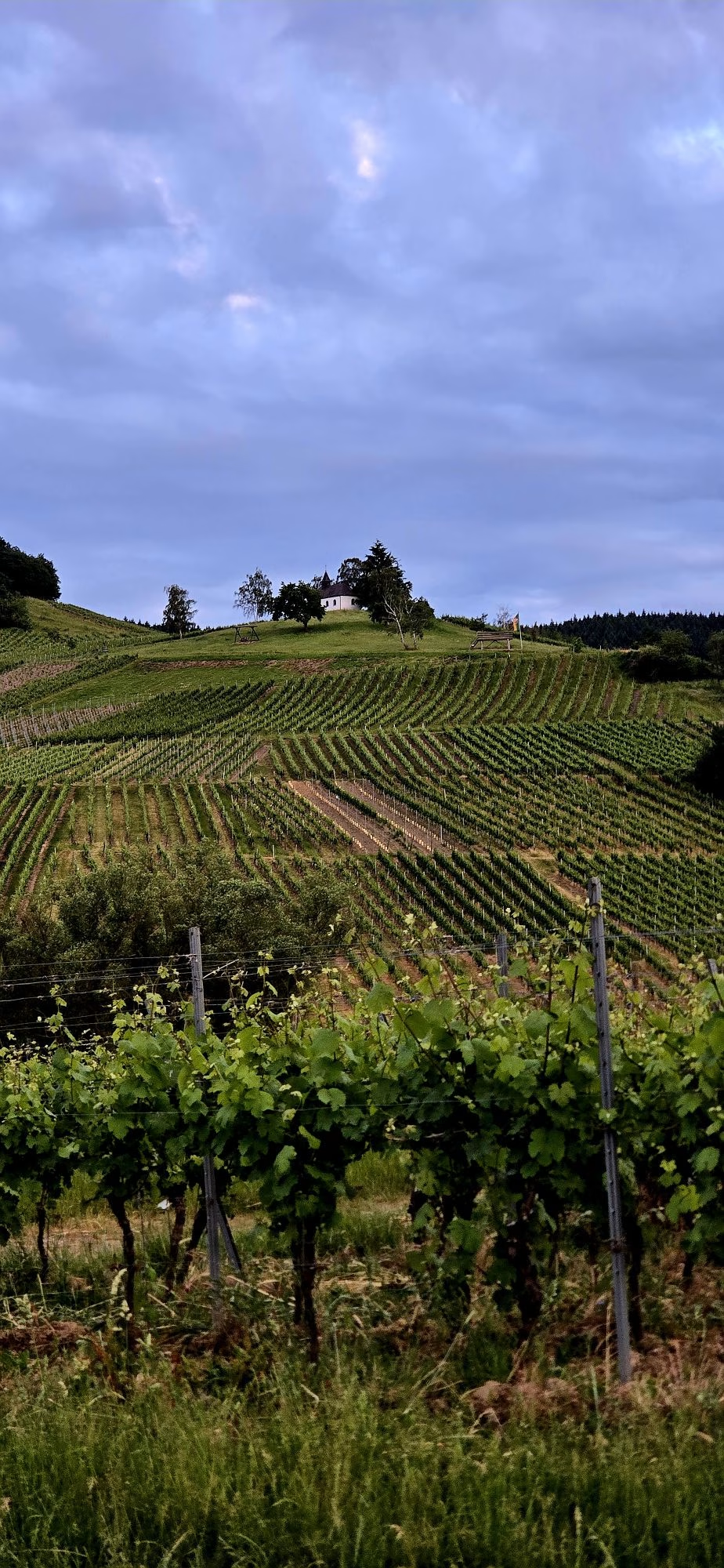
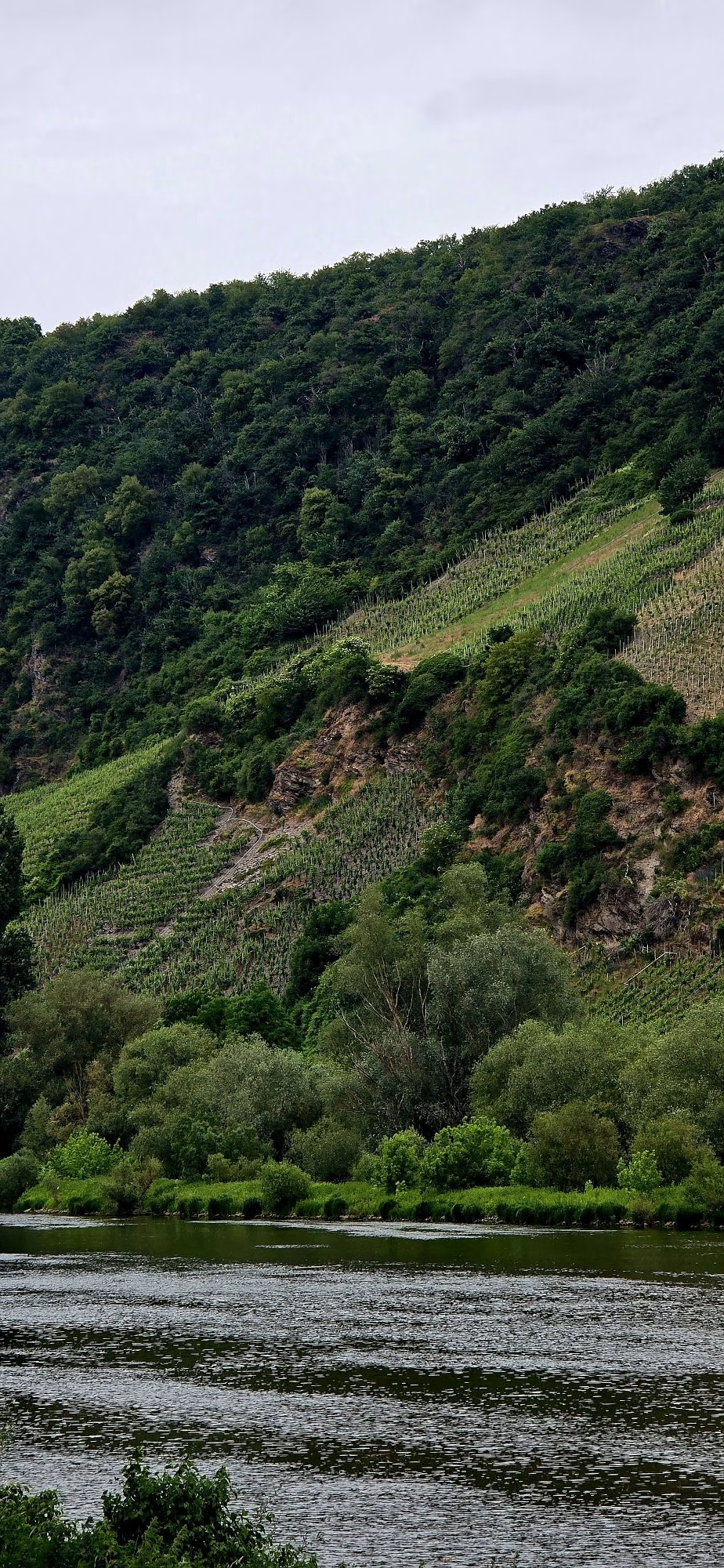
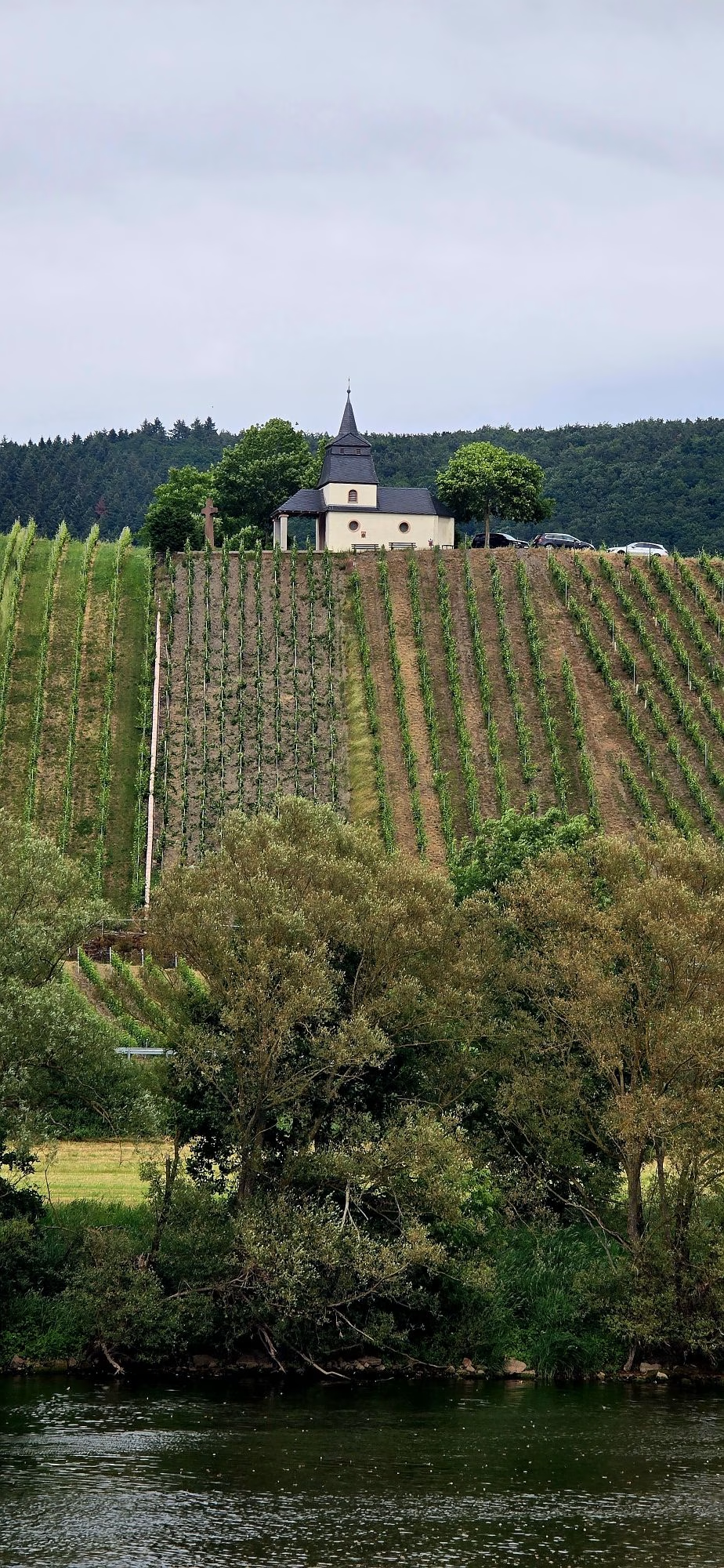
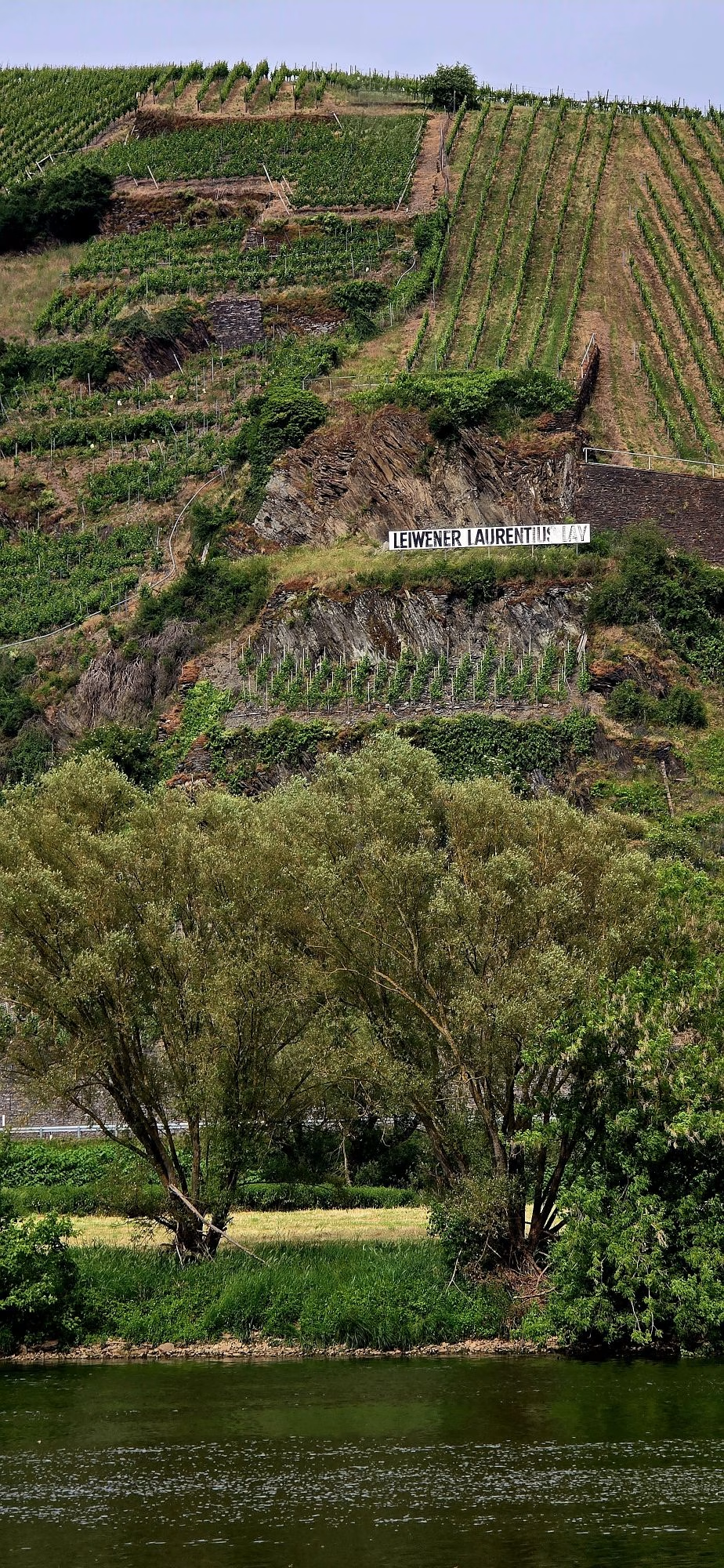
What fascinated me about wine-growing Germany was the dramatic positioning of the vines.
To maximize sun exposure, they’re planted on super-steep slopes, usually facing south and often right along rivers (for the mirror effect).
The higher up they are, the deeper the roots go, pulling in all the slate’s characteristics  complex wines with prices to match
  .
.
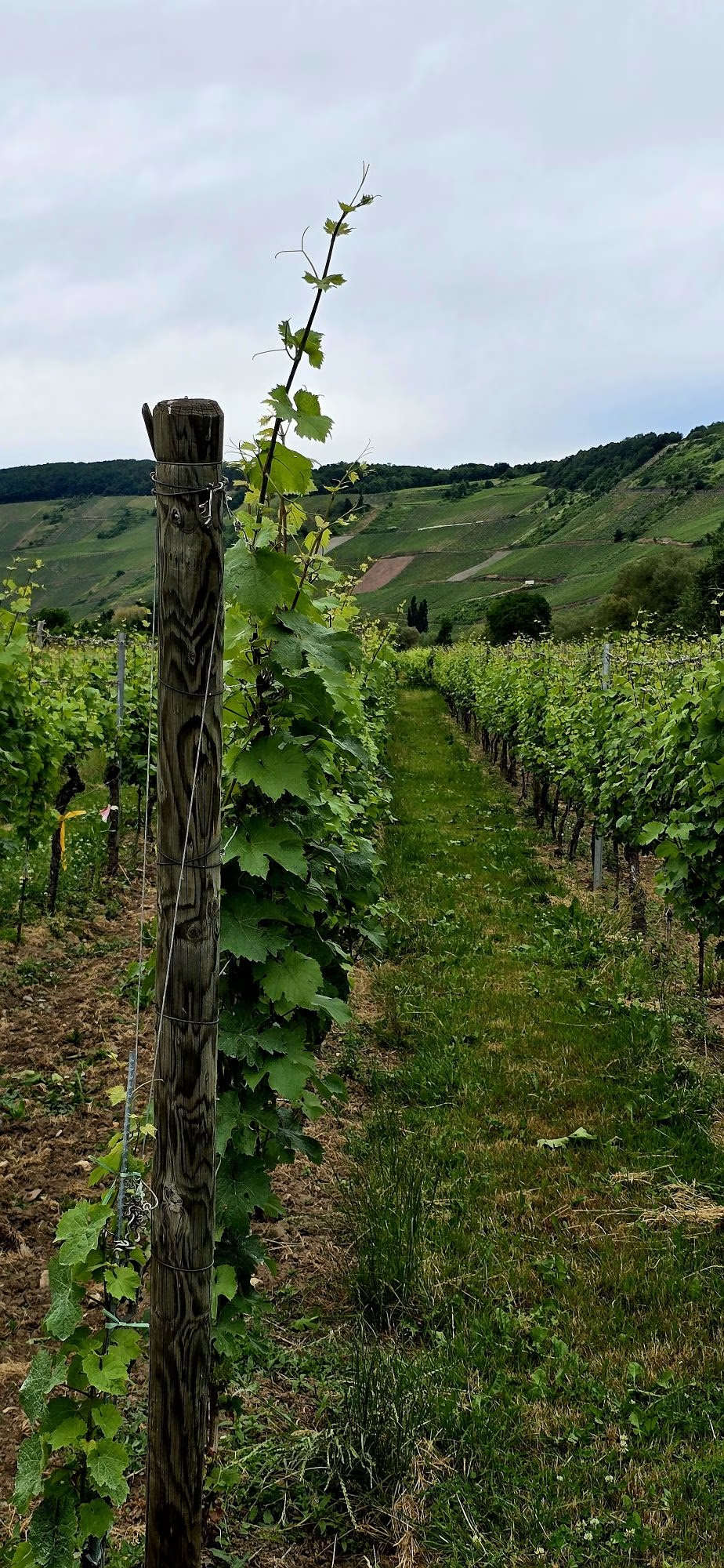
If the terrain demands it, vines are planted vertically instead of horizontally, again for maximum light and sun exposure (VSP – Vertical Shoot Positioning).
What I found really interesting is how different the vine training itself is in Germany compared to warmer countries (like Spain or France)… the trunk is taller and the canopy is directed upward… to catch… you know what  .
.
Conclusion: it all revolves around the “sun” … you’re probably realizing now just how crucial warmth is in cloudy, rainy, chilly Germany, especially since even the German wine classification system centers on ripeness or the “sweetness” in the wine, meaning sugar levels and maturity, namely:
- Kabinett – made from fully ripe grapes and can come in various styles, from dry to sweet, but generally, when you see “Kabinett” on the label, it usually means a sweet wine.
- Spätlese – literally “late harvest,” with higher sugar than Kabinett. You’ll find dry, off-dry, and sweet versions here too, with more concentrated, intense aromas.
- Auslese – Selectively harvested, very ripe grapes, often affected by noble rot. Usually off-dry or sweet wines with complex, super-concentrated aromas (botrytis – more details here “They Call It “Noble Rot” )
- Beerenauslese – We’re talking extremely ripe berries, most often botrytis-affected, hand-selected to make the most premium dessert wines (very high sugar with aging potential).
- Trockenbeerenauslese – The pride of German sweet wines in terms of aromas, sugar, and body. Made exclusively from hand-picked berries shriveled by botrytis right on the vine, with a price that reflects its rarity. Note: “trocken” here means dry (as in shriveled berries), not the wine style.
- Eiswein – Icewine, or in Romanian “vin de gheață,” is basically a Beerenauslese + ice. A dessert wine from naturally frozen, shriveled grapes harvested and pressed while still frozen. Usually no botrytis here, but the flavors from the frozen water in the grapes are truly special, super-pure fruit notes with crisp acidity.
In short, what to remember when buying or drinking a German Riesling:
- Trocken = dry.
- Halbtrocken = off-dry (sugar under 10 grams/liter), an official and precise legal term.
- Feinherb = also off-dry, but in the “elegance” version. It’s an unofficial term, not quite “slang” yet, but it refers to more refined, elegant, higher-quality wines that basically fall in the same sugar range; mostly used in Mosel and Rheingau.
- Liebling = semi-sweet, in translation and adaptation. It’s one of the 4 official “sweetness” categories and means a wine with moderate sweetness.
- Süss = sweet. Here we’re talking full-on sugar, meaning over 45 grams/liter.
All that, plus an exceptional Riesling I tried in school (WSET 2), convinced me to visit one of Germany’s oldest estates: Maximin Grünhaus.
Located in one of Germany’s 13 wine regions (Anbaugebiete), Mosel – Maximin Grünhaus has been making wine since Roman times… from 966 AD to be exact  and it’s one of the oldest vineyards (Weingut or Weinkeller in German) in the WORLD (goosebumps, I swear…).
The estate has a rich, downright royal history, and as you can imagine, it all starts with a monastic order,the Benedictine Order of St. Maximin, originally established in the city of Trier (which also happens to be Germany’s oldest city ). They received the current property, located in the village of Mertesdorf, as a donation from the Frankish king Dagobert .We know that during the Middle Ages, monastic orders played a crucial role in developing and preserving viticultural techniques and expertise, and this is exactly the case here: the Maximin order’s connection to the vineyard that bears its name lasted a full 1000 years, right up until Napoleon’s era, when in 1811 the property was sold at auction for 84,700 francs (a fortune back then).
Since 1882 and up to the present day, the estate has stayed “in the family”, specifically under the continuous ownership of the von Schubert family, who not only preserved the monks’ winemaking traditions but also poured massive investments into technology, turning it into one of the most modern and innovative wineries around. After a nearly 5-hour drive from Hanover and with a tasting reservation made 4 days in advance (a heads-up for fellow enthusiasts 😉), I arrived in one of the most dramatic landscapes I’ve ever seen: as far as the eye can reach, thousands of steep vineyards stretching endlessly across the hills of the Ruwer Valley (a tributary of the Mosel River), and right nearby, a winding road leading up to the abbey. The estate is absolutely stunning, idyllic, picture-perfect views from every possible angle. Check out the flood of photos below😬.


A true journey back in time to discover the estate’s star, grown on 90% of the land: Maximin Grünhaus Riesling. Once inside the wineshop, I went for the €25 tasting package with 8 wines, starting with a Riesling-based sparkling and moving on to the 2022 and 2023 collections, all in “trocken” (dry) versions.On the recommendation of the super-friendly sommelier-in-training (who’s Ukrainian, by the way), I also tried a fruity Pinot Blanc Reserve from 2022 and a balanced Pinot Noir GG (Grosses Gewächs, basically the German equivalent of Burgundy’s Grand Cru) from 2023, with notes of coffee, sour cherries, and cinnamon.


But by far, I was blown away by the aroma differences across the 7 Rieslings I tasted—different vintages, made in various styles (oaked and unoaked), sparkling, dry, and off-dry, all sourced from the estate’s three distinct parcels:
- Herrenberg (the largest, 19 ha), which stands out with intense mineral notes, fuller, more robust aromas.
- Abtsberg (14 ha), lending the wines a sleek, elegant character, delicate citrus and herbal notes (especially sage), but it’s also the steepest slop, so it demands its dues, meaning maintenance and harvest are incredibly labor-intensive.
- Bruderberg (the smallest plot, just 1 ha, tucked at the base of the slope in a shadier spot, producing wines with more pronounced floral and intense notes).


I left thrilled with 3 favorites:
-
Riesling Grünhäuser 1G (Premier Cru) – perfectly balanced: acidity/minerality/fruit.
-
Riesling Mash – an “experimental” 2022 wine, made in a style different from all the others: oaked ✨️
-
and a baby Herrenberg Kabinett 2020 (they only had small bottles left in the shop), with those classic citrus and petrol notes and crisp acidity. Perfect for aging (which is exactly why I bought it 😉 ).


Final notes:
- Tastings are offered in English too, but German dominates.
Winery staff respond quickly to emails and calls, but you still need to book ahead (especially careful on weekends and public holidays). - Prices are reasonable (0–30€, depending on the event and winery).
- No transport to or between wineries, make sure you either stay nearby, have a designated driver, or use the trusty spittoon (Germany’s blood-alcohol limit is the same as France’s: 0.5 g/L).
- You’ll find tons of wine hotels in the Mosel area worth checking out, plus plenty of other sights and activities beyond just wine.

 The journey doesn’t end here…
 The journey doesn’t end here…
Other interesting observations:
- “Curse and blessing” all at once: I’ve repeatedly mentioned “chilly Germany” because it’s one of the northernmost wine-producing countries, right on the edge of the “wine belt” between 49° and 51° North latitude.
- Bringing up global warming again, it’s already making an impact in Germany, and we’re seeing many estates starting to plant more red varieties (e.g., Pinot Noir is taking over).
- The vast majority of German vineyards are on extremely steep slopes (reasons detailed above) with inclines of 60–70%, which means a ton of manual labor.
- There’s a saying: “Anyone can make wine in warm regions, but not everyone can make wine in harsh, cool climates.” That’s why German oenologists are now lending their expertise to countries outside the northern belt (e.g., Poland, Denmark).
- In the Mosel, it’s common for rows of vines to belong to multiple owners—not entire parcels or plots like usual. Why? The Napoleonic Wars caused hyper-fragmentation of vineyards, leading to lots of heirs fighting over… sun, terroir, etc.
- This fragmentation goes further with the “Einzellage” (single-vineyard) system: one vertical row can belong to one owner, the next to another. So a vineyard might literally own just a few rows of a plot.
- We’re familiar with France’s “Grand Cru” designation, especially in Bordeaux and Burgundy, but Germany has a similar terroir-based system:
- Grosse Lage (equivalent to a Grand Cru vineyard) – the highest classification, referring to premium plots in the best locations: south-facing, sun-drenched, near rivers, usually producing exceptional wines with unique character and high aging potential.
- Grosses Gewächs (GG) – dry wines from selected parcels that go through a rigorous quality assurance process and require multiple approvals.
