
PUBLISHED ON
Iulie 02, 2025
BY
If in Mosel my perception of Riesling was starting to shift, in Rheingau I officially “converted” .
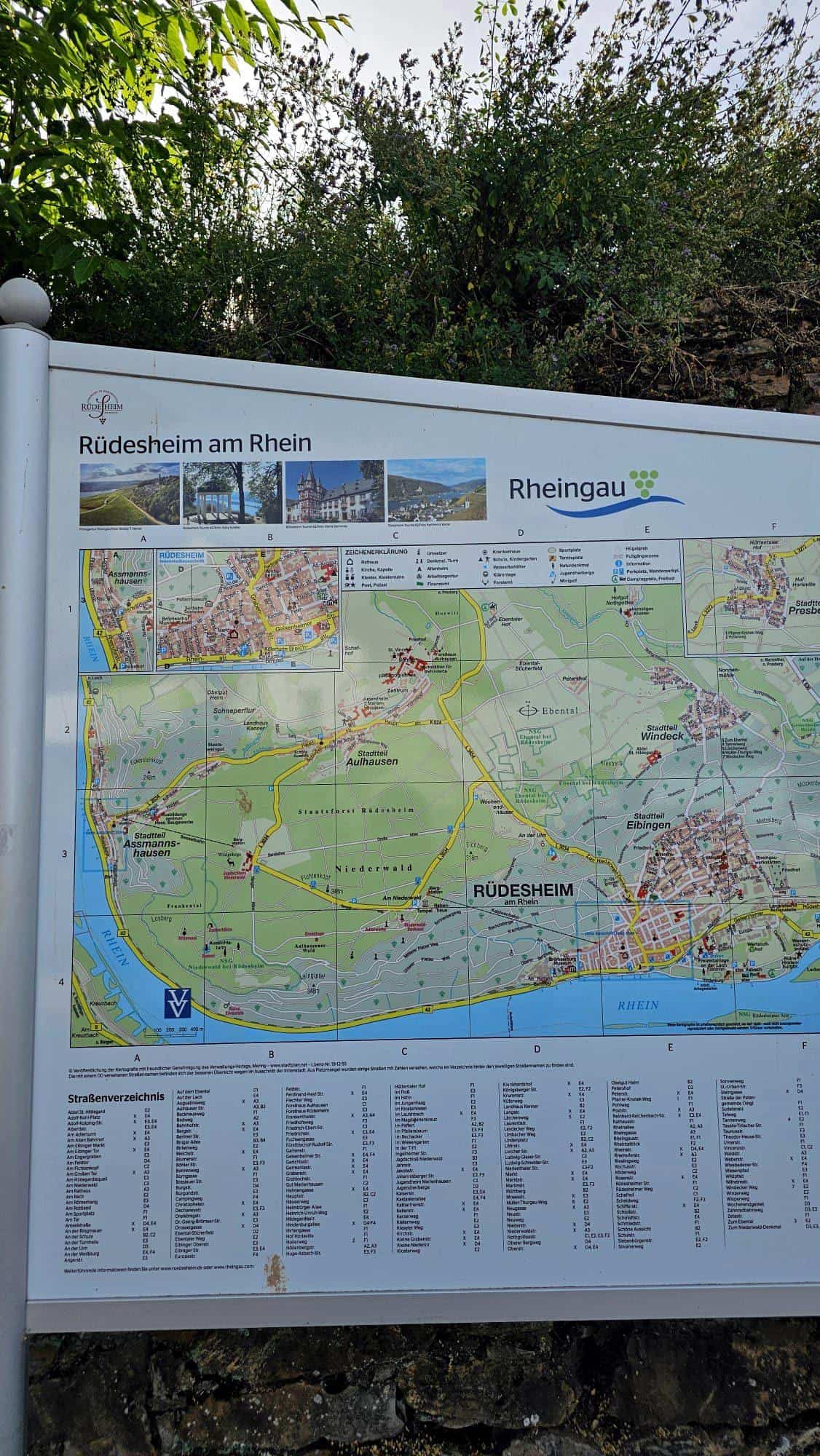
A bit late, I’ll admit, considering I lived in Frankfurt for 3 years and never once thought to explore places like Rheingau, Pfalz, Rheinhessen, etc 🙈. But hey, it’s never too late, right? Just 25 minutes west of Frankfurt, one of Germany’s 13 wine regions starts showing off its treasures: Rheingau (roughly “Rhine district”, the “gau” suffix giving away its old ties to the Frankish Empire). We pull up the map again to get a clearer picture of the topography, because here too, the terrain leaves a serious mark on the wines. This is where the Rhine takes a sharp turn, probably blocked by the “Taunus mountain”* and switches its course from east to west.
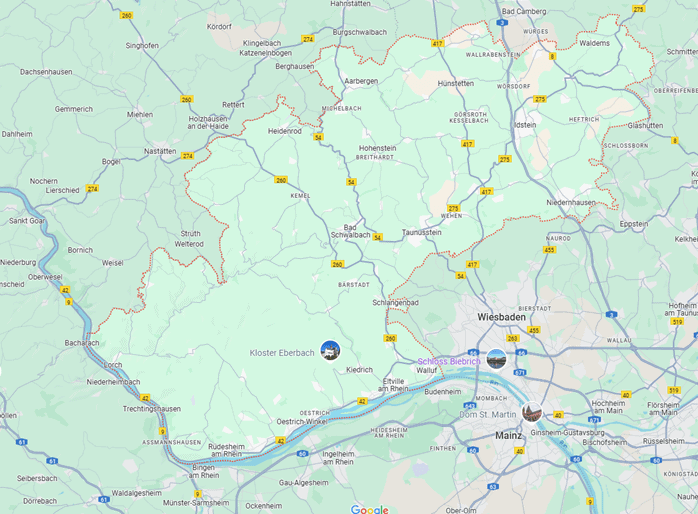
(*I call it a mountain, though it’s not really a mountain in the true sense. I remember my colleagues telling me how they’d go “hiking” in the Taunus, but when I finally saw it, I was shocked, and kinda disappointed, to find just a little hill (I’m used to the Carpathians, after all). But hey, don’t judge a book by its cover, Taunus may be small, but it holds some serious treasures inside… you’ll see 😉)
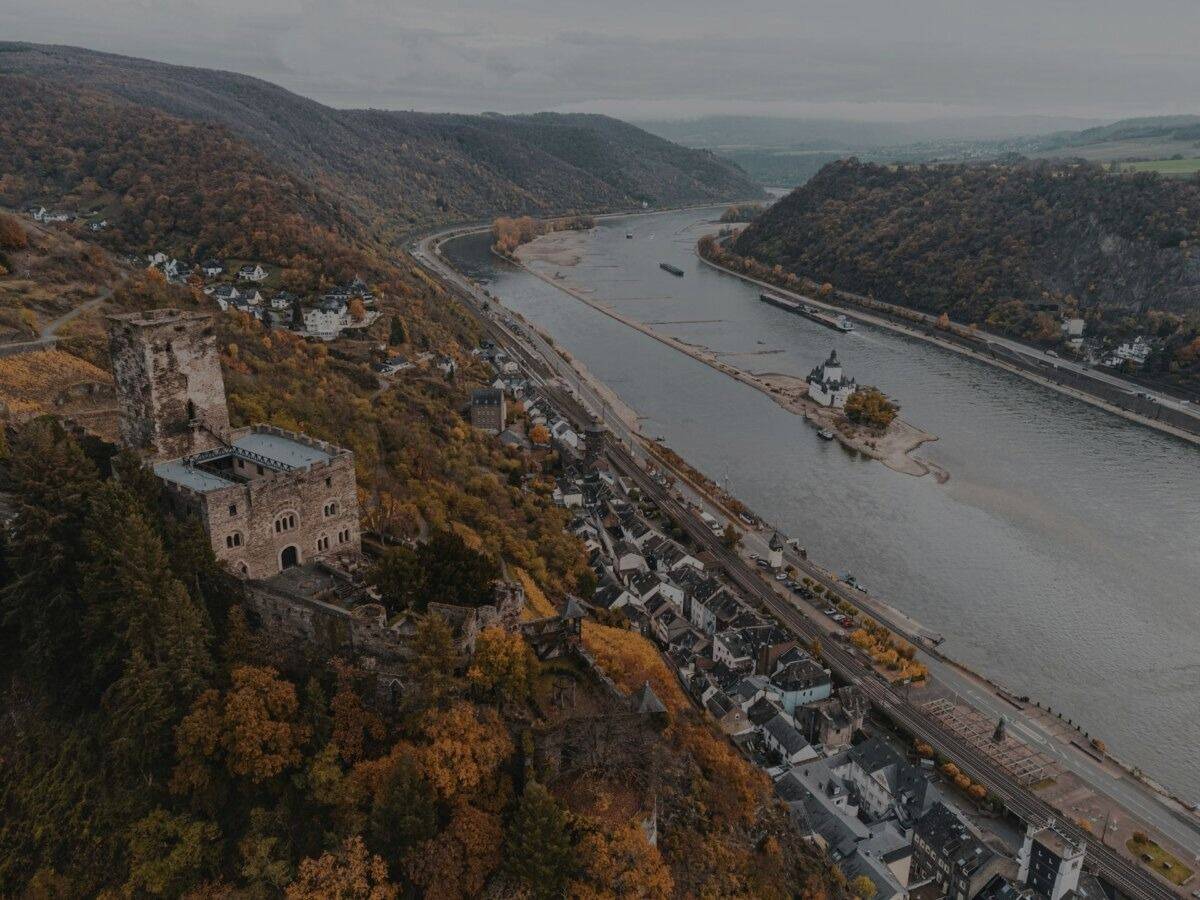
The road into the heart of Rheingau (I decide to spend a night in Rüdesheim) is absolutely stunning—it tempts any driver to pull over at least once just to marvel at how beautifully the Rhine sculpts the landscape.
Like in Mosel, you’ve got steep hills packed with vines lined up almost militarily, spectacular islands and alluvial formations… pure magic, I tell you ✨️.
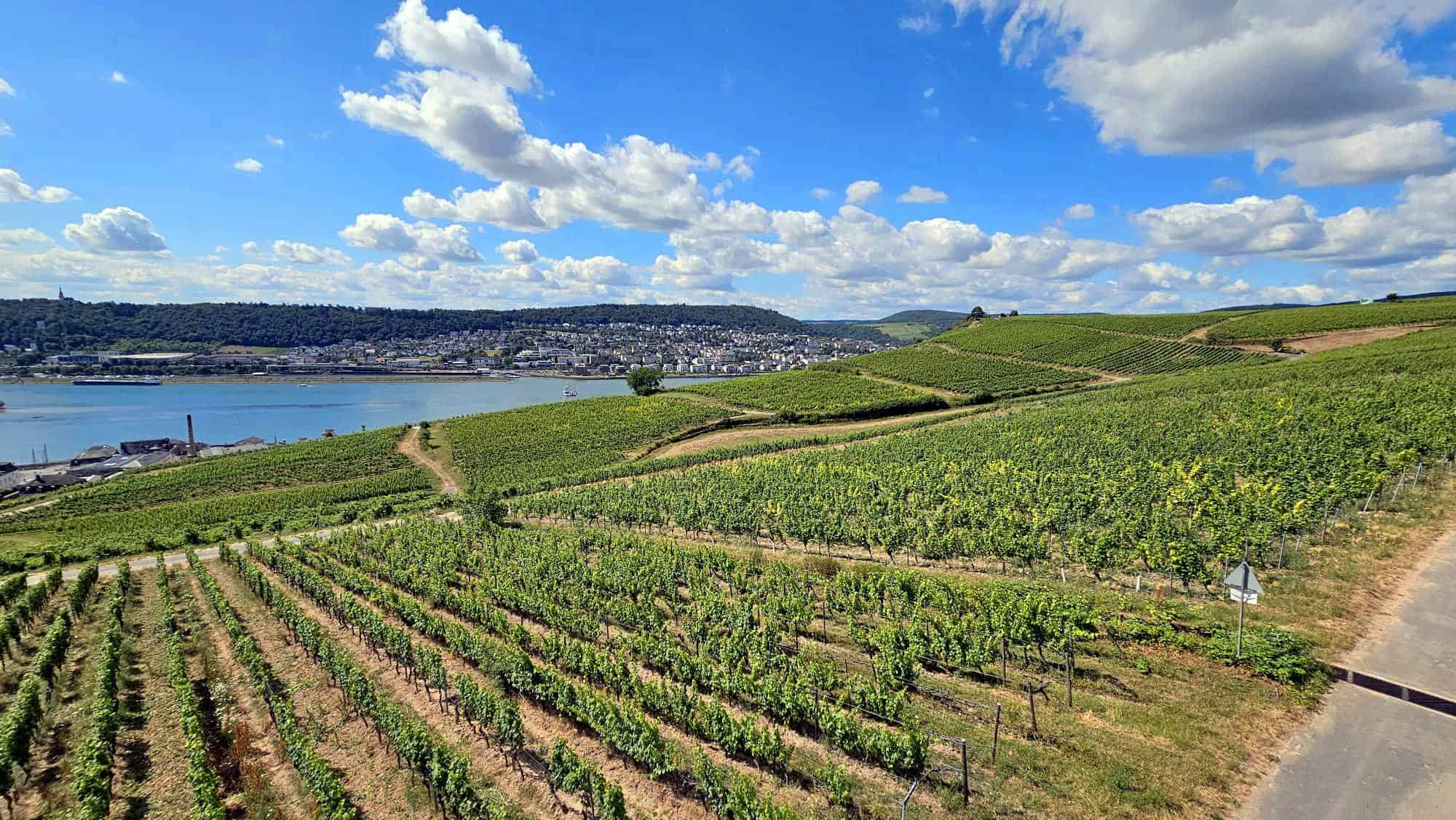
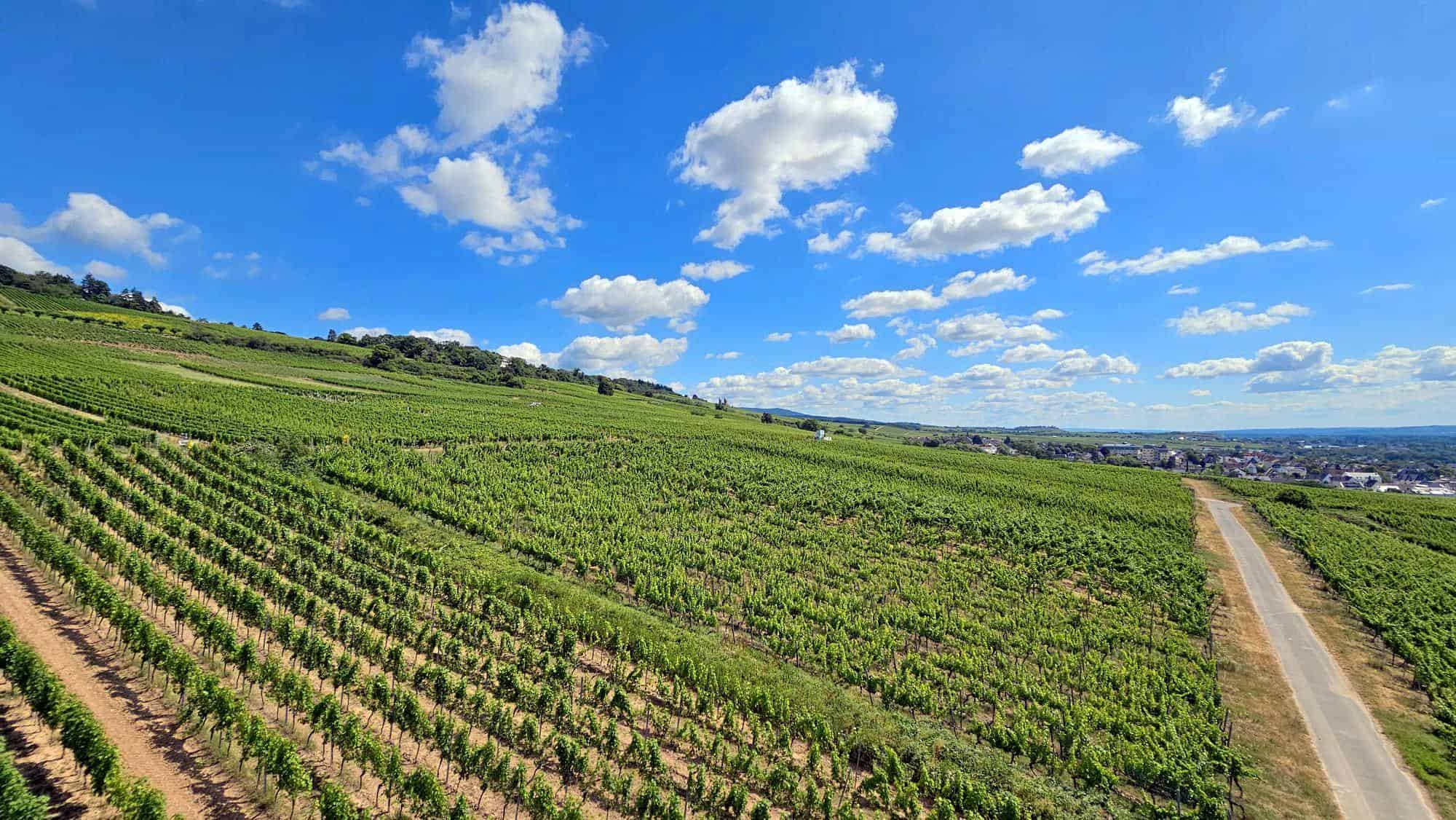
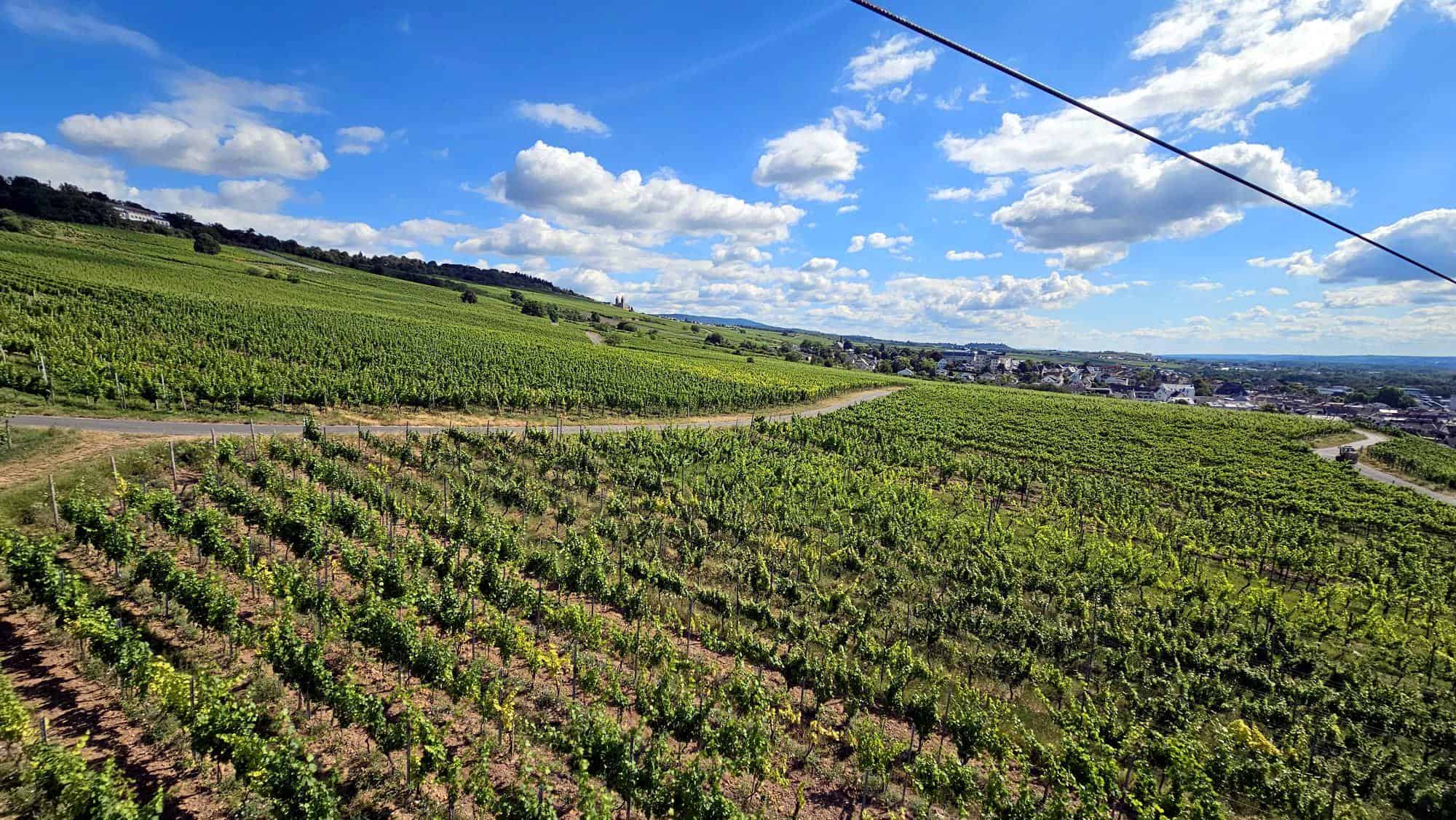
Basically, between Wiesbaden and Rüdesheim you’ll find 90% of Rheingau’s vines, a tiny area of about 3,000 ha (to give you an idea, that’s roughly the same size as the entire Jidvei estate, Romania  ).
).
Rheingau accounts for just 3% of Germany’s total wine production, but those few percent deliver some of the purest, highest-quality Rieslings in the country… or even the world (the main reason I’d been looking for any excuse to “detour” here  ).
).
TERRAIN & SOIL
Back to the map: we’re right on the 50° N parallel, smack in the “wine belt.”
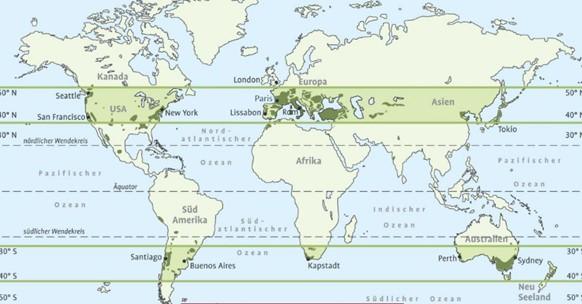
Which means it’s cold… average annual temp around 10°C (to quote Cosmin: “exquisite taste of chill” 😅 ).
And yet, the climate here is actually milder and more forgiving than in Mosel, and that hill that fancies itself a mountain, the Taunus, is famous not just for getting in the Rhine’s way, but also for its geological “armor”: slate, schist, quartz, loess, and limestone.
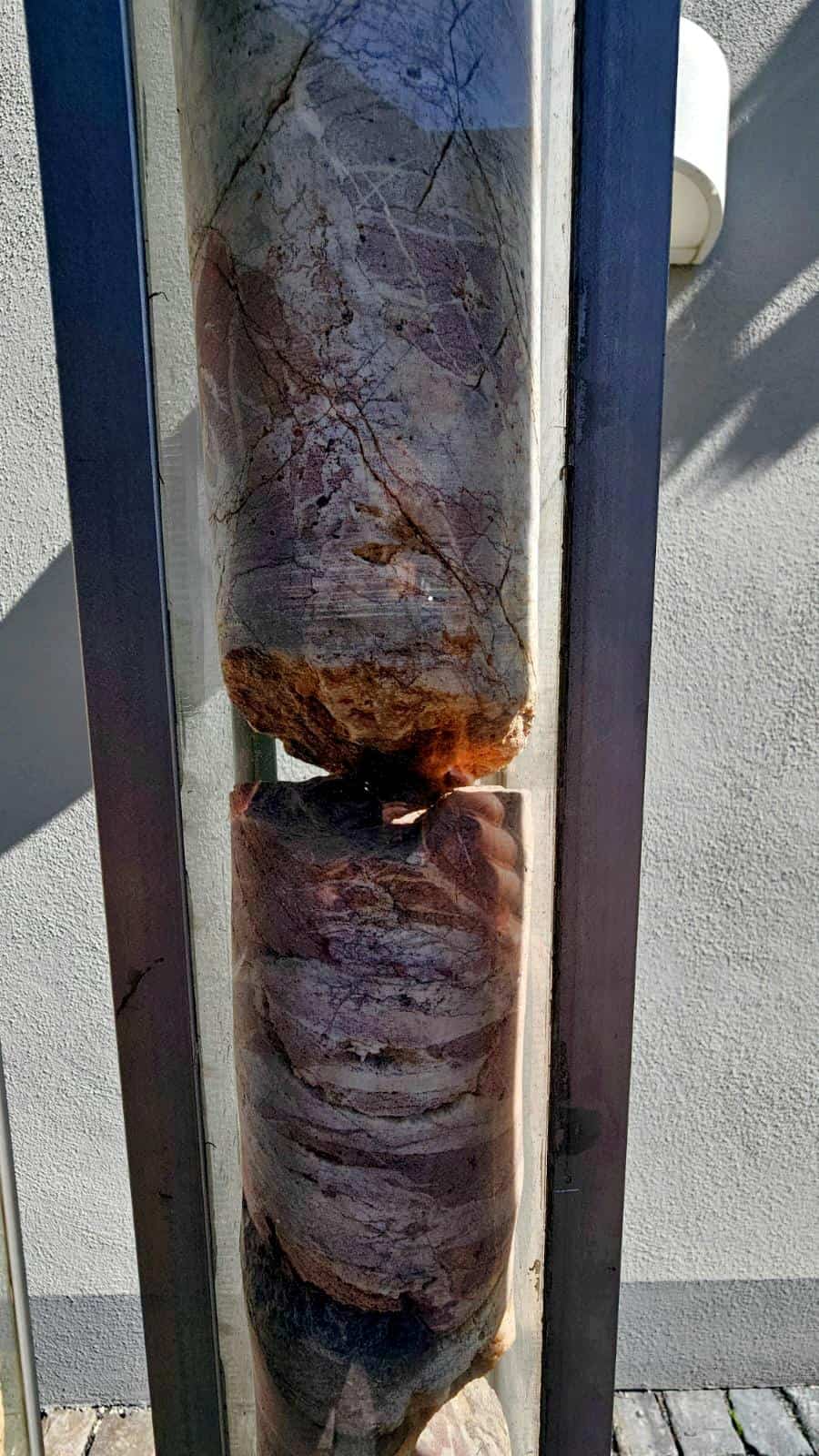
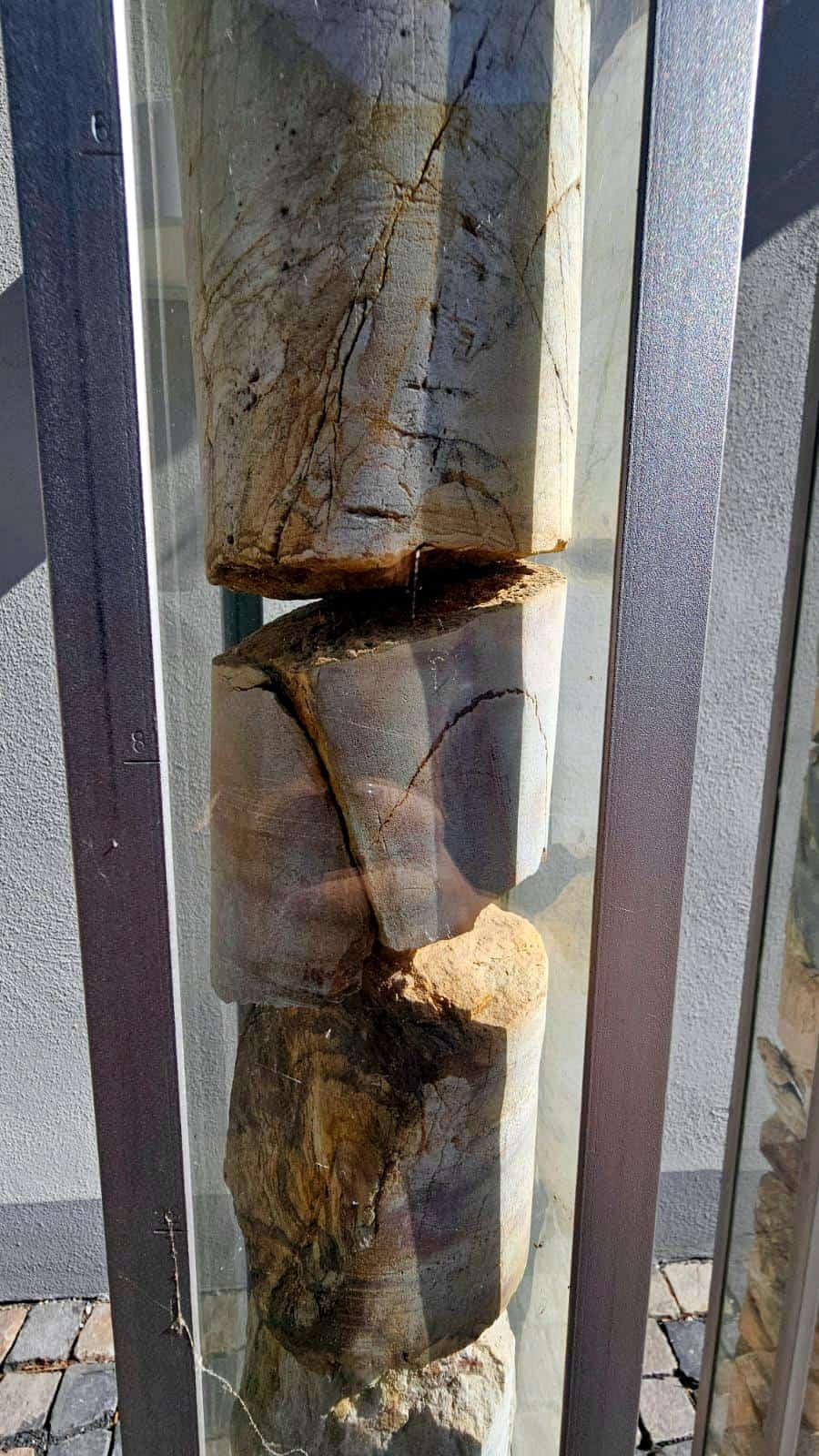
All of this turns Rheingau wines into true gems, unbelievably complex, with an aging potential of over 15 years (white wines aren’t exactly famous for maturing… but Rheingau casually shatters that preconception).
ONCE UPON A TIME…
No surprise, it all goes back to the Romans, who spotted the potential after conquering the Rhine territories (I mentioned their legacy in the Mosel article too).
They brought “Vitis vinifera” from the empire’s capital, along with grape-growing know-how, and strategically planted vineyards near Roman fortresses.
Fast-forward through centuries of history after the fall of the Roman Empire: the vines stayed, passed into the hands of monastic orders (some even French in origin ), who not only tended them year after year but also started experimenting with varieties and winemaking techniques.The result? Refined, characterful wines that perfectly express the region’s terroir. And YES… this is where Riesling was actually born  .
.
VARIETIES
Riesling still rules, covering over 80% of Rheingau’s vineyards, with the rest being Pinot Noir (Spätburgunder) and a few more demanding local varieties.
Despite its serious pedigree, Riesling only appears in records in 1453, mentioned in Rüsselsheim (a small town also in Rheingau), and it’s the result of a cross between two varieties: Traminer (an ancient, well-known grape) and Weisser Heunisch (widely planted in the Middle Ages but very rare today).Rheingau Riesling characteristics are almost… intimidating at first glance. They’re described as austere and robust, powerful and intensely mineral thanks to the terroir.More reasons to dig into the region’s most celebrated estates, and I found:
- Schloss Johannisberg – officially the world’s first
 100% Riesling estate (1720), and also one of the oldest vineyards… first documented in 817 AD. Checked off my list , but sadly only seen from the outside, on that day they were hosting a festival and I couldn’t get in at that hour. Still, the estate is stunning and worth at least a visit.
 100% Riesling estate (1720), and also one of the oldest vineyards… first documented in 817 AD.
  , but sadly only seen from the outside, on that day they were hosting a festival and I couldn’t get in at that hour. Still, the estate is stunning and worth at least a visit.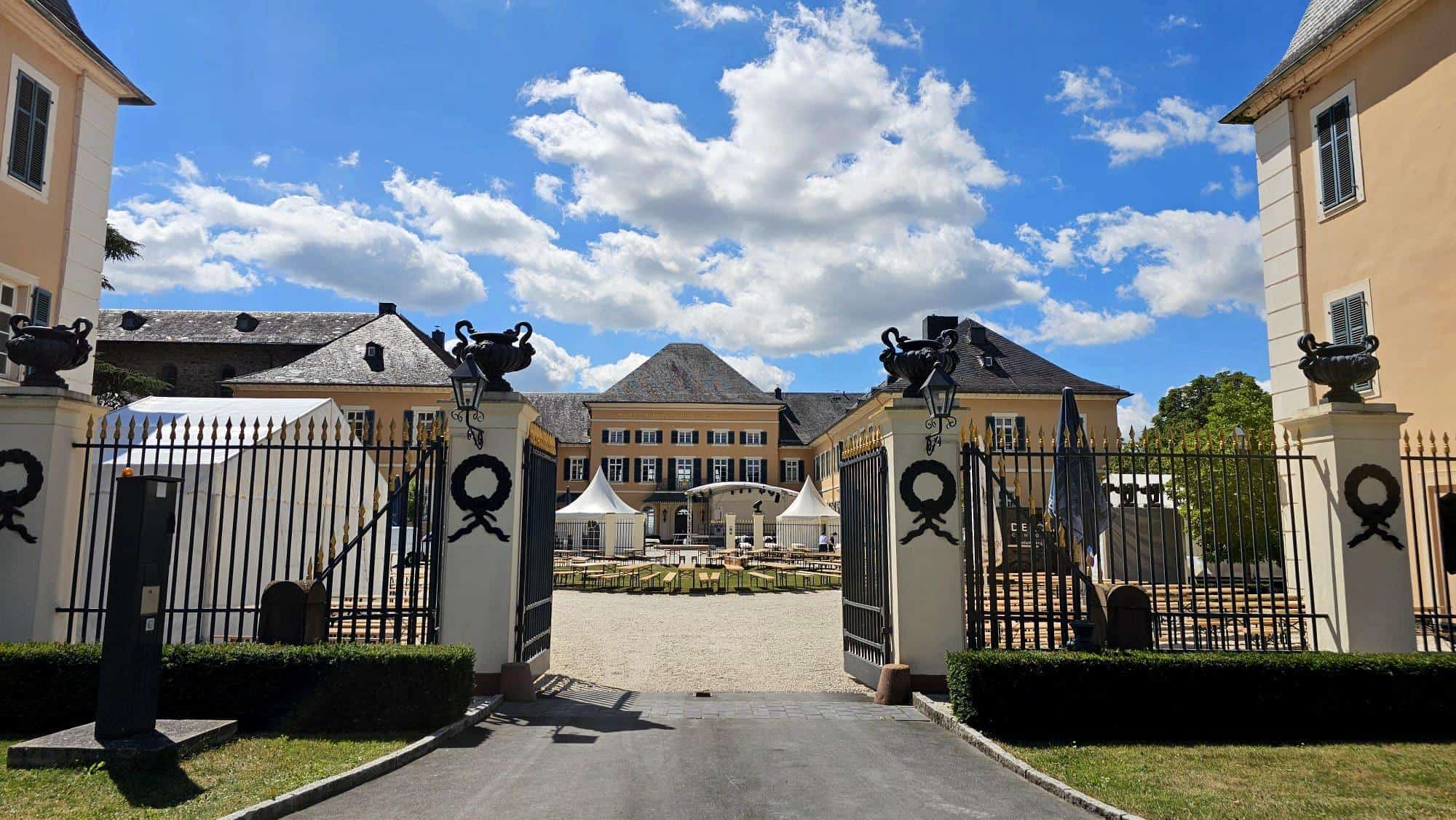
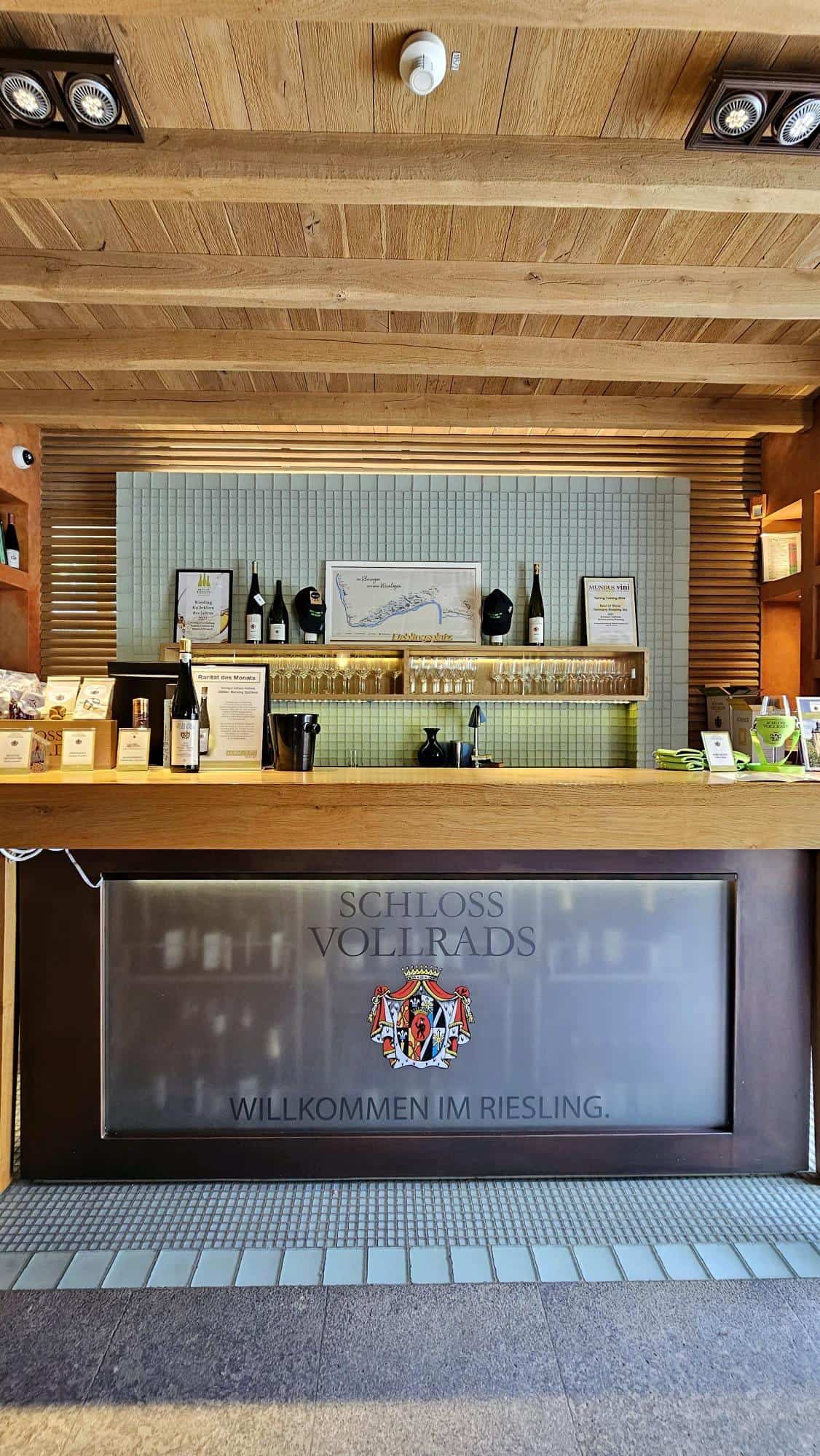
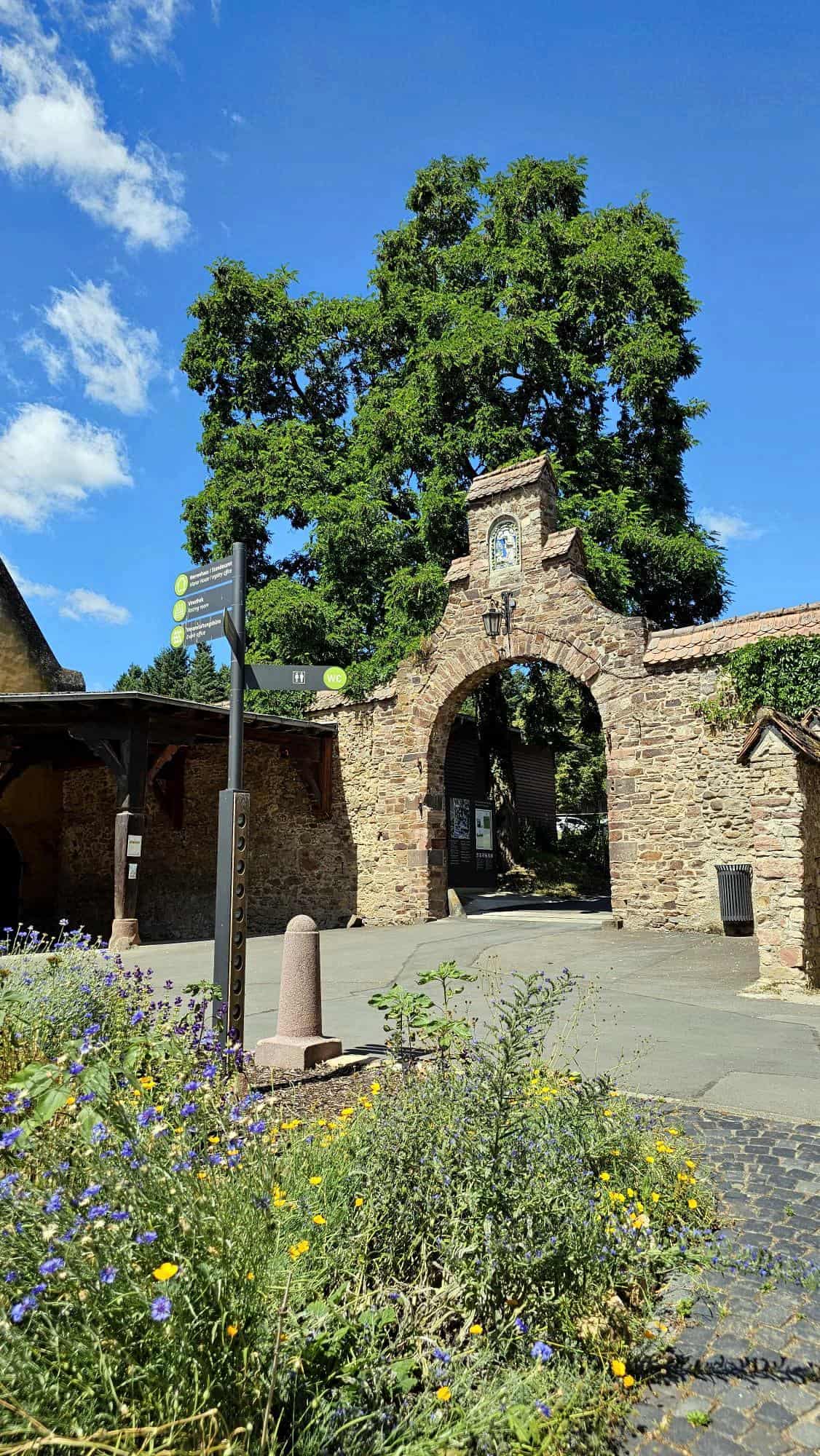
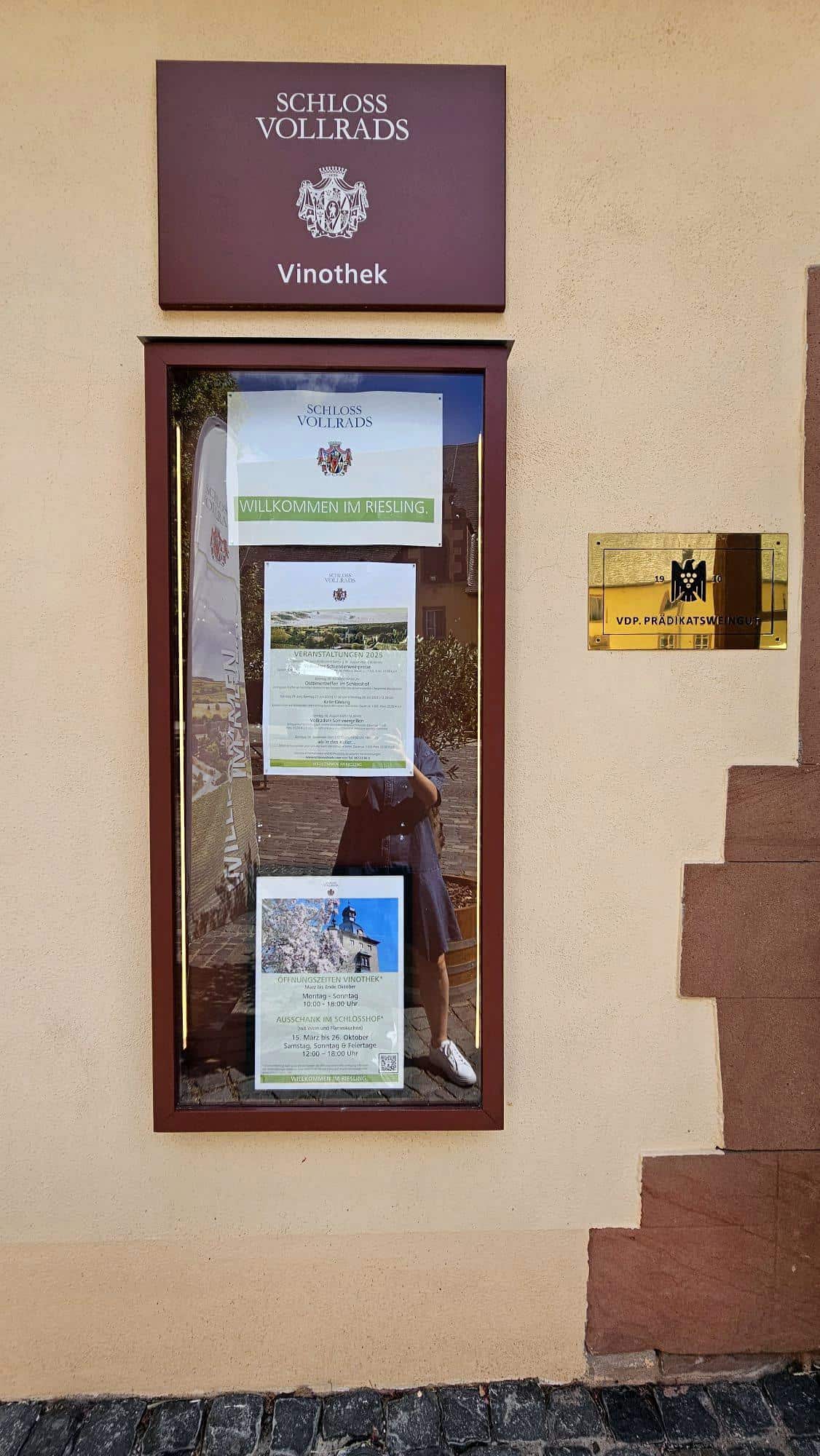
- Schloss Vollrads – another medieval castle with over 800 years of winemaking history, owned for centuries by the von Greiffenclau family, then (fun fact) taken over in 1997 by a bank?!
They boast creating the German classification system and, of course, producing the very first Kabinett wine in 1716. I learned the 80 ha are planted exclusively with Riesling, and the massive estate includes a restaurant, wine bar, and terrace.
I really wanted to tour the cellar and do a tasting, but no one replied to my emails.
Once I got there, I realized walk-in tastings were possible at the wineshop, but sadly it was too late, as I was already driving back home💁♀️.
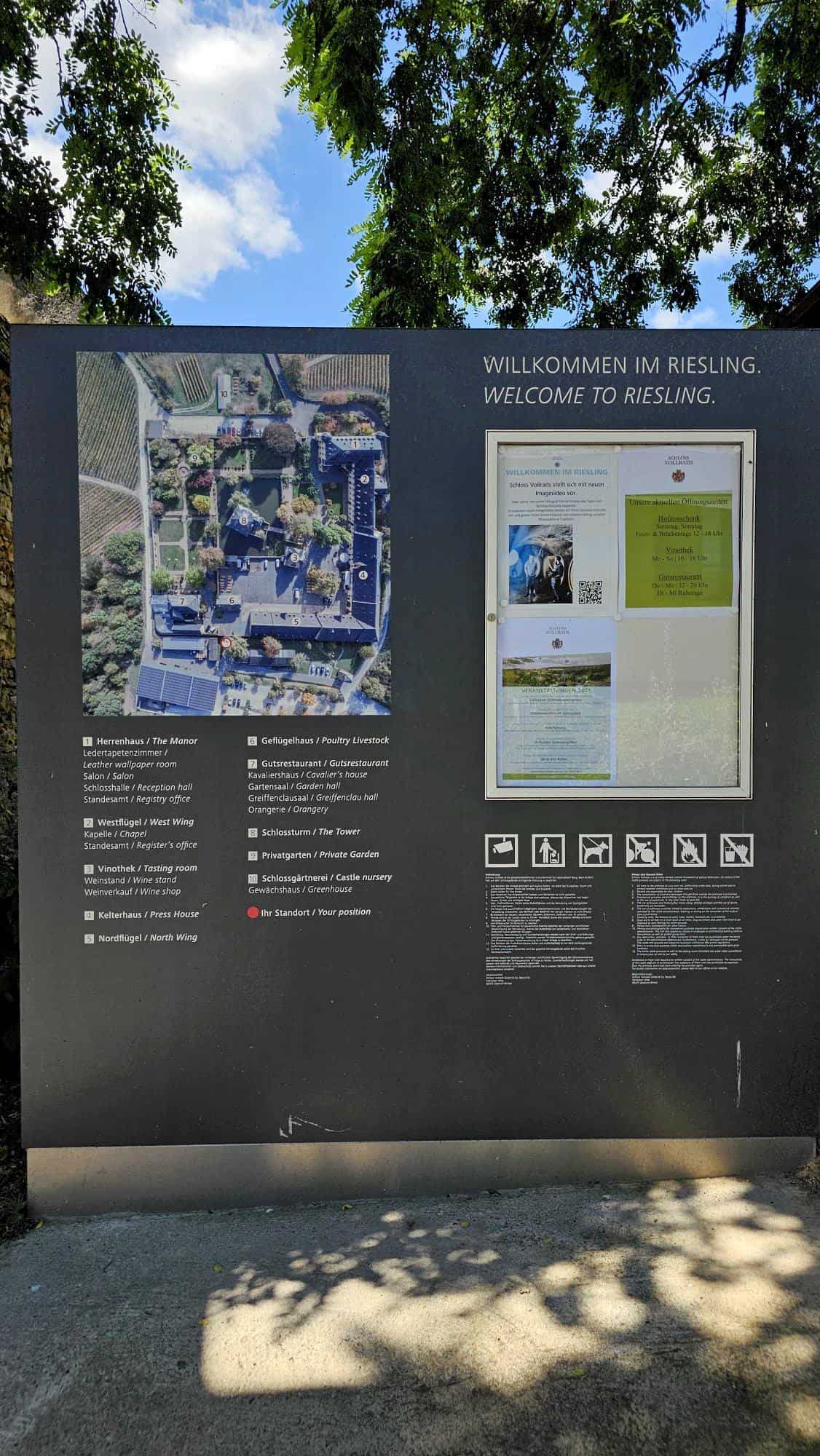
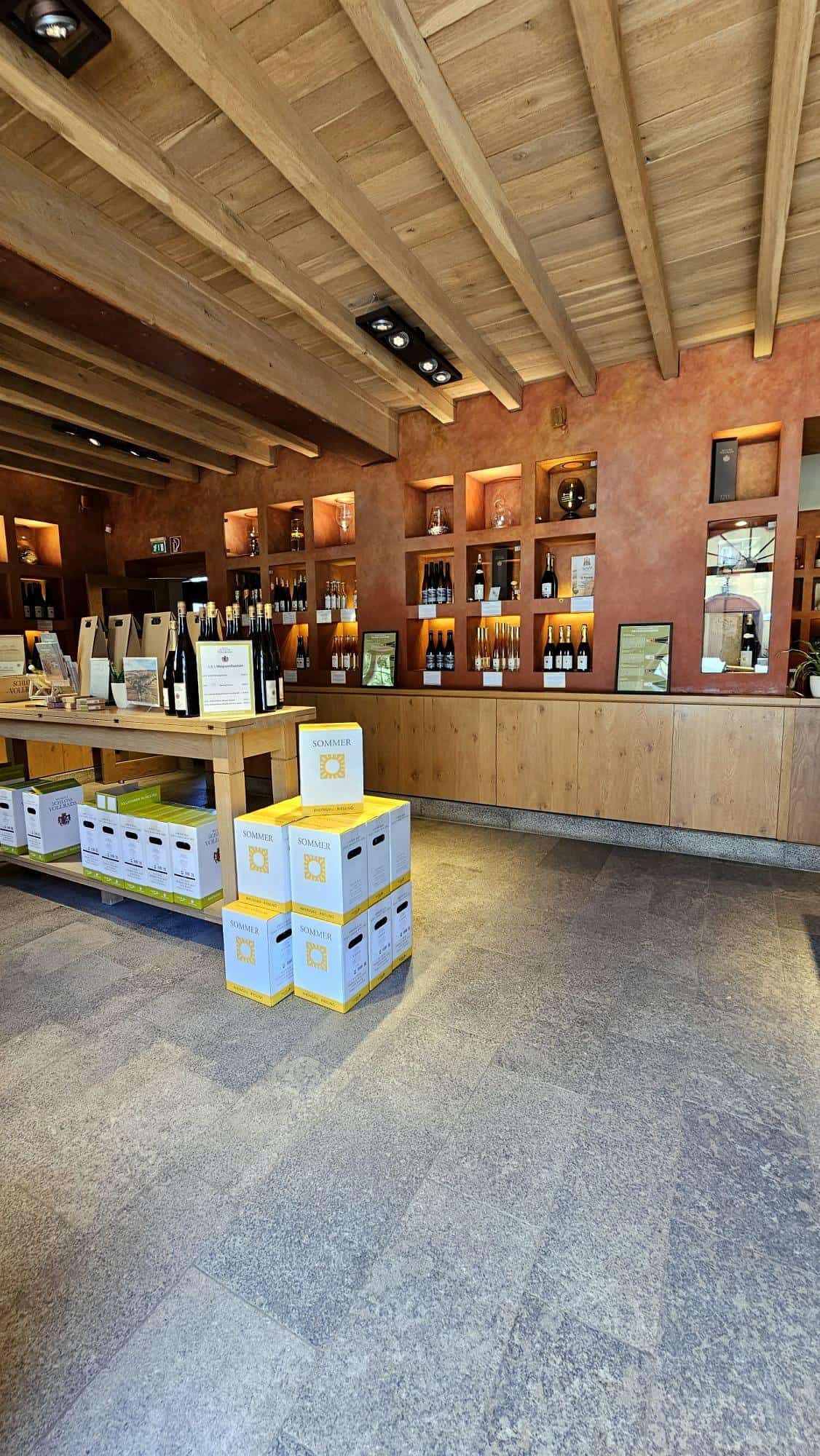
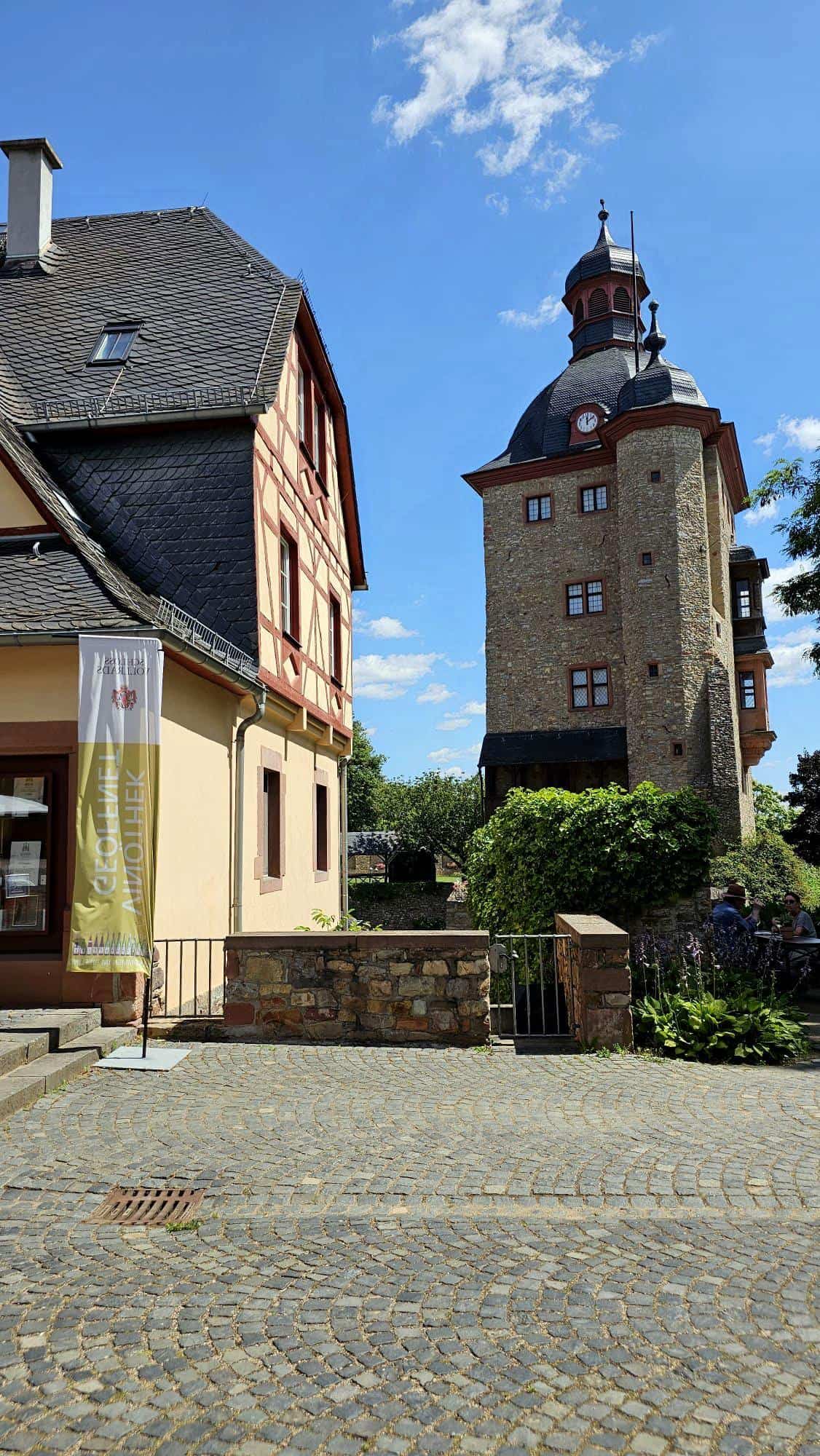
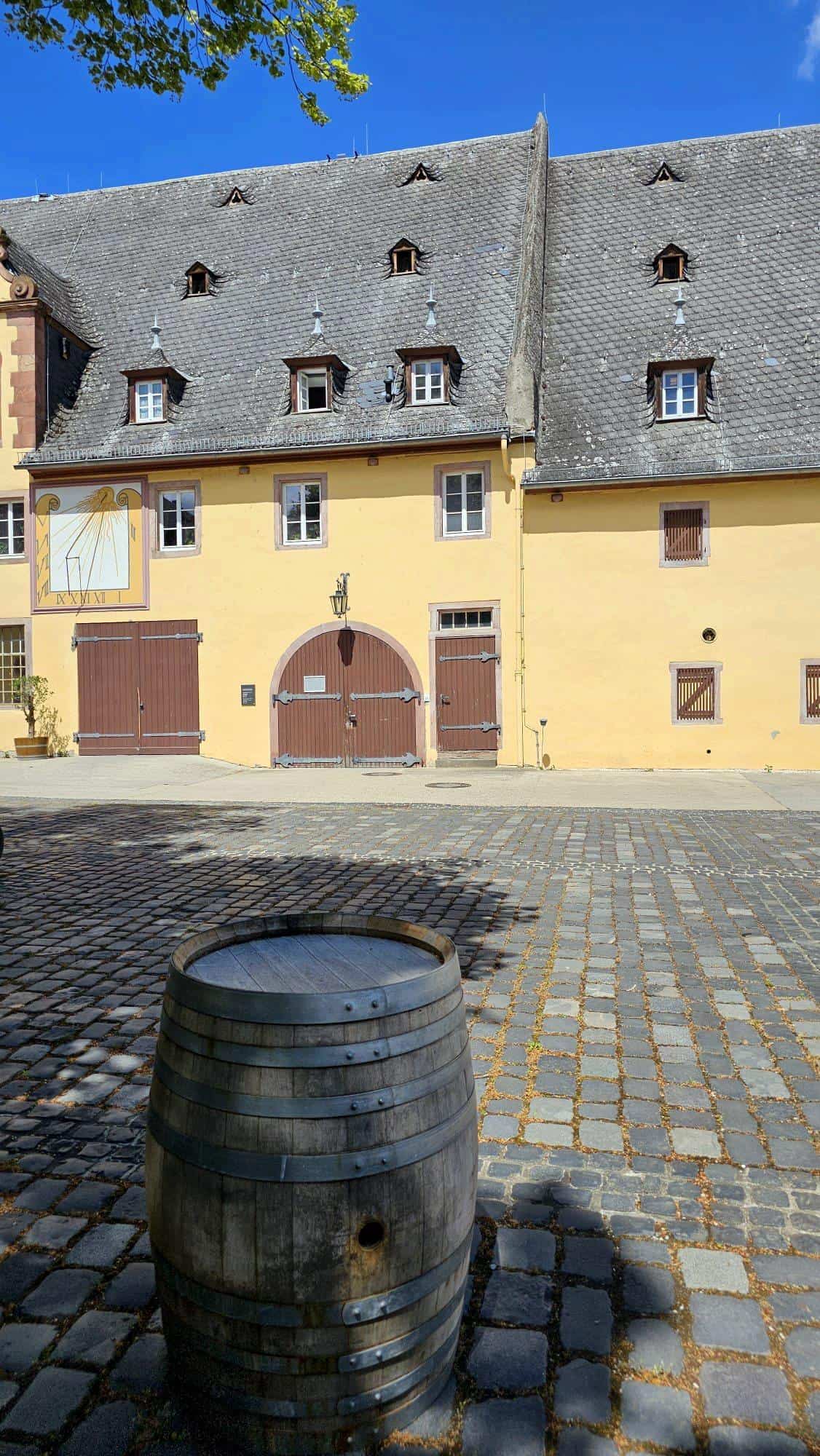
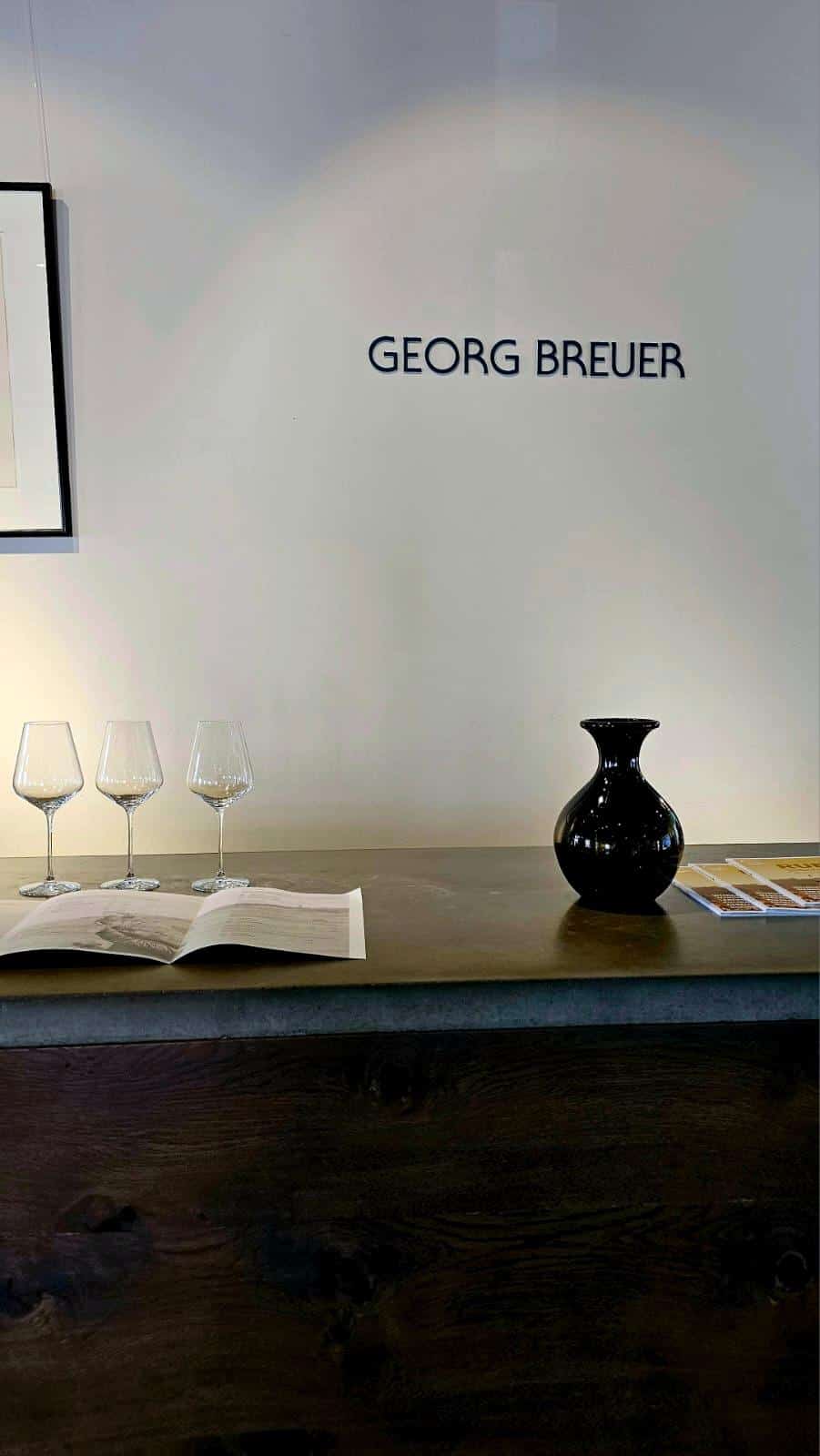
- Georg Breuer – To be honest, this was my first stop and the very first winery I reached out to after listening to the “Wine for Normal People” podcast, specifically the Rheingau episode where host Elizabeth Schneider invited Theresa Breuer to talk about Rheingau Riesling… and more. I was instantly charmed by Theresa’s passion, how she explained the terrain’s impact on the wines, how she started her career at just 21, and her take on both the region’s past and future.
I’d booked a Friday 5 p.m. tasting at their wineshop in Rüdesheim (cellar tours are apparently only for groups of 5+), plus a 7 p.m. dinner at the winery restaurant. They even recommended the estate hotel in the email (Ruedesheimer Schloss), which looked decent at first glance, but it was fully booked, so I found something nearby instead. For the tasting, I headed to the wineshop at Grabenstraße 8, 65385 Rüdesheim am Rhein—impossible to miss. They have a spacious tasting room, shop, and best of all, parking (don’t be like me and park two streets away).
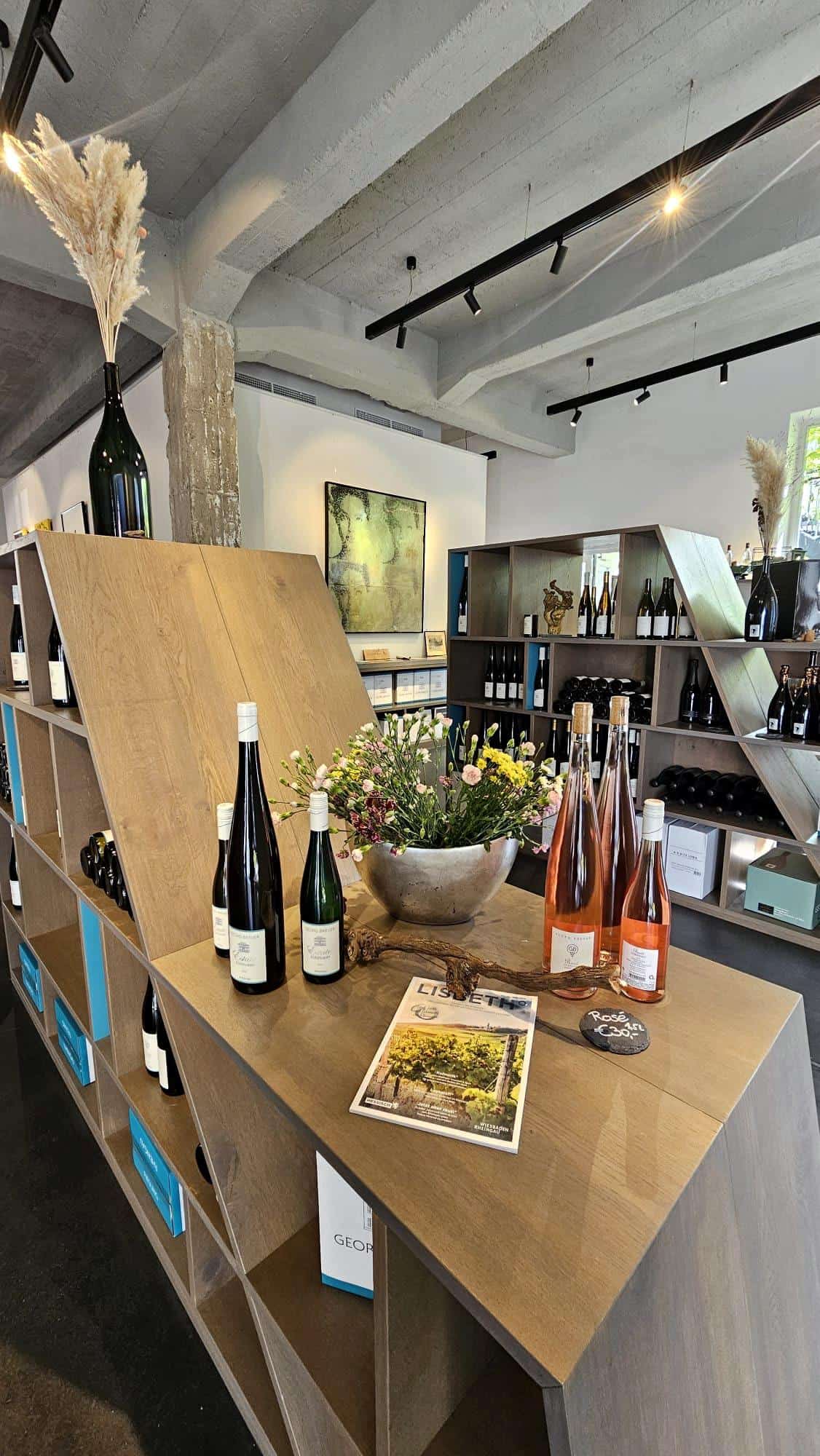
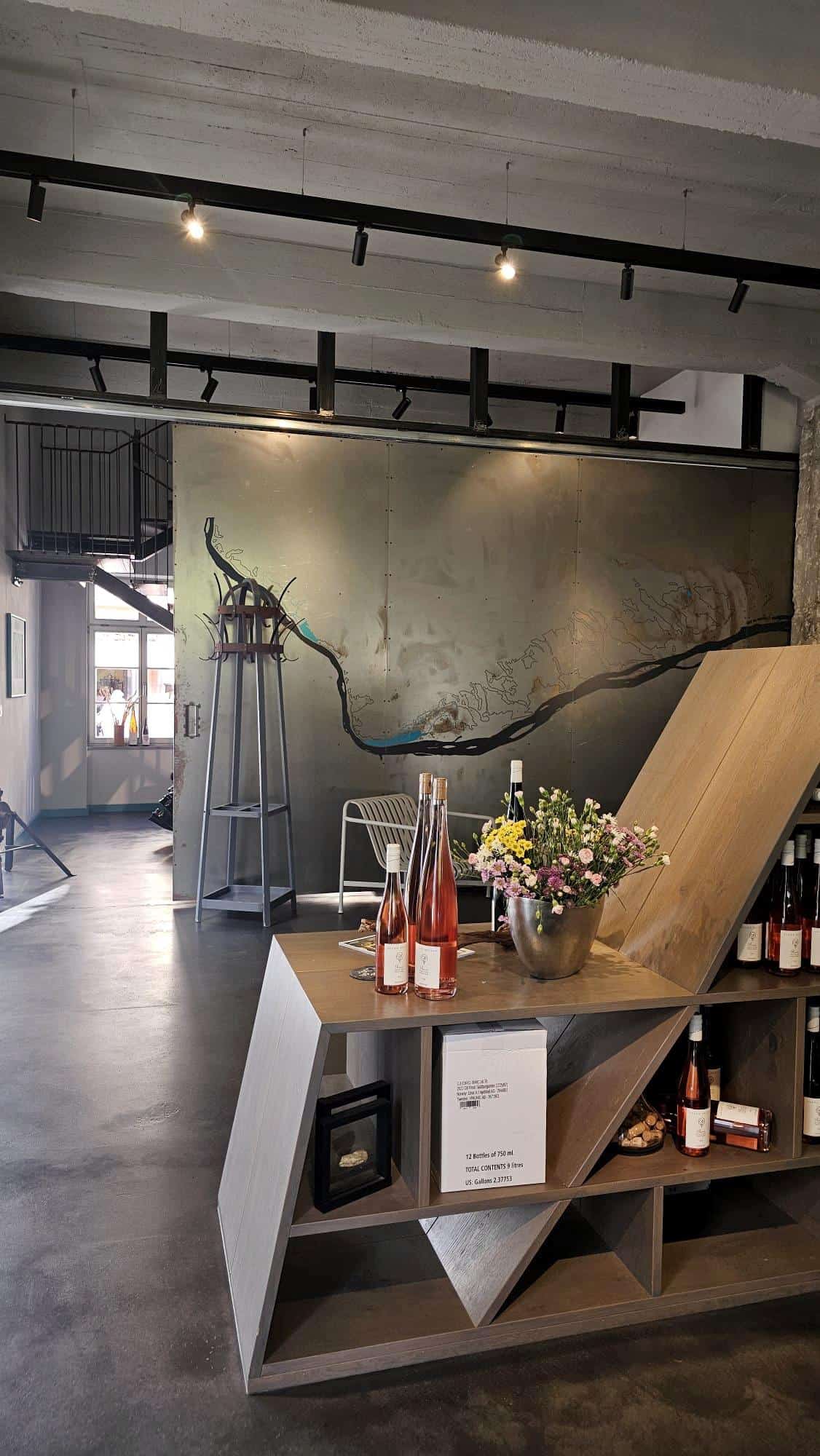
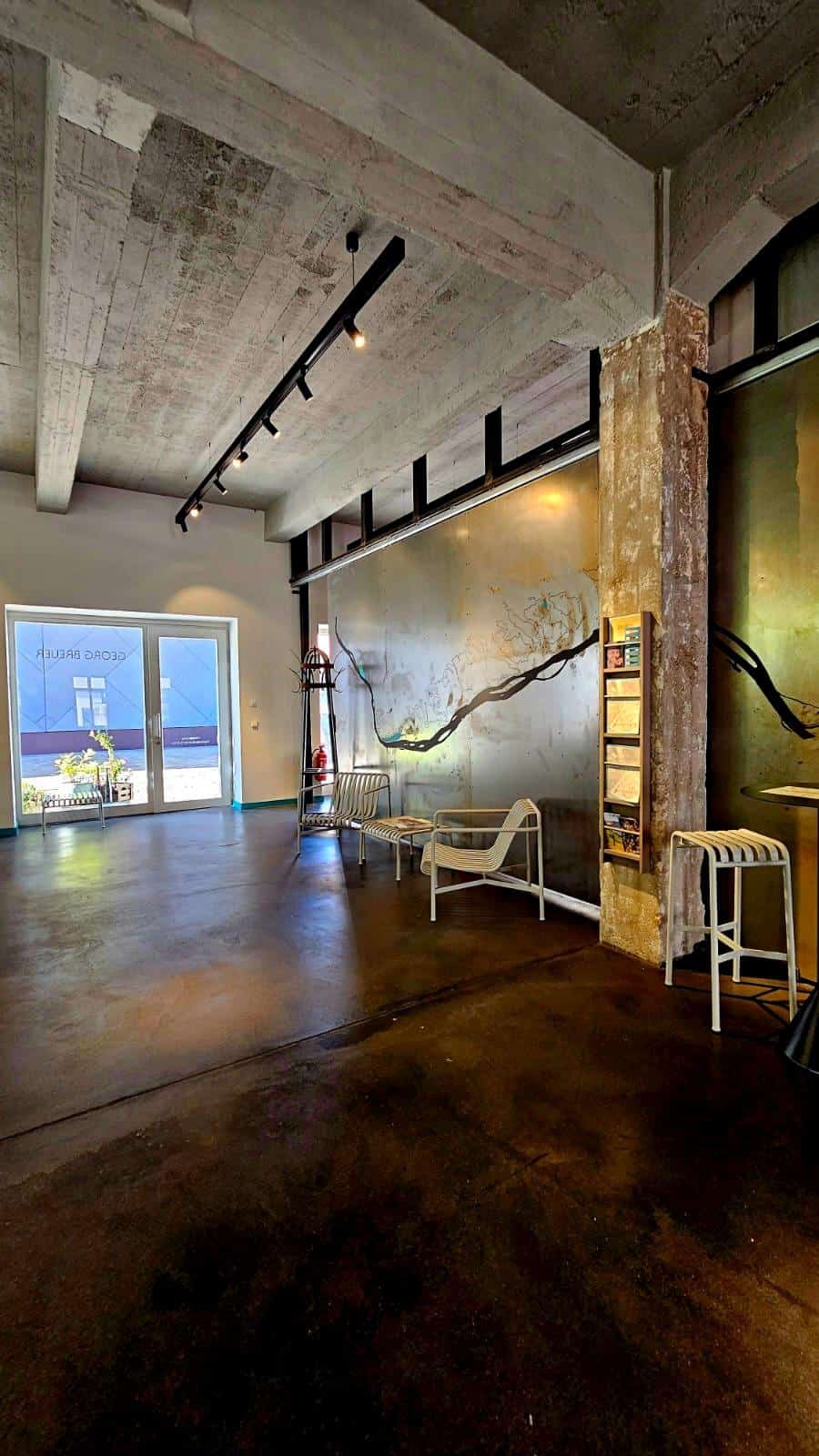
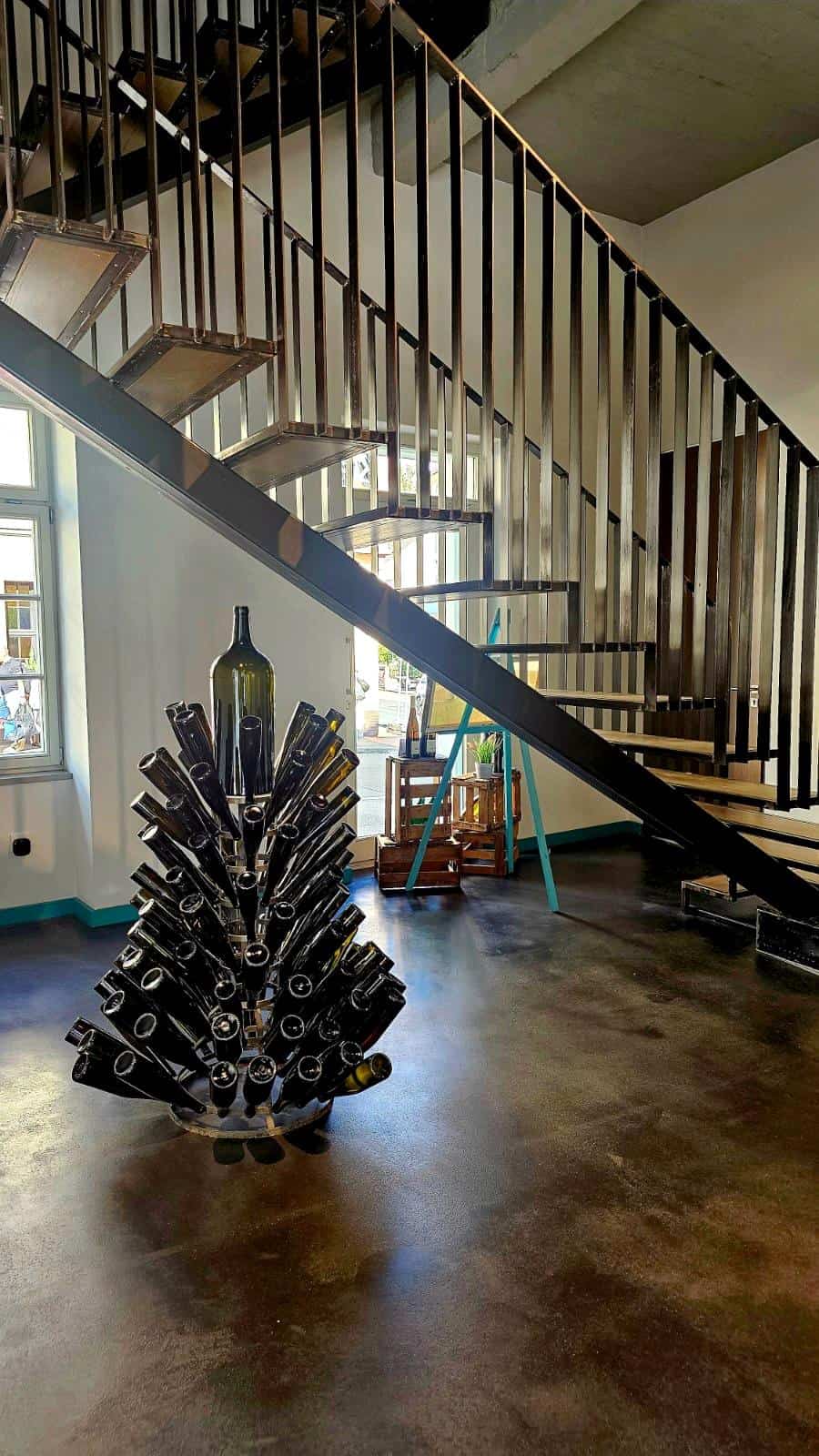
The lady who greeted me—Katharina, if I remember right—was super friendly and incredibly knowledgeable about all things Rheingau. She offered me a 7-wine tasting package, all Rieslings, of course  .
.
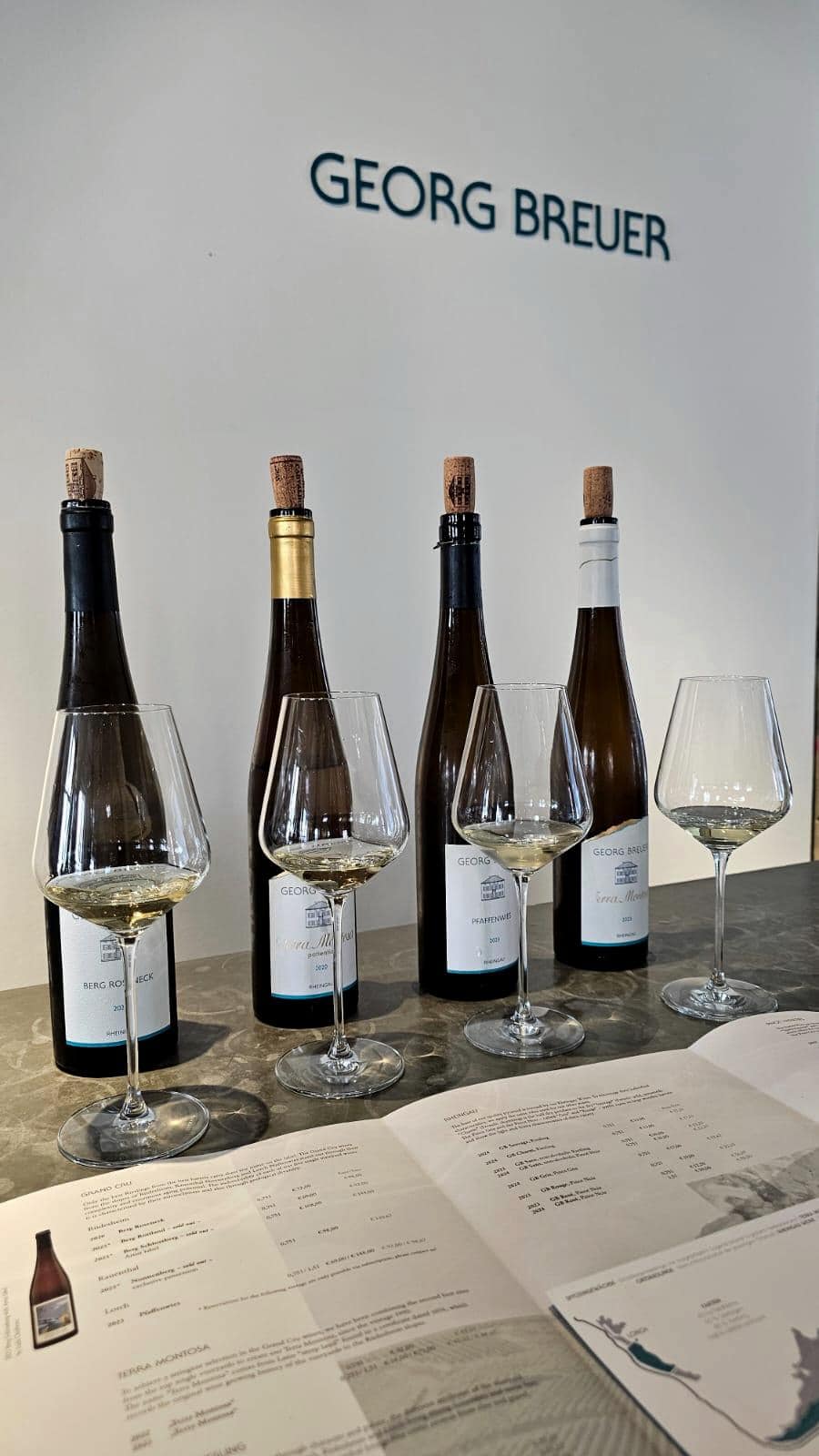
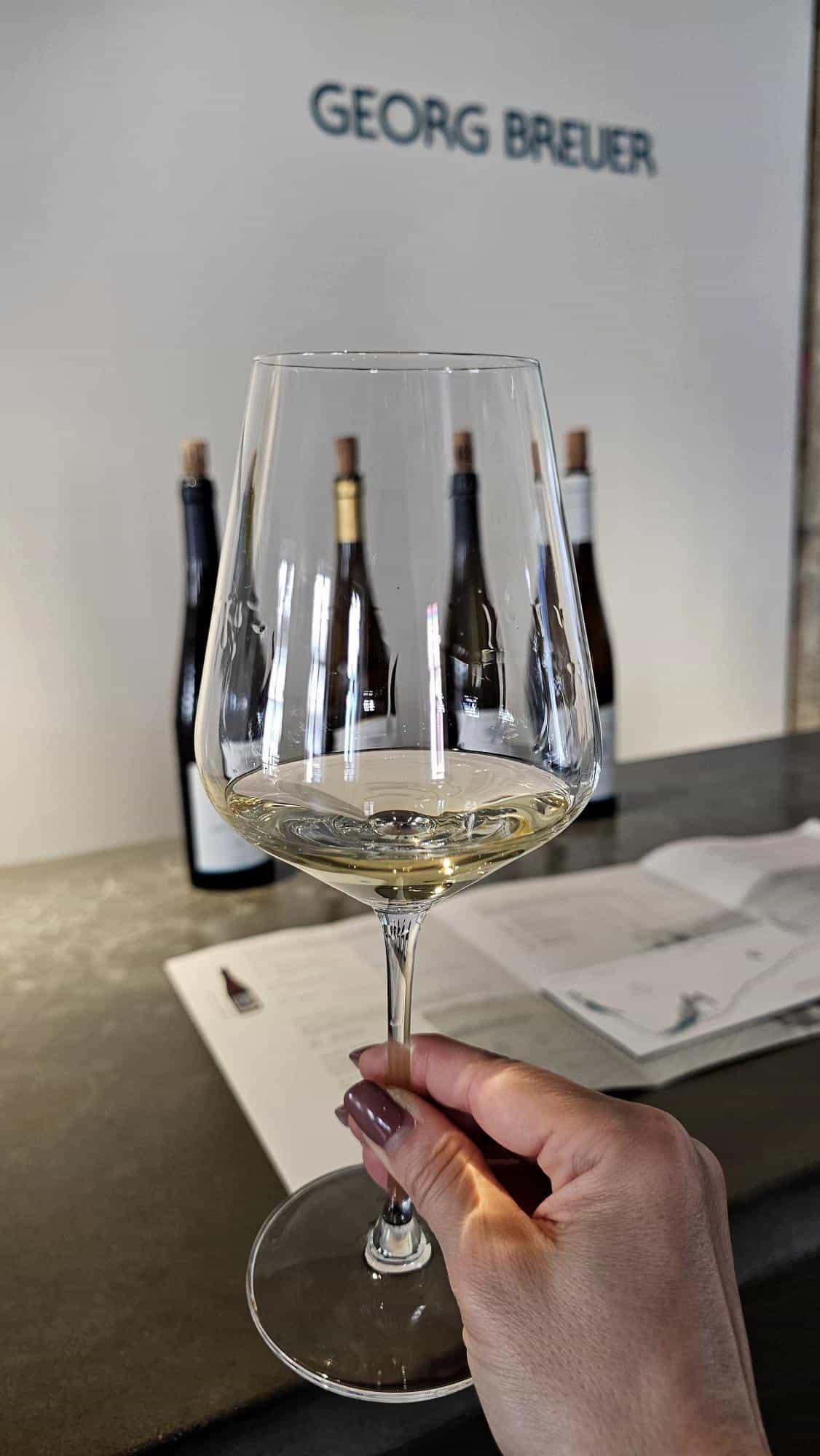
We started with the entry-level range, Sauvage 2024. I’ve told you before about wineries’ “starter” lines: light, no-frills wines designed to please the masses. I didn’t have high expectations, but I was seriously impressed by the citrus freshness, obvious minerality, and clarity… plus it was perfect for the scorching heat outside. So I left with 3 bottles 😁 .
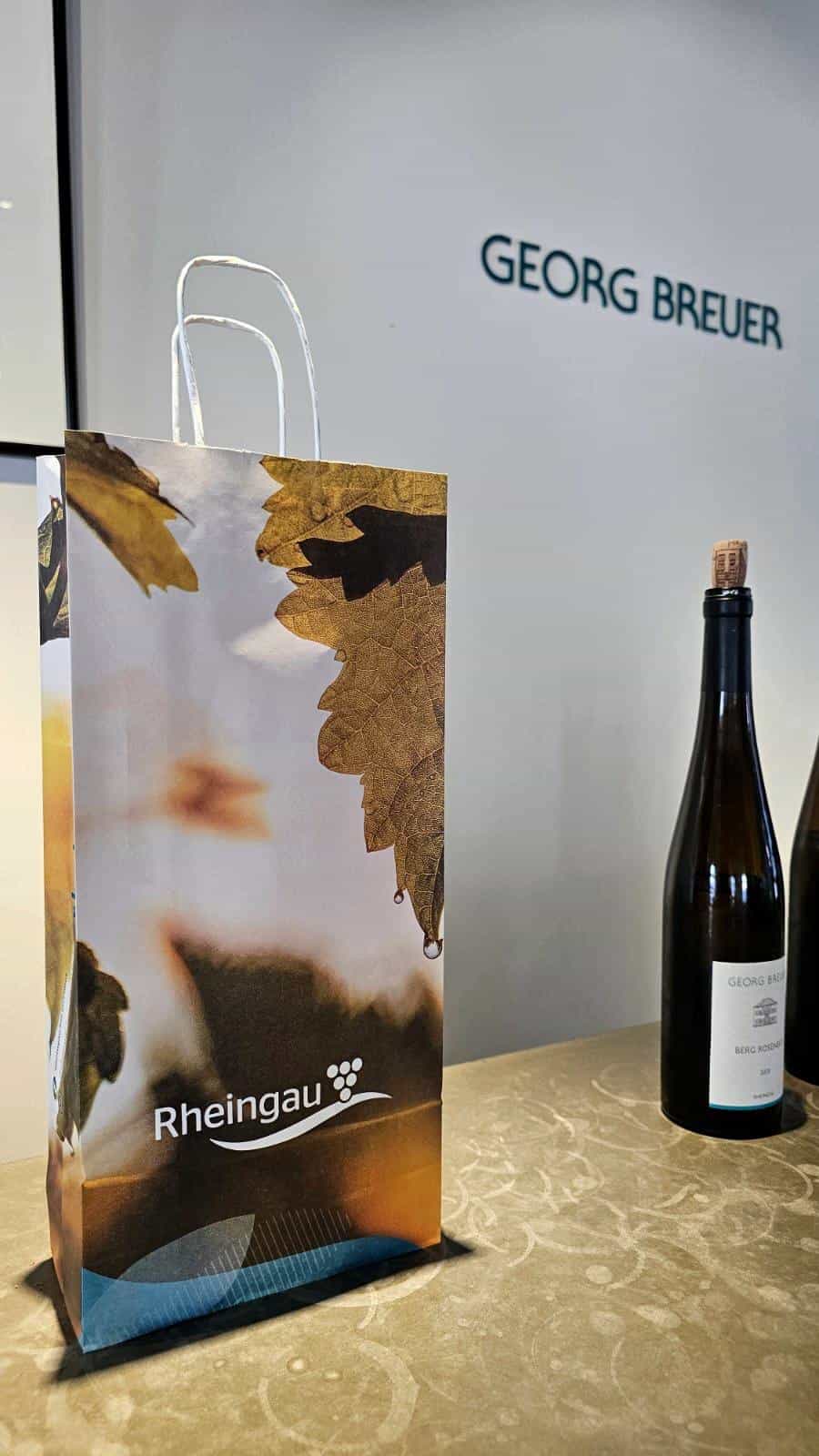
We continue…
With a 2023 Riesling that’s a total departure, floral and perfumed with golden apple notes. It’s all thanks to 2023 being a scorcher in Rheingau compared to the super-cool 2024. I have to stress: this was a different Riesling. The aromas were perfumed, sure, but so delicate, elegant, and subtle compared to what I’ve tasted in other regions or even in Mosel. We swing back to 2024 with an “Estate” Riesling (or Village Riesling) that won me over instantly. Turns out it comes from a flat parcel, not on a steep slope, facing south and soaking up tons of sun. Again, super elegant and balanced, with rounder, gentler notes and aging potential up to 6 years.
I also try a dry Lorch. It’s a vineyard with wild terroir: insanely steep slopes dominated by quartz and slate. Katharina tells me the vines’ roots go down as deep as 20 meters here, and honestly, I taste exactly that in the glass: complex minerality, grapefruit, nectarine, plus subtle smoky and wet-stone (think damp cement) vibes. The 2023 (warmer year) and 2024 are equally mineral, but 2024 leans more into green apple, lemon, and a hint of petrol. And because we save the best for last, I discover Terra Montosa, Breuer’s Grand Cru equivalent. Three Rieslings from 2020: Patientia with fine buttery aromas, another 2020 Berg Roseneck that I declare the most suave, delicate, and feminine Riesling of the bunch, and a “warm” 2023 in the glass, dominated by metallic aromas, yet still very elegant.I leave deeply impressed by the quality of the wines, the design of the wineshop, and the hosts’ knowledge. I invite you to discover more on their site (https://georg-breuer.com) or in the Wine for Normal People podcast, where Theresa shares the story of Rheingau Riesling.
ACCOMMODATION
I mentioned earlier that I couldn’t book the Breuer family’s hotel, so I picked something close to the winery and within budget (I’d set a limit of 100€ per night). I went with Weinhotel des Riesling Zum Grünen Kranz: a single room for one night, no parking, no breakfast, 84€.
The photos below speak for themselves. To my disappointment, I don’t think I’ve ever had such a “student dorm” vibe in Germany before, especially at that price.
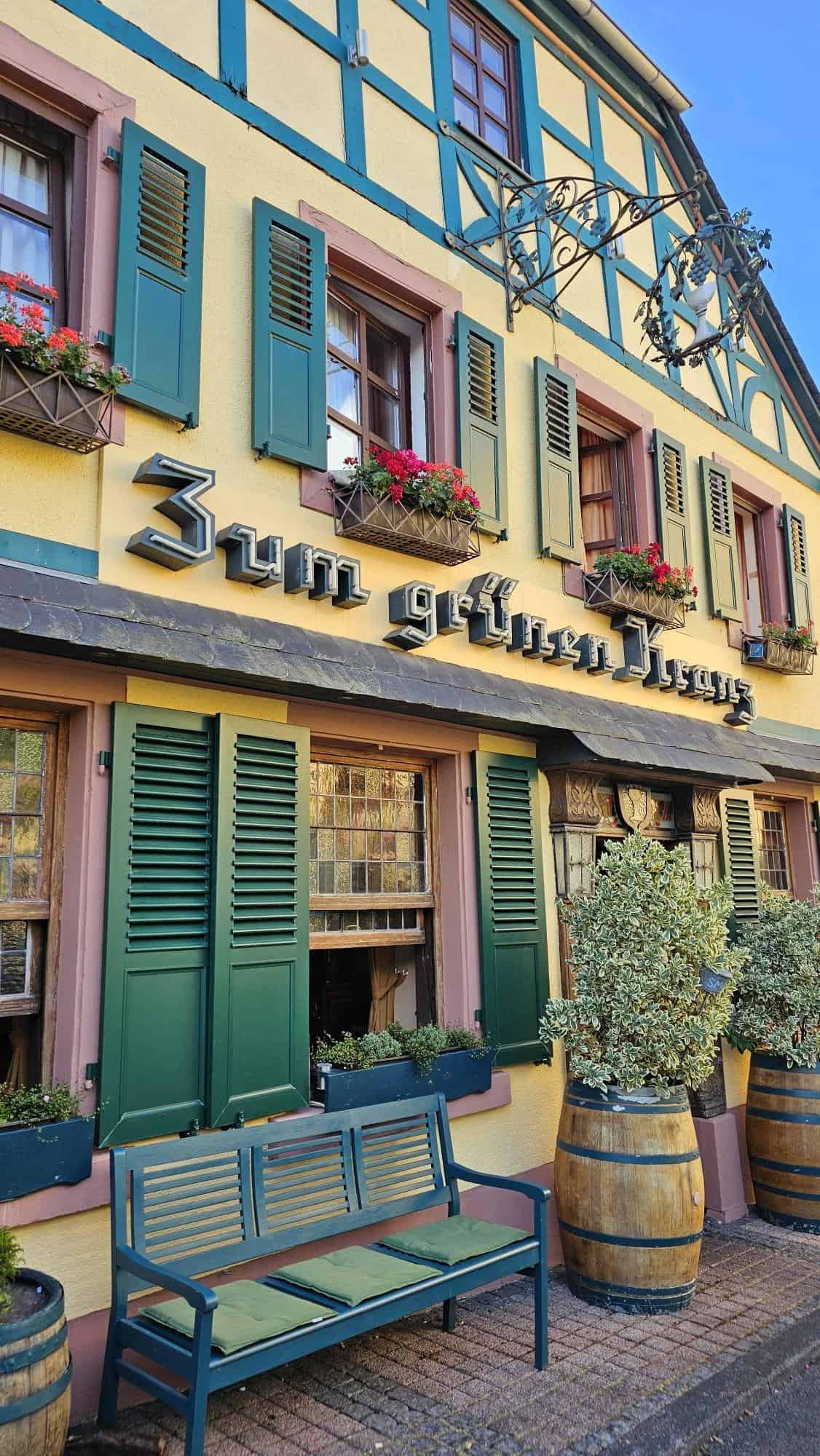
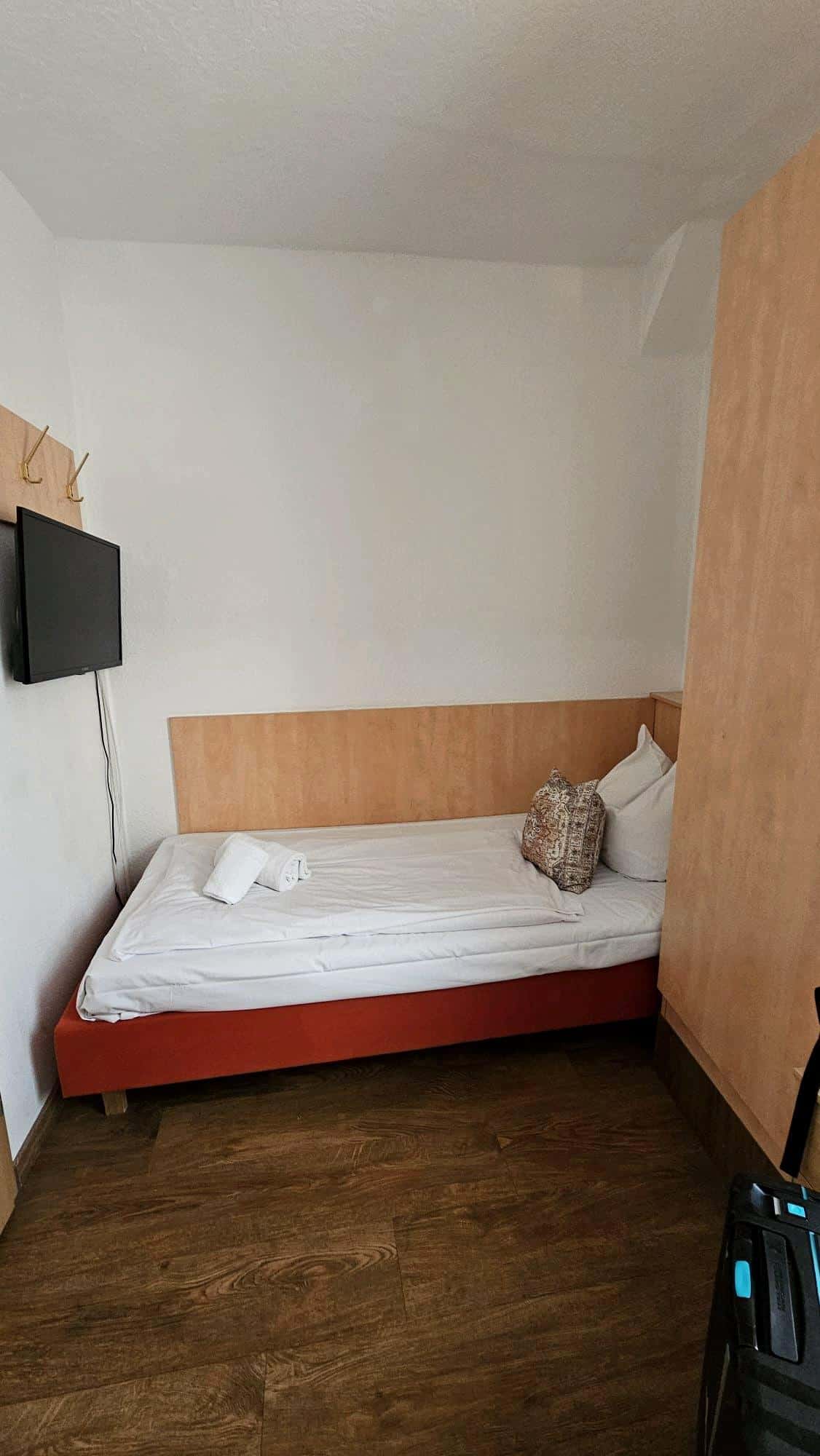
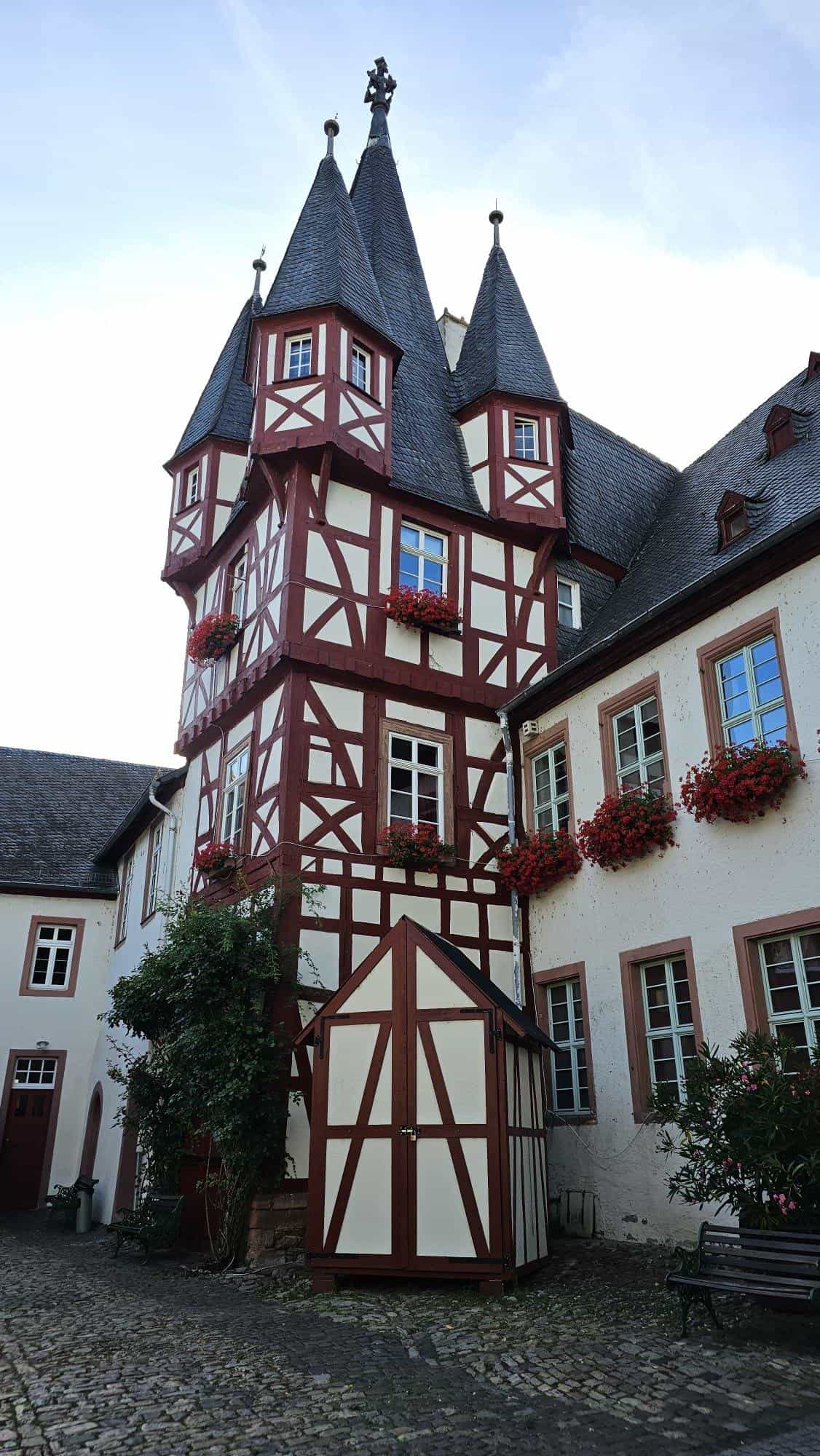
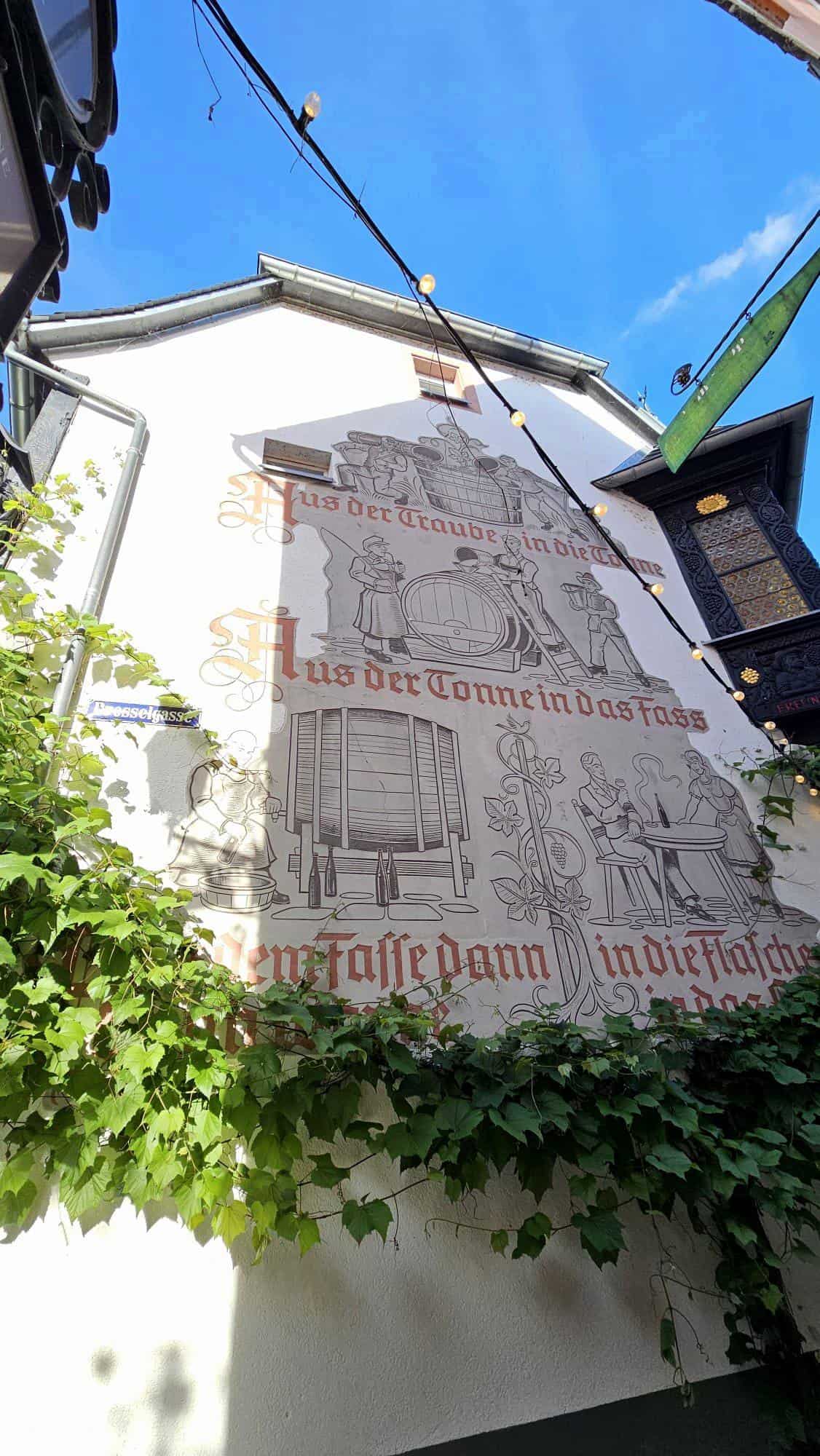
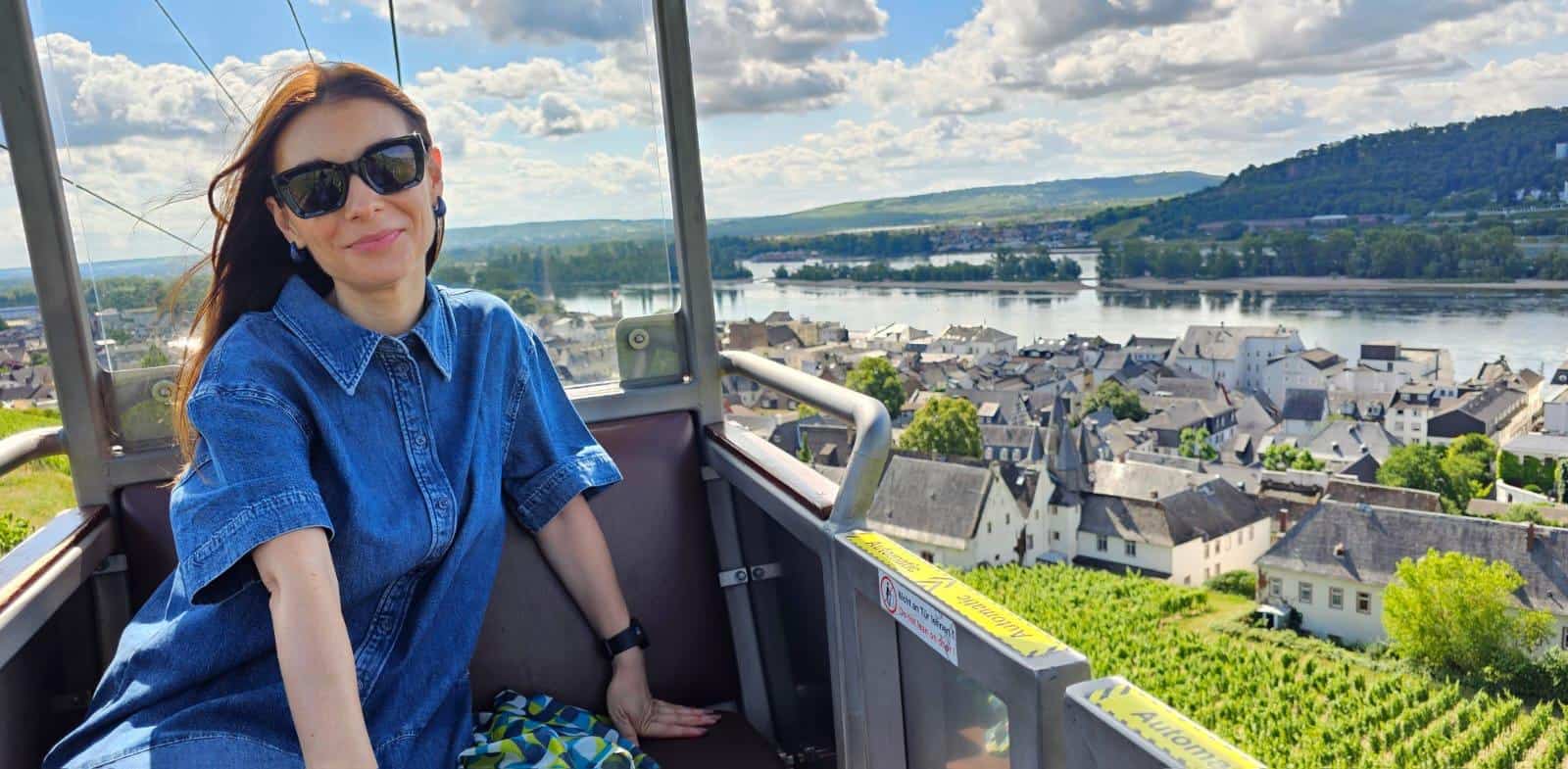
I’ll zoom in on the little town itself, Rüdesheim, which is absolutely worth it from every angle. It’s tiny but super charming, with postcard-perfect scenery and vines literally spilling into the streets. It’s fully geared up for visitors, packed with restaurants, bars, and wine-focused activities. It gave me one of the coolest wine experiences yet: a cable-car ride right through the vineyards  .
.
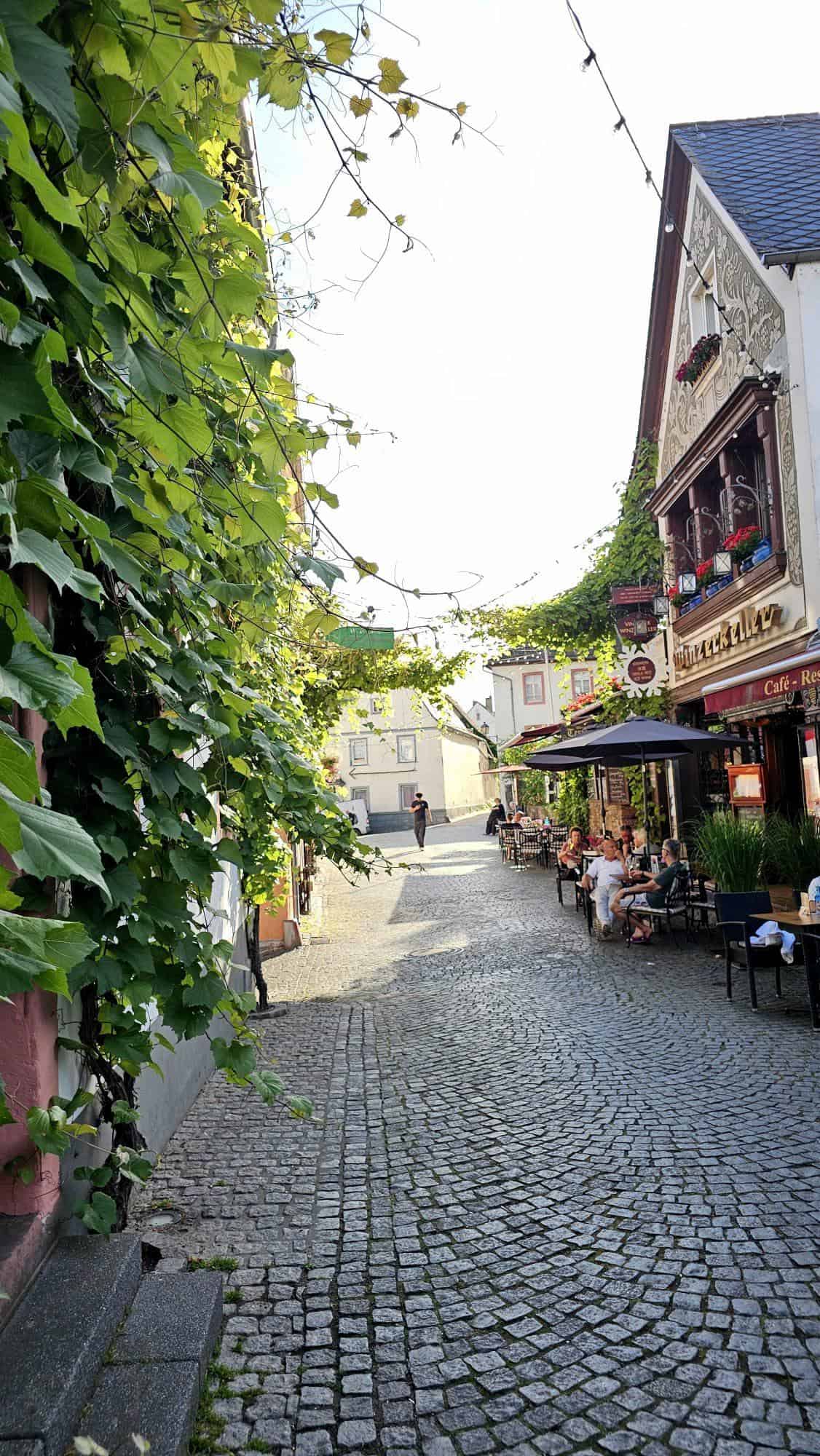
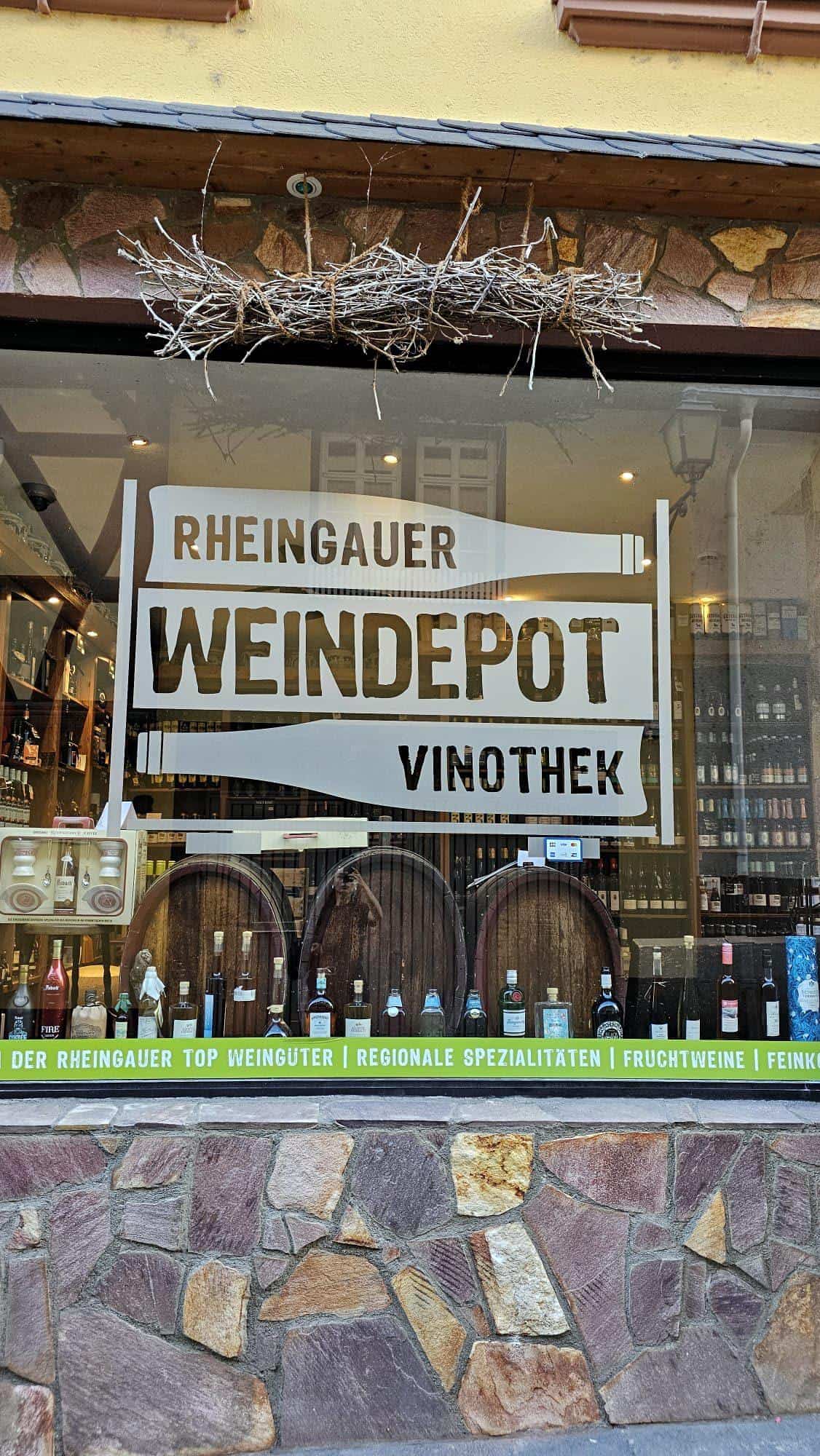
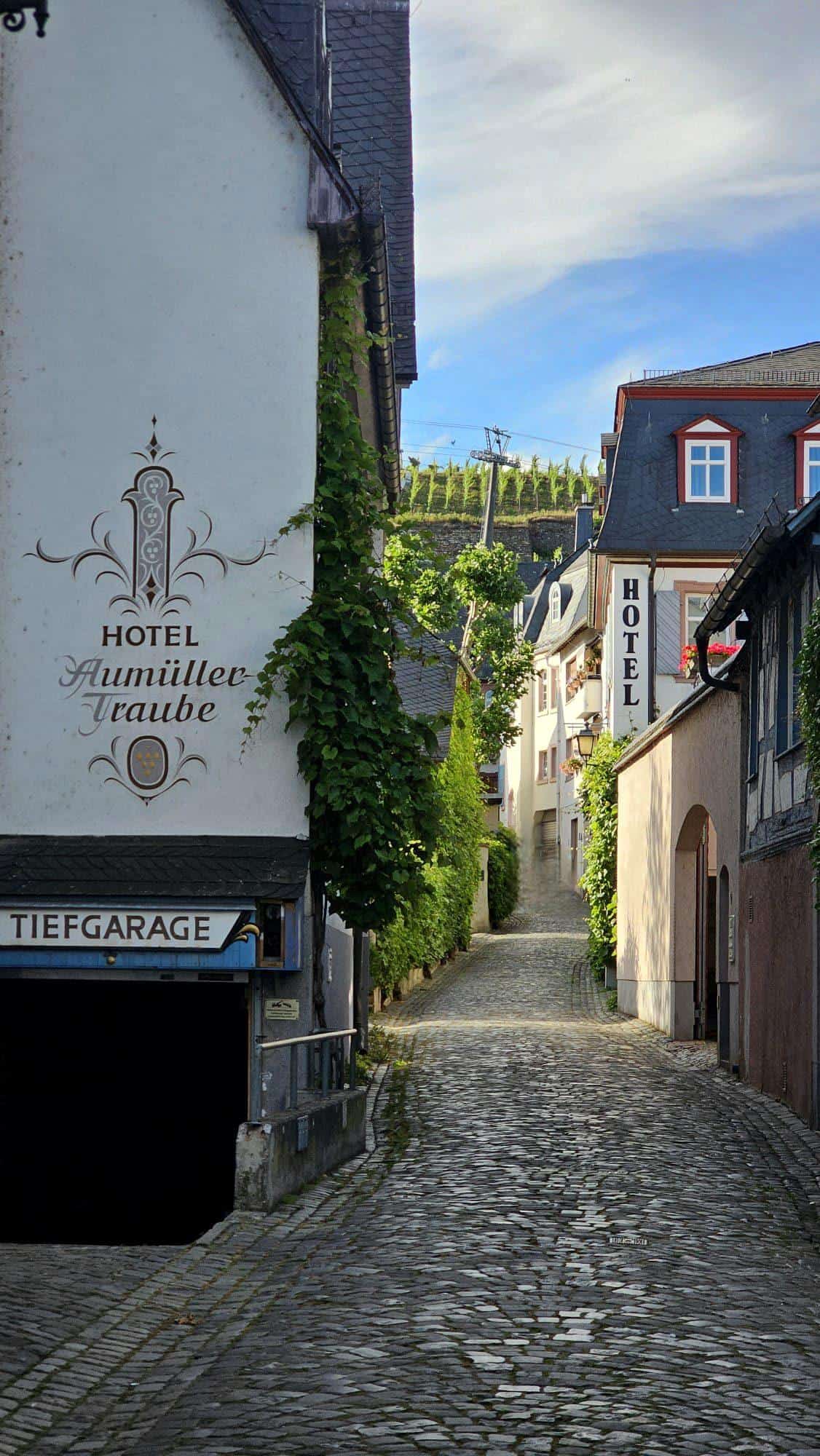
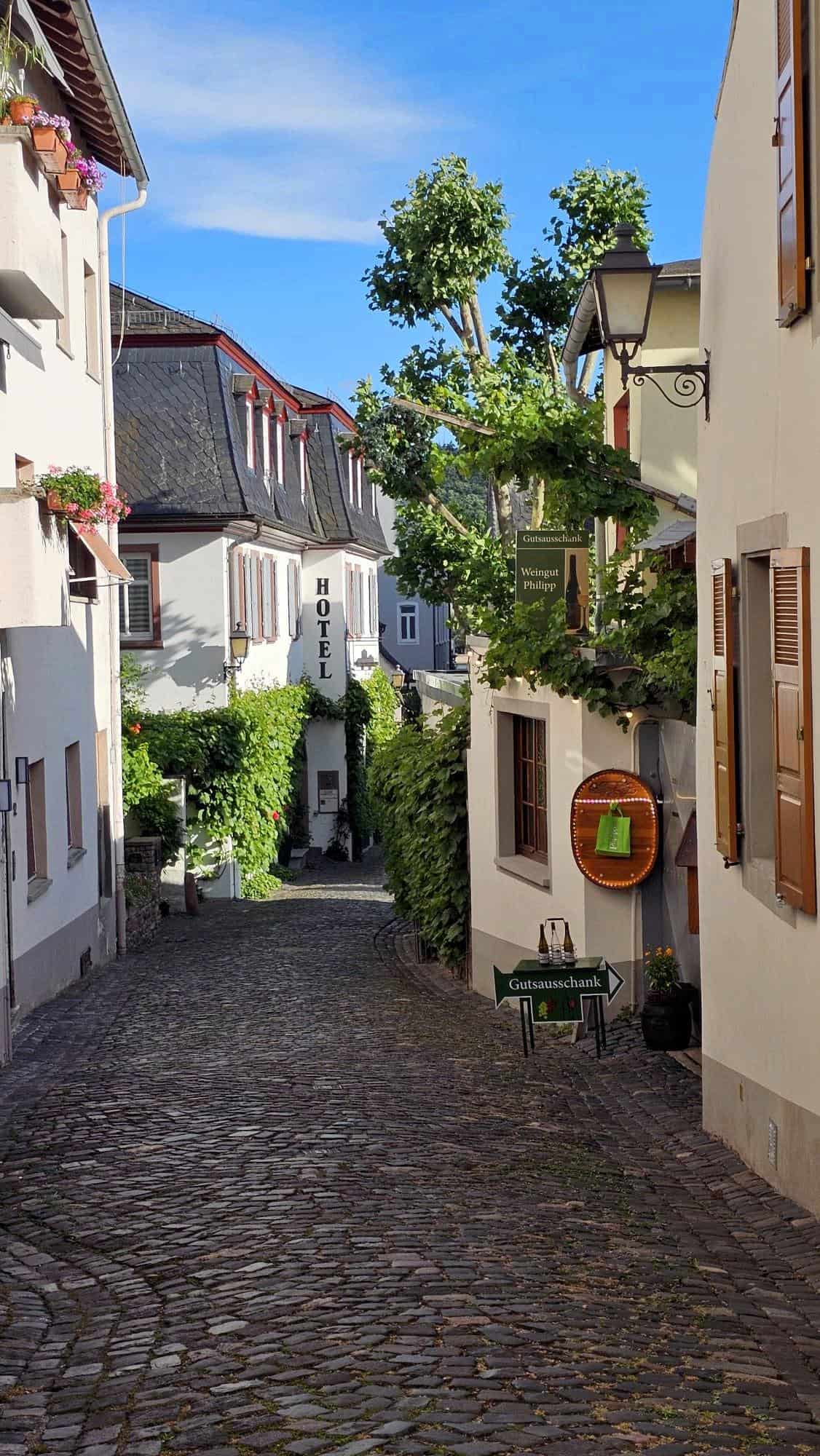
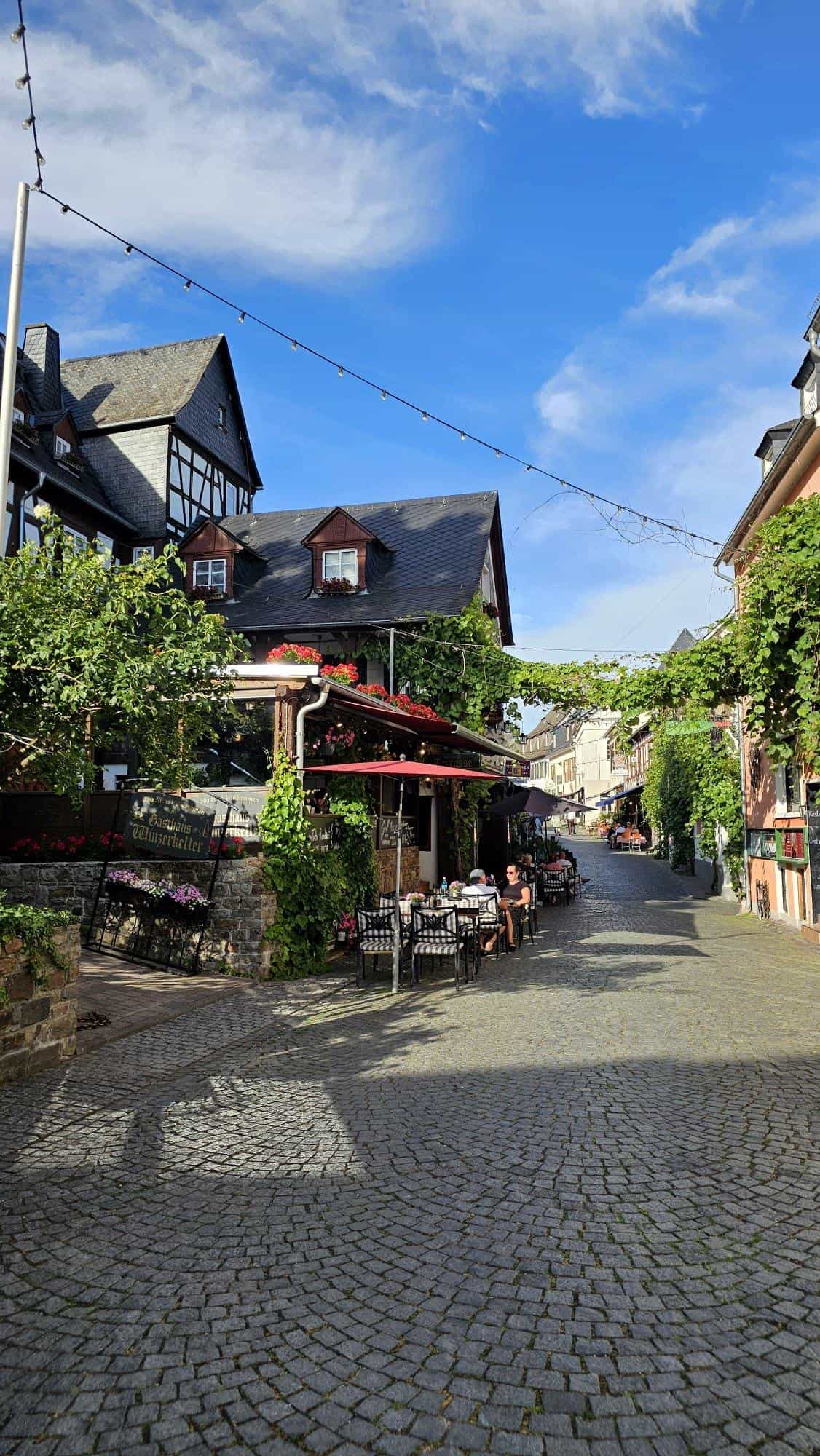
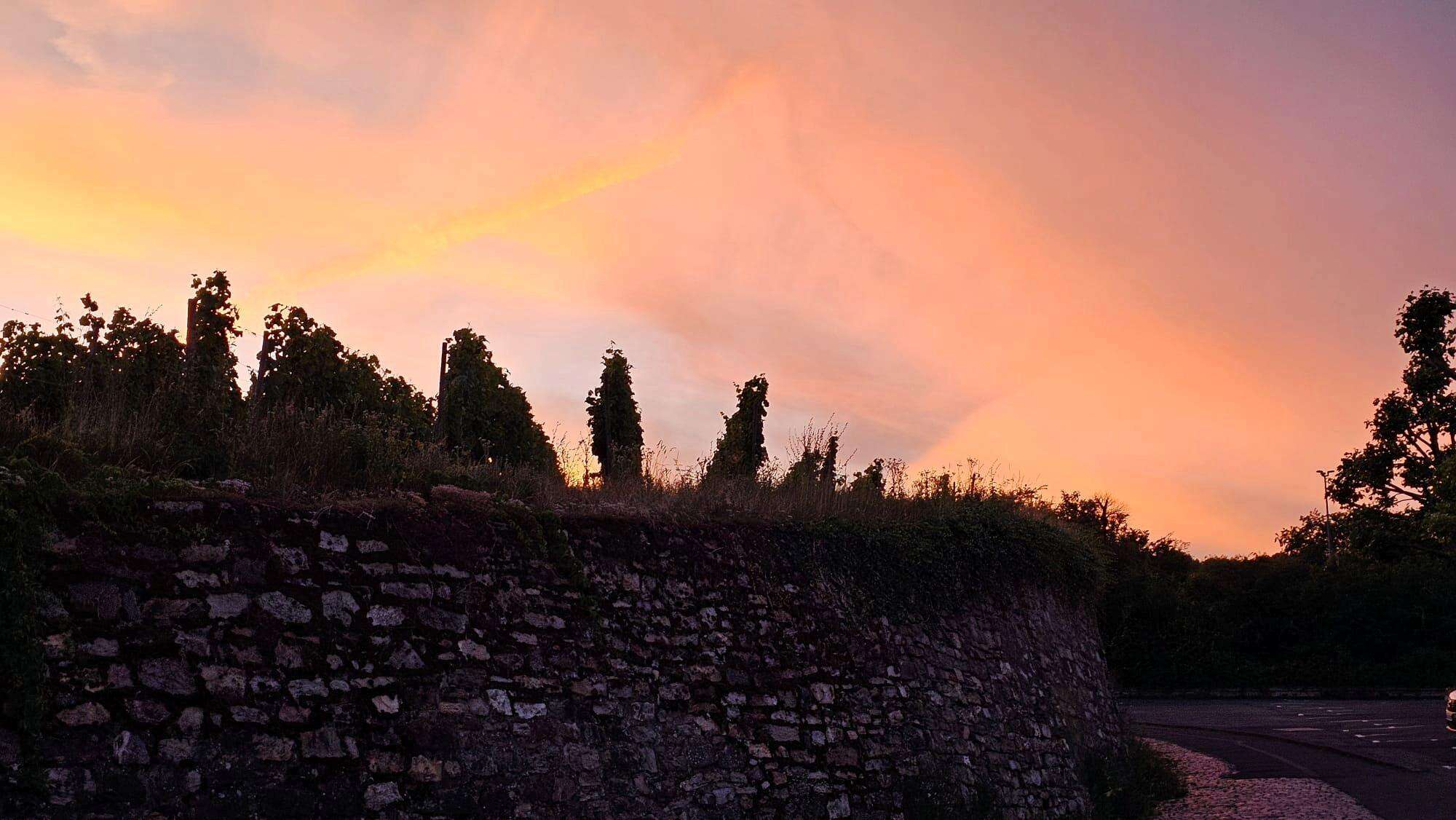
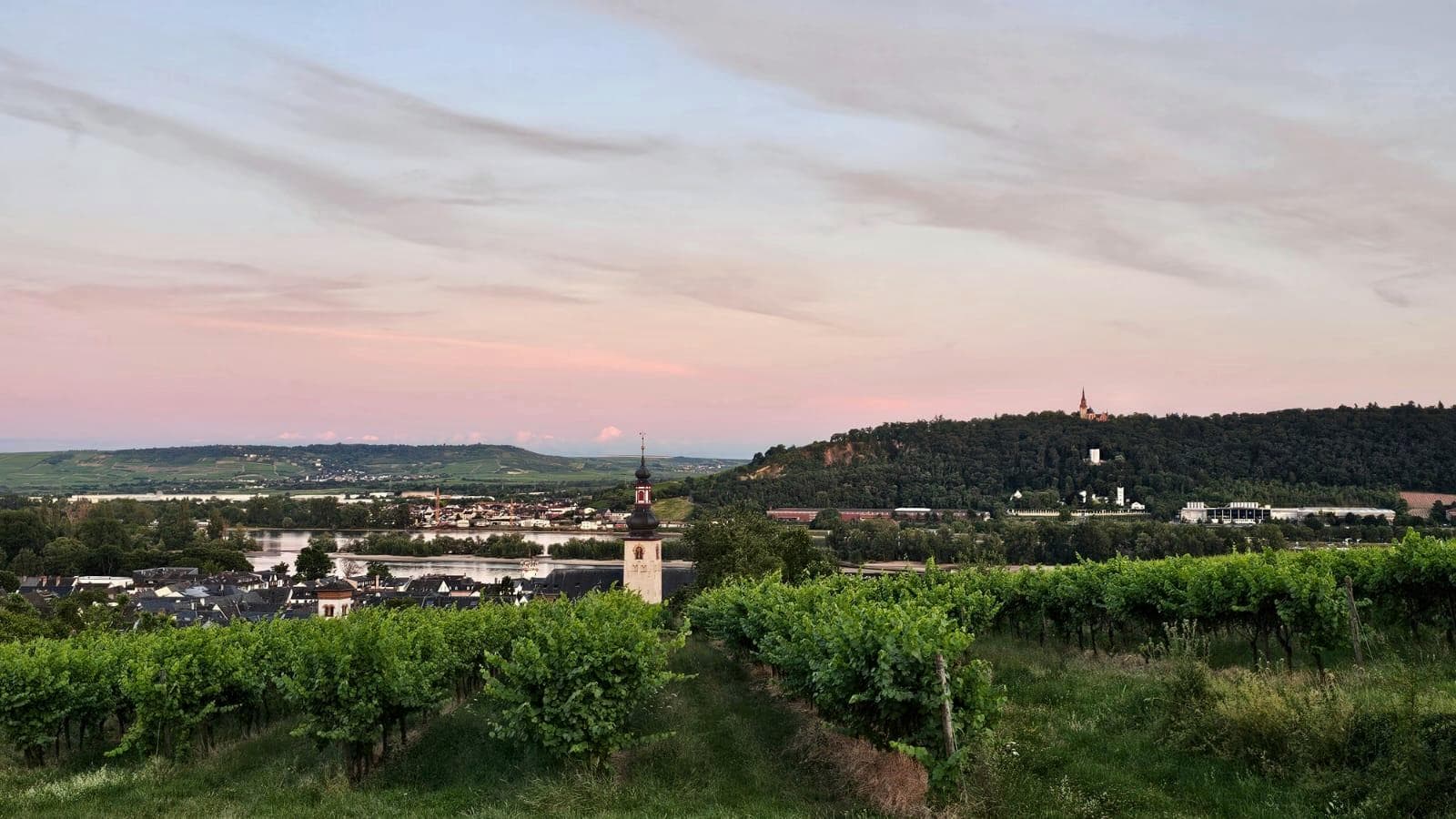
That evening, I was determined to hike up one of the hills in town, hoping to catch a sunset through the vines.
I made it just in time (note: days are pretty long in Germany in June, and I was there a week after the summer solstice) to soak in a soft, glowing light show and snap some of the most stunning, watercolor-like scenes. That is, until I spotted two little wild boars casually munching at the edge of a vineyard. Suddenly it hit me: wait, aren’t wild boars kind of dangerous? 🤦♀️ So I hightailed it back to the “dorm” like a kid caught sneaking out.
Final notes:
- Tastings are offered in English too, but German is the main language.
Winery staff reply quickly to emails and calls, but you still need to book ahead (watch out for weekends and public holidays). - Costs are reasonable (0–30€, depending on the event and winery).
- Transport to and between wineries isn’t provided, so make sure you either stay nearby, have a designated driver, or make good use of the spittoon (Germany’s blood-alcohol limit is the same as France’s: 0.5 g/L).
- You’ll find plenty of wine hotels in the Rheingau area worth checking out, plus loads of other sights and activities beyond just wine.

Other interesting notes:
- You’ll still need a car to reach the vineyards, so plan carefully: how, when, where, who’s driving, etc. (It’s 10 km between Georg Breuer and Johannisberg, so unless you’re up for a serious hike, better take the car)
- There are tons of wine-themed events, especially in summer and fall. Check ahead, because many wineries open their doors and you get to taste some gems
- The area is super touristy, prices skyrocket if you leave bookings to the last minute
- Book tastings in advance by email or phone
