
Do You Know How Much Sugar’s Hiding in Your Glass  ?
?
 ?
?The way sparkling wines get classified hinges on that sneaky sugar dosage, and yeah, it flips the script on what “dry” really means. Here’s the breakdown, straight from bone-dry to full-on sweet tooth territory:
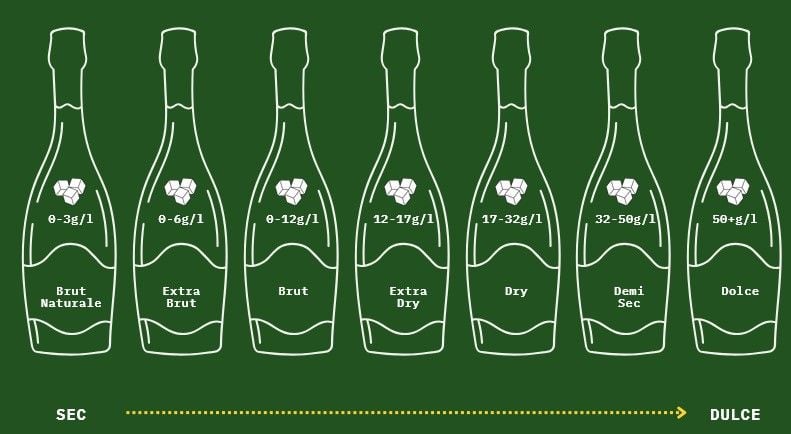
Conținut zahăr
Brut natural, extra brut, brut, extra dry, dry, demi sec, dulce.
Brut Nature – 0-3 g/L (residual sugar) – 》91-93 kcal / 100ml (basically a teaspoon—phew, guilt-free!)
Extra Brut – 0-6 g/L (residual sugar) – 》91-95 kcal / 100ml (one and a half teaspoons—still playing nice)
Brut – 0-12 g/L (residual sugar) – 》91-98 kcal / 100ml (pushing three teaspoons—your everyday bubbly buddy)
Extra Dry – 12-17 g/L (residual sugar) – 》98-101 kcal / 100ml (up to four-ish teaspoons—sneaky sweet under that “dry” label!)
Dry – 17-32 g/L (residual sugar) – 》101-110 kcal / 100ml (hello, eight teaspoons—pairing with spice? Yes please)Demi-Sec – 32-50 g/L (residual sugar) – 》125+ kcal / 100ml (why bother with dessert at this point?  )
)
Doux/Sweet – 50+ g/L (residual sugar) – 》Often Moscato-based (skip a meal tomorrow or hit the gym hard  )
)
Quick Note: Don’t mix up “dry” in sparklers with “dry” still wines—these are totally different sweetness leagues!