
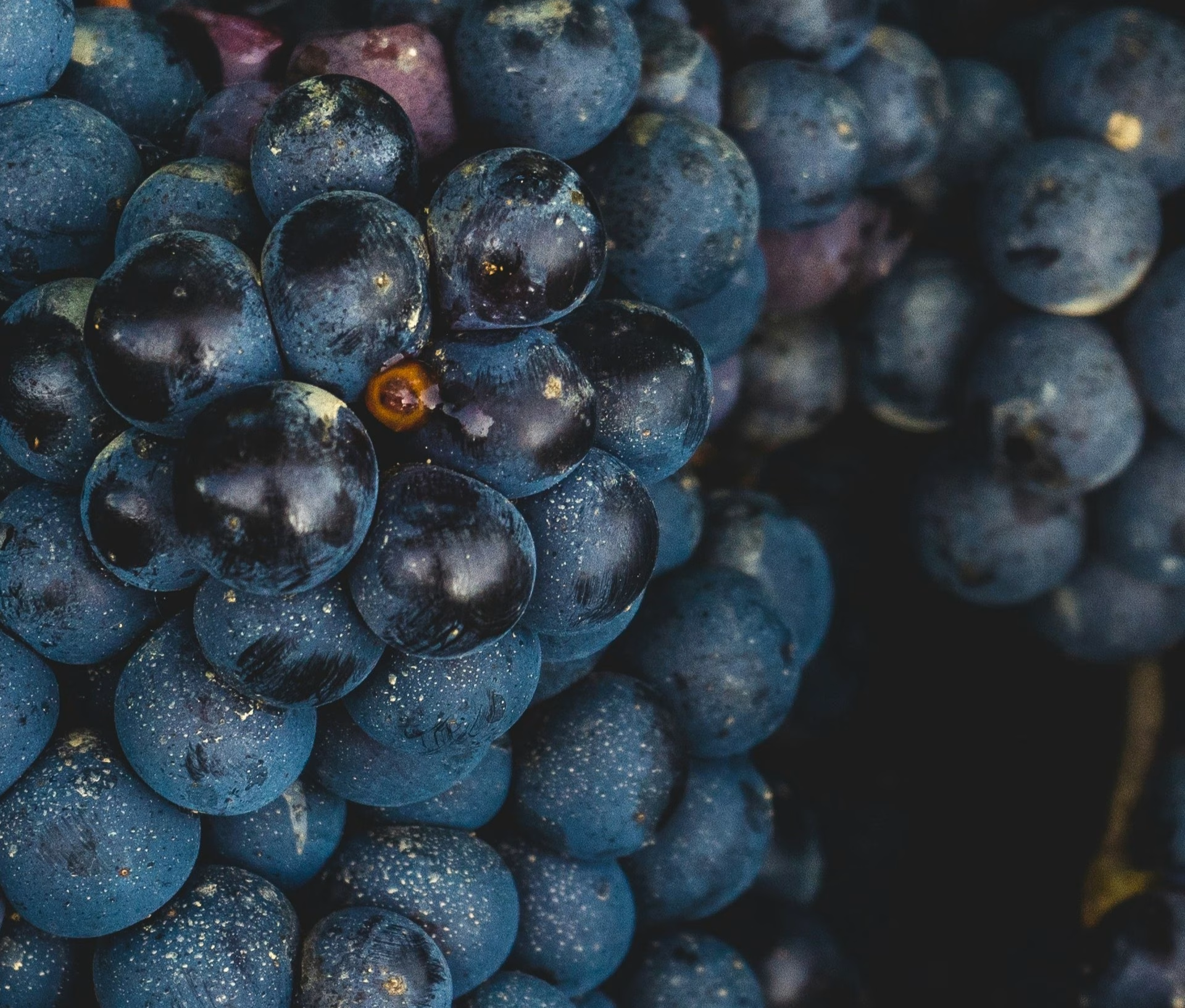
MERLOT
(the velvet early “bird” :) fruity)
Origin, Name & Family:
- Origin: Bordeaux FR (specifically Libourne → “right bank”). 2nd most planted red.
- Name: Comes from “merle” (fr) which means “little blackbird” (en). Legend says these birds were seen often in the vineyards picking these grapes (+ dark color).
- Family: Its famous father is Cabernet Franc mixing up with a rare variety called Magdelaine Noire des Charentes.

Soil:
CLAY QUEEN! Loves heavy, cool clay soils because it loves water & ripes early (acts like a sponge). It stays cooler than gravel which absorbs & retains heat.
Harvest:
BUT… IT HAS A 48H TIME WINDOW!

Vinification:
- DE-STEMMING: (Like brother CS).
- LIGHT CRUSHING: Keeps aromas.
- COLD SOAK: (+ color) + FERMENTATION @ 25°-28°C.
- VESSEL:
- Steel → fruity & floral notes
- Oak → notes of cedar, vanilla, cloves
- Concrete → fruity & floral notes
- MALOLACTIC CONVERSION: Almost every time → creaminess.
- BLENDING: Merlot is used as a “softener” (the tamer of tannins) when mixed with Cabernet Franc or Sauvignon.
Profile:
COOL climate (Bordeaux, US Washington) → red fruits (raspberry, cherry, plum) + violets + tea.
WARM climate (Australia, Chile, US California) → red turns black (blackberry, black cherry, jam).
+ Influences from aging: Spices, mocha, cocoa, cedar, truffle, meaty notes, forest floor, tobacco.
Regions:
CHILE: Central Valley
SA: Stellenbosch | NZ: Hawke’s Bay
CABERNET SAUVIGNON
(behold! the king of grapes)
Origin:
Bordeaux FR (~1600). Most planted red grape in the world!
Name & Family:
Child of Sauvignon Blanc + Cabernet Franc (after a cross pollination  )
)
Derived from “Sauvage” / Savage + Black / “Cabernus” ➝ THE WILD BLACK GRAPE
Soil (Terroir):
- GRAVEL = Gold Standard: Especially in Bordeaux (area valued after soil type ➝ hello “Graves”
 ). It allows “dry feet” = happy CS feet. Stones retain heat & radiate it back to the vine at night (thermal blanket).
 - VOLCANIC SOIL: Just like a cocoa powder (i.e., Napa Valley).
- LIMESTONE / CLAY: Called “Terra Rossa” @ Coonawarra Australia, giving extra acidity + minerality (eucalyptus notes).
Harvest:
Late to the party type: Usually the last to be harvested! 
S. Hemisphere: Mid-Mar to April
*If not ripe, CS tastes like green pepper

Winemaking:
- DE-STEMMING: Almost mandatory (too much tannin = bitter).
- CRUSHING: Gentle to keep away seeds.
- COLD SOAK: (10°C) to extract tannin + aromas before fermentation.
- FERMENTATION: At high t° (26°-30°C) ➝ “cap management” techniques to keep juice in contact with skins.
- THE PRESSING: In several batches.
- MALOLACTIC CONVERSION: Almost a “must” to soften rough tannins + adds texture.
- VESSEL: Most of times in OAK (FR ➝ Spice + silky tannins | US ➝ Coconut, sweeter profile). Sometimes in STEEL for fruity styles.
Profile & Aromas:
Primary
Black fruit core (cassis, blackberry, black cherry). Green notes: green pepper, mint, dried herbs, olive.
Secondary
Cedar, espresso, leather, vanilla, coconut.
Tertiary
Truffle, forest floor, cigar box / tobacco, dried plum / fig, leather.
Regions:
PINOT NOIR
(the trickster)
“Single variety most of cases / Like a ‘ballerina’ color”
Origin:
Burgundy (homebase) FR
Name:
fr. “pine” / pin (refers to the grapes clusters just like a pine cone) + “noir” (black)
Family:
One of the oldest (2000 years+) and most noble grape varieties. Most likely “domesticated” by the romans, influenced by the monks.
Soil:
Harvest:
Timing is key! 24-48 hrs window.
- COOL climates: September / October
- WARM climates: late August
Vinification (Open-Top Fermentation):
- Cold soak / Maceration: to extract color from the pale PN
- Whole cluster vs. Destemmed: Whole cluster gives “green tannins” to increase ageing, notes of black tea, white pepper. Destemmed is fruit forward, soft & approachable
- Pigeage “Punch down”: stirring & punching down the cap, or else Pinot will remain clear and gain no color
- Remontage: pumping juice from bottom to the top (aggressive)
- Malolactic conversion: softens tannins, gives body
- Oak: not too much as it overpowers, usually french oak for subtle & sensitive flavors
Profile, Ageing & Temp:
13-16°C (Although a red wine, it needs cooler t° otherwise floral aromas evaporate). The wine transforms from primary (cherry, rose) to tertiary (truffle, leather, game, “sous-bois”, mushroom). Ageing: most of them 3-5 years but can go up to +15 years.
Color is soft and not so inky due to the pale & thin skins of the grapes.
YOUNG (Cherry Red, Ruby)
High acidity. Cherry, raspberry, rose petals, strawberry.
MIDDLE AGED (Garnet, Brick Red)
Dried cranberries, tea, forest floor, earthy, cinnamon / nutmeg / cloves, thyme.
MATURE (Tawny, Orange-Brown)
Leather, game, smoke, forest floor “sous bois”, truffle, tobacco.
Regions:
NZ: Martinborough + Otago, Marlborough.
SA: Walker Bay (vibrant + crisp).
AUS: Yarra + Mornington.
CABERNET FRANC
(the “father” of reds)
Origin, Name & Family:
- Origin: Basque Country (N. Spain / S. France) then settled in its “spiritual” home of Loire Valley.
- Name: Cabernet Franc — the true one, authentic. Also known as “The Father of Wines”.
- Family: Just like in CS, it may mean black or head… depends.
The Legacy: It gave “birth” to famous kids like Cabernet Sauvignon, Merlot & Carmenere.AND… what it passed down through generations → green notes of bell pepper & herbs.
Soil:
@ Loire → violet, graphite (great aging).
@ Loire + Bordeaux → “lunchtime” wine. Approachable & friendly with raspberry & red currant notes (do not age).
@ Bordeaux – St. Emilion → plush & rich, structured tannins, plum + tobacco.
Harvest:
Usually Manual: 2 weeks earlier than “son” CS, but it’s prone to spring frosts & rain → berries split open & rot.
Vinification:
- DE-STEMMING: As usual for most reds (exception Pinot Noir & Gamay sometimes).
- FERMENTATION: Usually kept cool 25°C – 28°C to keep floral aromas.
- MACERATION: To get color from skins.
- VESSEL:
- Steel @ Loire → fresh, floral, crisp & fruit forward.
- Eggs of Concrete → creamy texture.
- Oak Vats (“foudres”) → powerful styles.
- MALOLACTIC CONVERSION: Used to soften tannins & reduce acidity.
Profile:
Unlike CS, it leans toward RED notes of cranberry, red currant & wild raspberry.
BUT when warm it turns black (cherry & plum jam).
Adding the standard GREEN pepper notes, herbs (tomato leaf, thyme, bay leaf, oregano) and FLORAL notes of violet and iris, graphite, leather & tobacco, nutmeg & cedar, forest floor after the rain.
Regions:
US: California (Napa + Sonoma), NY, Ontario
HU: Villány | AG: Mendoza
