
TOKAJ
Szia Tokaj!
 10 min
Our tastes and preferences are wonderfully malleable, they shift and evolve depending on the moment and the context. And that’s exactly what happened to me with Hungarian wines, or more precisely, with Tokaj.
Just a few years ago I would passionately reject anything sweet (oh, the irony…), and now here I am, tirelessly hunting down vineyards with centuries of experience in crafting the “golden elixir” known as Vinum Regum, Rex Vinorum – the Wine of Kings, King of Wines.
It’s a continuous learning journey, and I’m thrilled that we finally made it to Hungary’s most famous wine region: Tokaj 
TOKAJ or TOKAJI? 

It’s the same dilemma as “Syrah” or “Shiraz” , both versions are correct, but there is a nuance. If you’ve looked at wine labels, Google Maps, or other references, you’ll sometimes see the extra “i” and sometimes not.

It’s not exactly a stone’s throw away, but it’s not terribly far either. Located in northeastern Hungary, it sits 195 km from Oradea, 362 km from Timișoara, 290 km from Sibiu, and 743 km from Bucharest.
( Lucky are those from Budapest, as well as from Banat and Bihor — you can reach it fairly quickly via motorway, making it the perfect destination for a city break or a weekend escape.)
Though small in size (just 3,650 inhabitants), the town feels airy and impresses with its compact medieval center – a UNESCO World Heritage Site since 2002 – beautifully restored buildings, boutique guesthouses, rustic csárda-style inns, cafés, and wine bars. Locals tell us there’s significant investment going into the town’s tourism potential, which is evident from the many construction sites and historic buildings being renovated. A very good sign, we say  .
.
The Tokaj region is one of Hungary’s six wine-growing areas (by far the most famous, though it accounts for only about 10% of total volume). It comprises 28 villages spread across 11,000 hectares, of which just 5,500 are planted with vines. For context, Romania’s Dealu Mare region is almost three times larger. Tokaj focuses firmly on quality over quantity and it delivers  . The region proudly carries thousands of years of savoir-faire. The vines were first planted by the Celts and Romans, and the tradition was later continued by the locals.
In 1737, Tokaj became the first officially delimited wine region in the world, by royal decree of Emperor Charles VI of Hungary. (There’s a friendly battle with Portugal’s Douro Valley, which also claims the title  )
)

TERROIR
What makes Tokaji wines so special and globally renowned as the “wine of kings, king of wines”?
The Microclimate 


Tokaj literally sits on a volcanic graveyard (no fewer than 400 extinct volcanoes) and on the bed of an ancient dried-up sea (the Pannonian Sea). In addition to this fascinating geology, the region is shaped by two rivers: the Tisza and the Bodrog. They create high humidity, especially in the mornings (frequent fog). Add the protective barrier of the Zemplén Mountains, which shield the area from cold Siberian winds, and finish with warm, dry afternoons and you have the perfect recipe for what made Tokaj famous: Aszú (noble rot, or Botrytis cinerea in Latin).
Imagine a fungus that only develops when these precise conditions align at the right time and place, affecting the grape berries. With microscopic needles, noble rot pierces the grape skins and draws out the water. Daytime heat then naturally dries the berries, evaporating the water and leaving behind super-concentrated raisins bursting with flavors of candied orange, honey, dried apricots, and nuts. This phenomenon occurs 100% naturally and isn’t guaranteed every vintage , a key factor in its high price. Legend says it was discovered by accident in 1631, when the grapes in Tokaj were left unpicked while villagers were busy defending themselves against the Ottoman armies. When they returned, the grapes looked ruined, but for purely economic reasons, they decided to make wine from the shrivelled berries anyway. And thus, a miracle was born — one that would later grace the tables of royal courts across Europe.
Another reason Aszú bottles command such prices is the painstaking harvesting and ageing process. In short: everything is done by hand. Grapes are picked in multiple passes, depending on their level of botrytizing, berry by berry  and collected in traditional wooden baskets called puttony (each holding 25 kg). This is also where the famous classification system for Aszú wines comes from — based on the number of puttonyos (baskets) per barrel, indicating sugar levels.
The berries are crushed into a paste, left to macerate for up to 48 hours, then pressed. Fermentation begins, but because of the enormous sugar content, it’s often slow and rarely pushes the alcohol above 12%. The wine then matures in Hungarian or French oak barrels stored in famous volcanic rock cellars for a minimum of 18 months. The absolute pinnacle is Tokaji Eszencia, the pure essence of botrytised berries, more like a thick syrup than a liquid. It ferments with great difficulty due to the extreme sugar levels (max 3% alcohol) and can age for over 100 years.
(Amateur tip: if a waiter offers you a glass of Eszencia with dessert, check the price first  )
)
While sweet wines put Tokaj on the map, in recent years the region has been placing increasing emphasis on dry wines made from six legally approved white varieties. Three, however, dominate the story: Furmint (64%), Hárslevelű (18%), and Sárgamuskotály (12%).

DRIVE, ACCOMMODATION & ADVENTURES
After a drive of about five and a half hours, we arrived at our accommodation, unpacked quickly, and headed straight out to our first destination: a highly recommended restaurant suggested by a friend from Budapest, located about 45 minutes from Tokaj. We debated several times whether the effort was worth it, but we appointed our usual “designated driver” and set off along the national road that winds through the classified wine villages of the region.
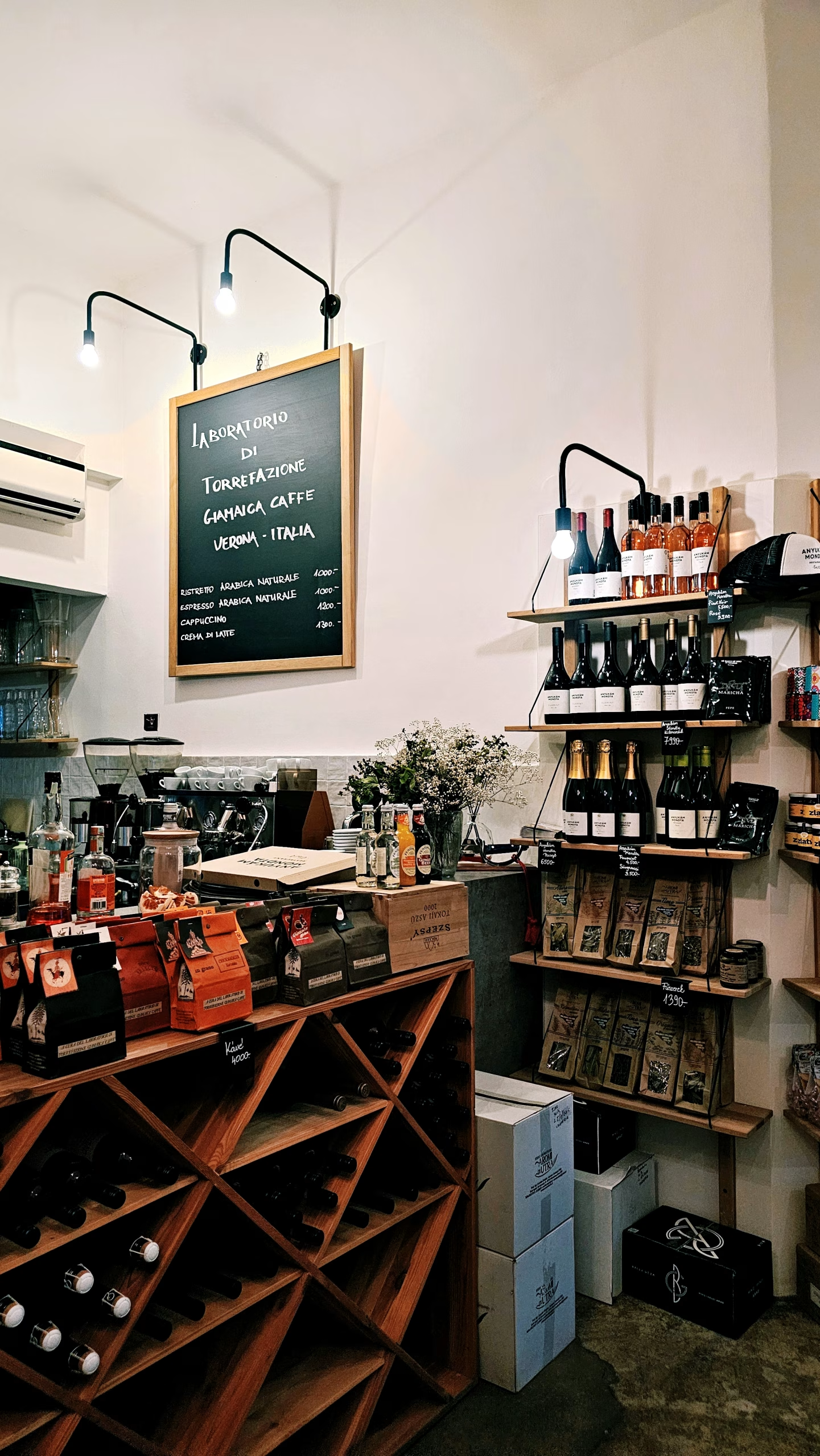
Almost convinced we had the wrong address, the place is very isolated, in a semi-abandoned village called Encs with nothing and no one around, we gathered our courage and discovered the gem: Anyukám Mondta.
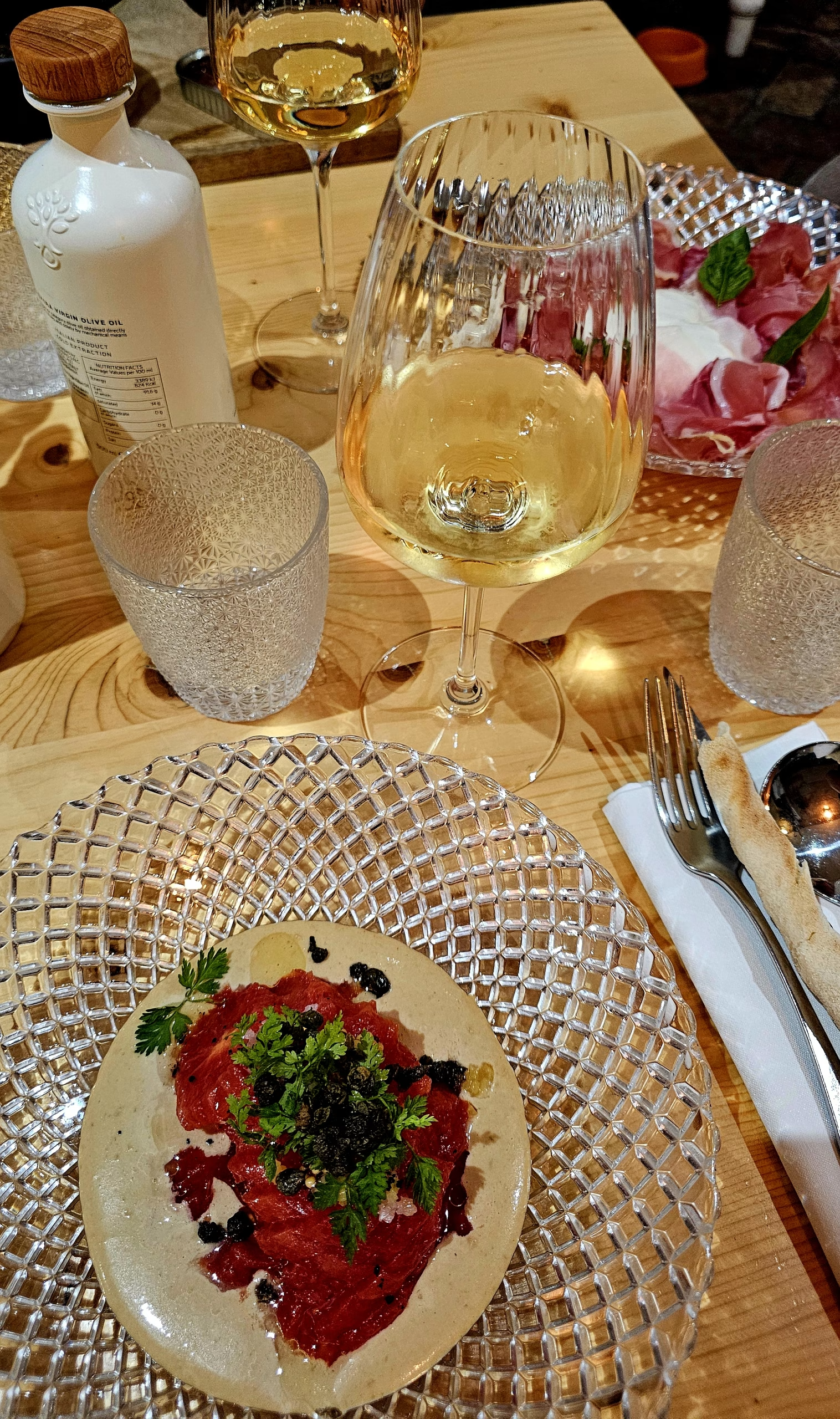
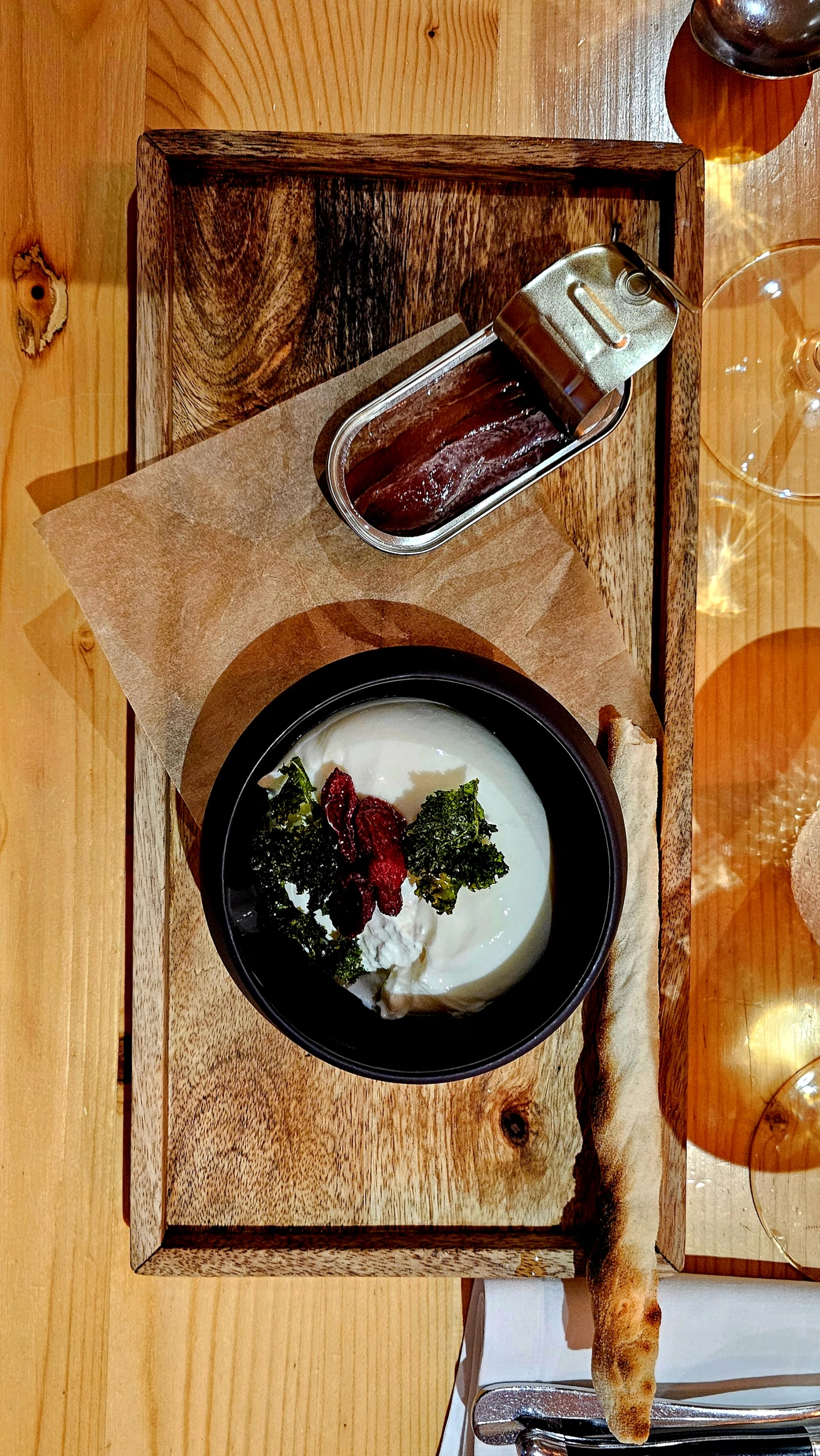
The moment you step inside, you’re transported into a completely different atmosphere. It’s a true hidden gem. How much can you be impressed by a loaf of bread?!?! I don’t think I’ve ever eaten bread this good, not even in Germany or France. It was simply indescribable  . We indulged in excellent Italian-inspired dishes, each one better than the last, perfectly paired with local wines. And I must mention: the prices were surprisingly reasonable
  . The wine that really stole the show for me was the Holdvolgi Intuition 4. It was so impressive that it convinced us to visit the winery for a tasting the very next day. It’s an experimental dry wine (of course) made from a relatively new grape variety called Kabar – a crossing between Hárslevelű and Bouvier (an Austrian variety). The name itself is fascinating, inspired by one of the nomadic tribes that once settled in the area. The taste is powerfully mineral and saline, yet velvety and almost oily in texture, while remaining incredibly elegant. Beautiful notes of quince, pear, and peach follow through.




The next morning we started the day with coffee at Manufaktura, a lovely café right in the center of town. It’s the only one in Tokaj that offers specialty coffee and fresh homemade pastries.
I usually take care of the planning, itineraries, and reservations, but I always leave room for surprises and spontaneity. This approach led us to visit the Tokaj Museum (which I highly recommend). We left with a fantastic map, a handmade clay magnet, and some unique artisanal souvenirs.
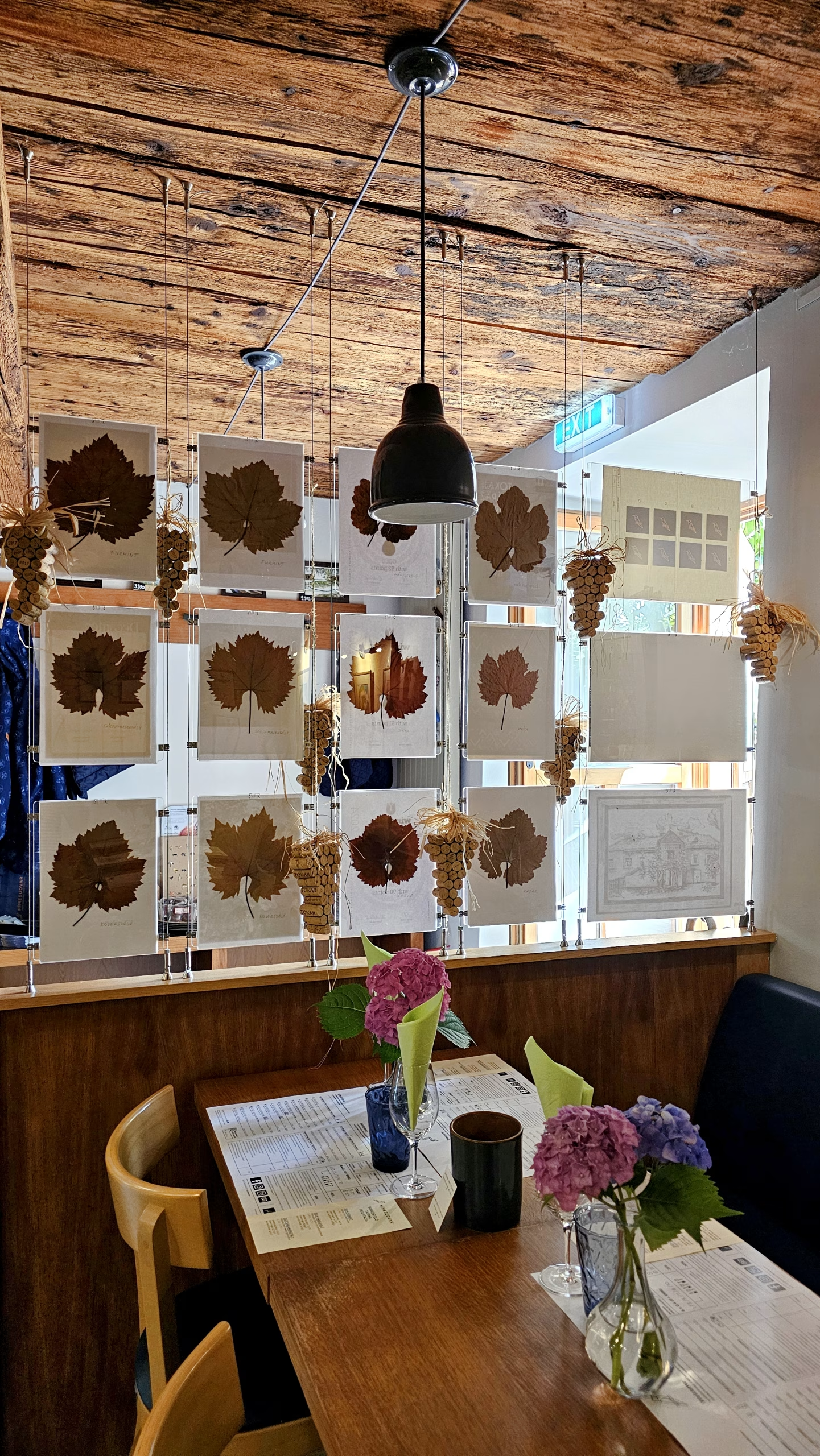
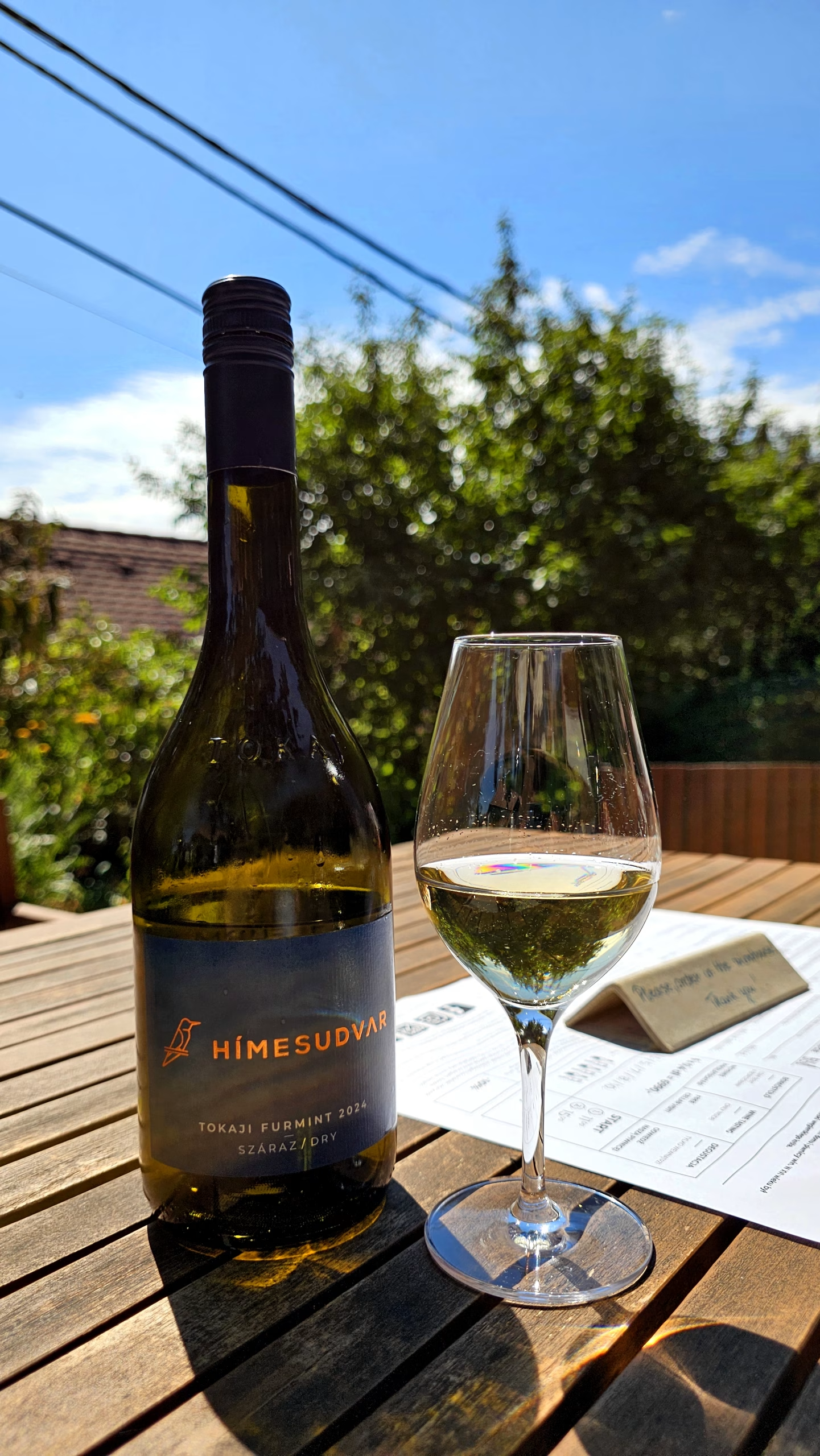
We began our wine journey at Himesudvar, a charming boutique winery just a few hundred meters from the café. It’s renowned for its beautiful location, excellent wines, and the overall tasting experience. When I say “boutique,” think tiny: just 3 hectares and a maximum of 10,000 bottles per year  . Yet from those small plots we tasted some of the best dry Tokaj wines and outstanding Aszú we had during the entire trip.
Ps. This visit was completely spontaneous, nothing was planned in advance. The owners (along with their cat Foltos) welcomed us warmly and opened a tasting for us on the spot.
Next, we headed to a winery I had discovered by chance a few years ago at Lake Balaton and had planned to visit for a week: Sauska. After doing some research, we found out the winery was only about 20 km from Tokaj, right outside the village of Mád. Google told us there was a bus (TokajBus) that could drop us in Mád, but the locals quickly informed us that the bus doesn’t actually exist. In the end, we ordered a minivan (80€ round trip) and arrived at what felt like a cinematic estate.
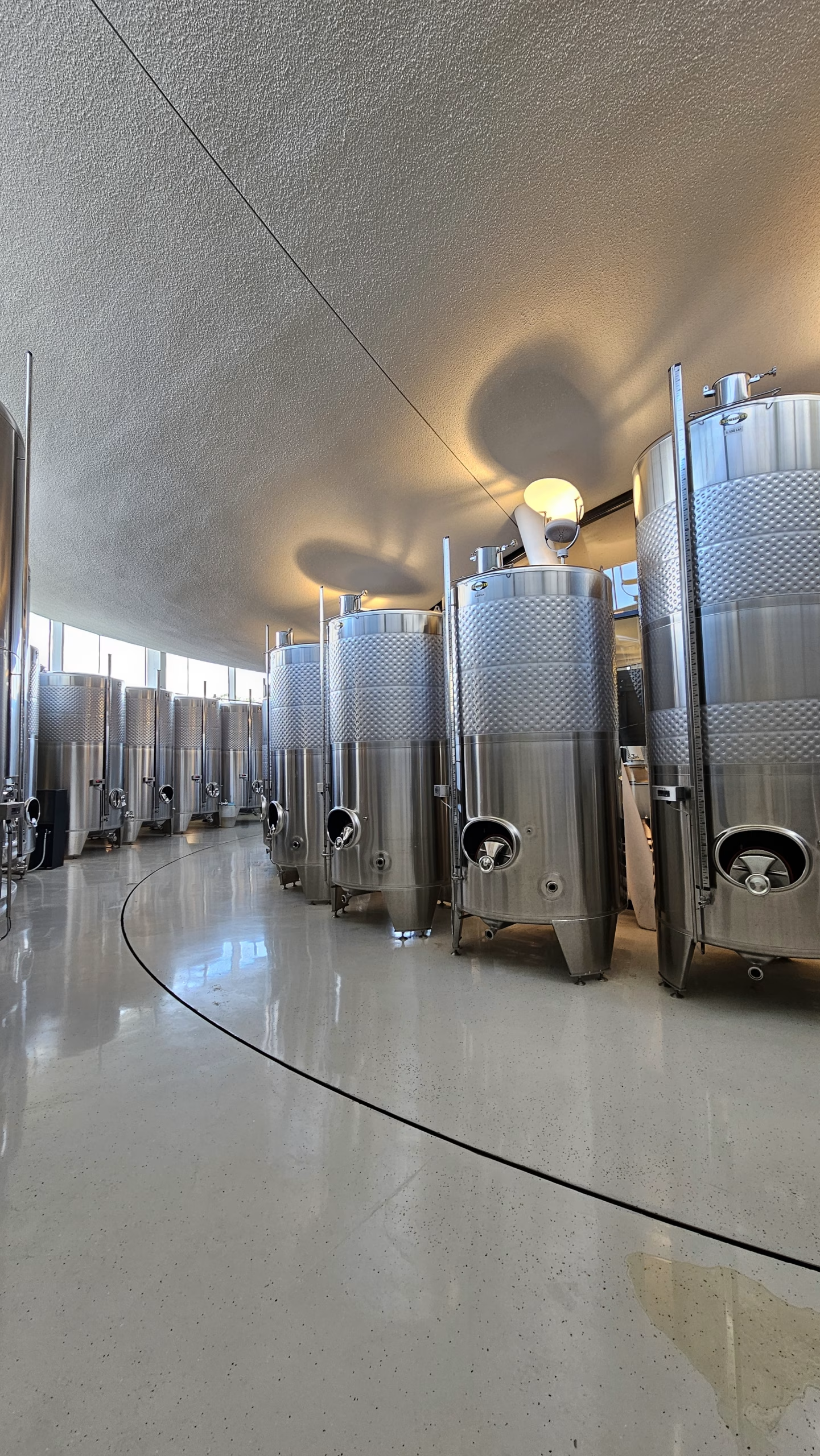
The architecture is boldly avant-garde yet perfectly integrated with nature. The two striking buildings with their “spaceship” vibe are spectacular from every angle. During the tour we learned that the design belongs to Adam Tihany, one of the world’s most famous restaurant designers, born in Târgu Mureș, now based in Israel and working in New York. Like almost all wineries in Tokaj, the budget doesn’t come only (or even mainly) from wine sales. Most estates belong to successful businessmen who are passionate about wine.Sauska is the perfect example: Krisztián Sauska, a Hungarian entrepreneur who emigrated to the USA, built a successful lighting business there, and later returned home to buy vineyards in Tokaj, Villány, and Budafok.
Both the extremely detailed (and spotlessly clean ) wine tasting and the fine-dining lunch at the estate’s concept restaurant Padi were unforgettable multi-sensory experiences , the perfect birthday gift 

Ps. You must visit the panoramic terrace 
We literally went off-road through the vineyards and arrived at our last planned stop of the day: Holdvölgi. I confess we didn’t dare buy the bottle that had impressed me the night before (the Kabar Intuition 4) after seeing its rather steep price, but we still managed a quick tasting.
Our next stop was Rakoczi Pince (pince means “cellar” in Hungarian)
Located in the center of Tokaj, right in front of the Catholic church and a very cheerful statue of Bacchus (the god of wine), Rakoczi Pince is impossible to miss. Open daily until late, it’s geared towards mass tourism, although the winery itself has an impressive history spanning over five centuries. It owns seven parcels at the foot of Tokaj Hill with prime south-facing slopes, which earned it Premier Cru status as early as 1772.
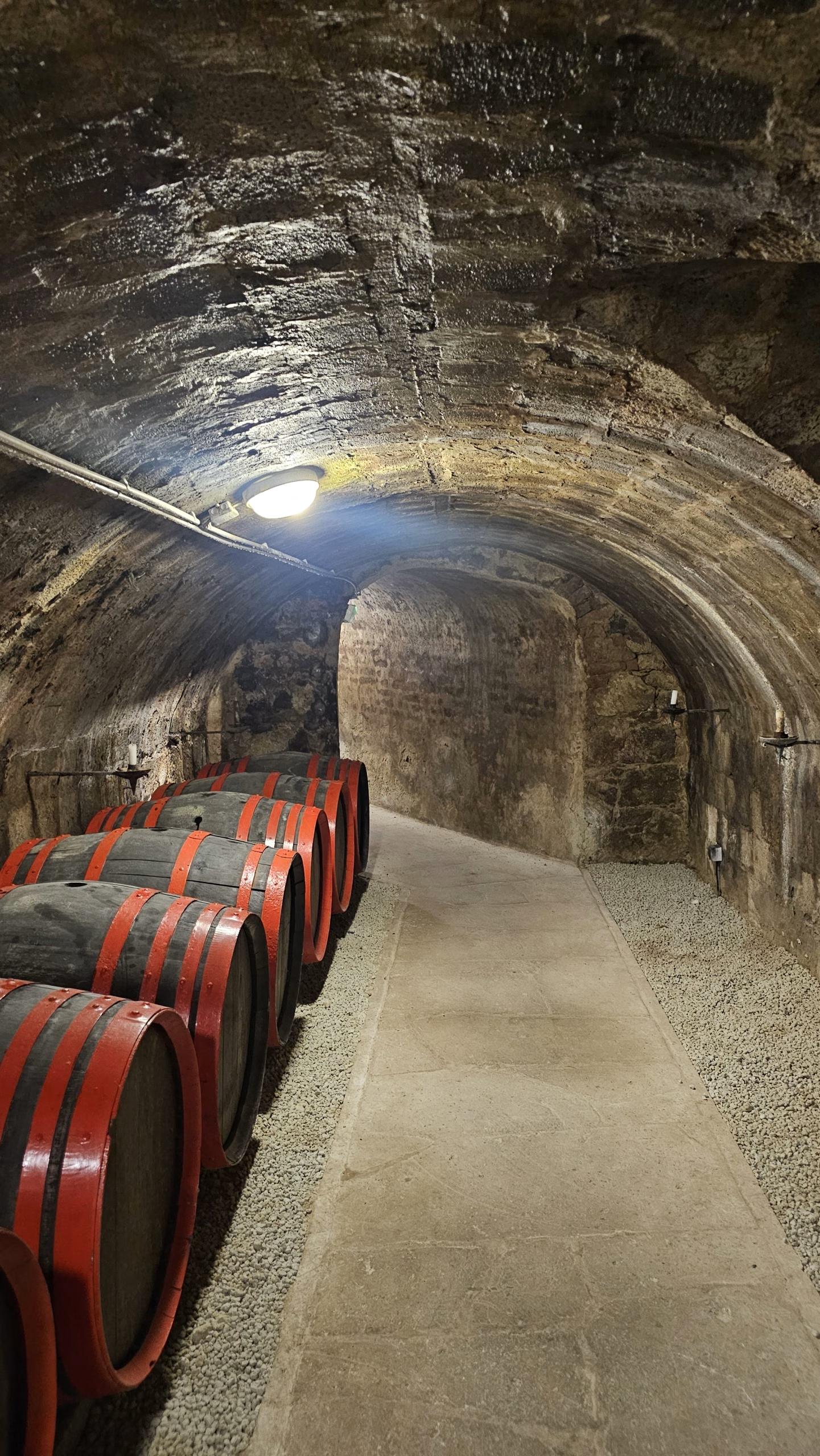
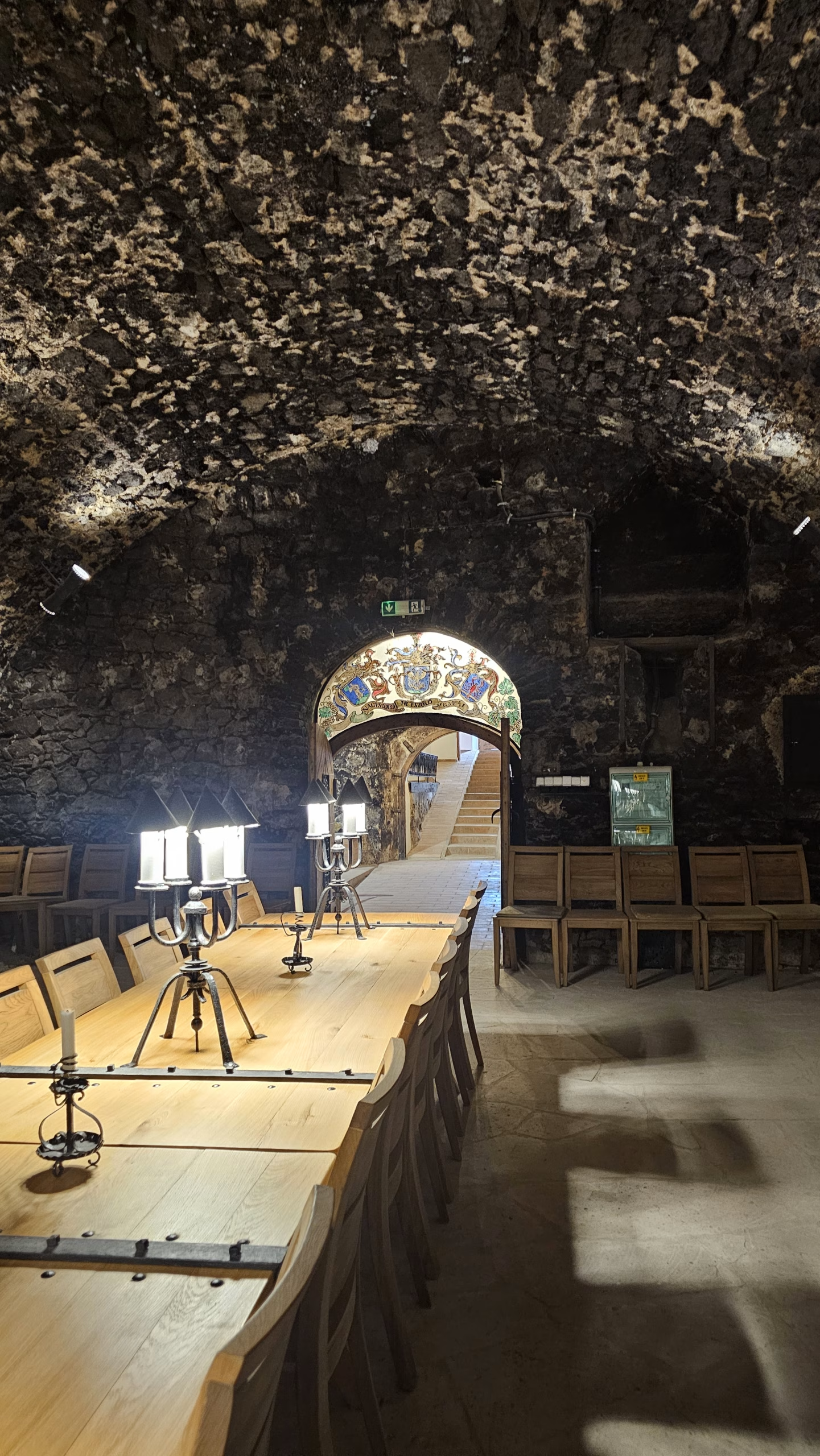
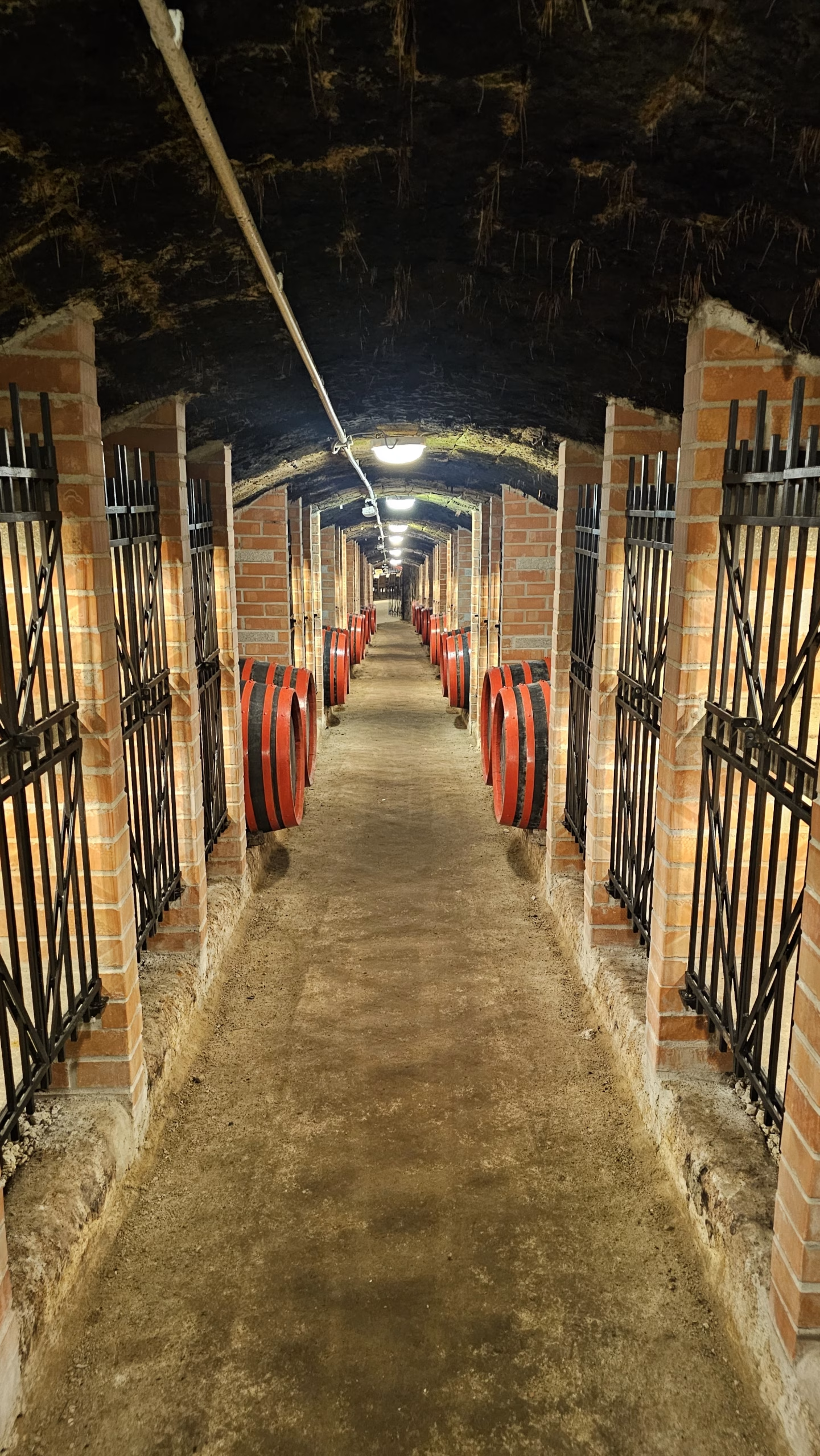
With royal pedigree from the Austro-Hungarian Empire, the winery also boasts the largest underground tunnel system where precious bottles of Tokaji Aszú are still aged. We tried a dry Tokaji – a 100% Furmint that was fresh, mineral, with lovely notes of green apple and yellow melon. We capped off this very long day at a recommendation from the sommelier at Sauska: Demeter Zoltán. I didn’t think we’d make it in time, but luckily we found the wine bar open on Saturday after 6 pm.
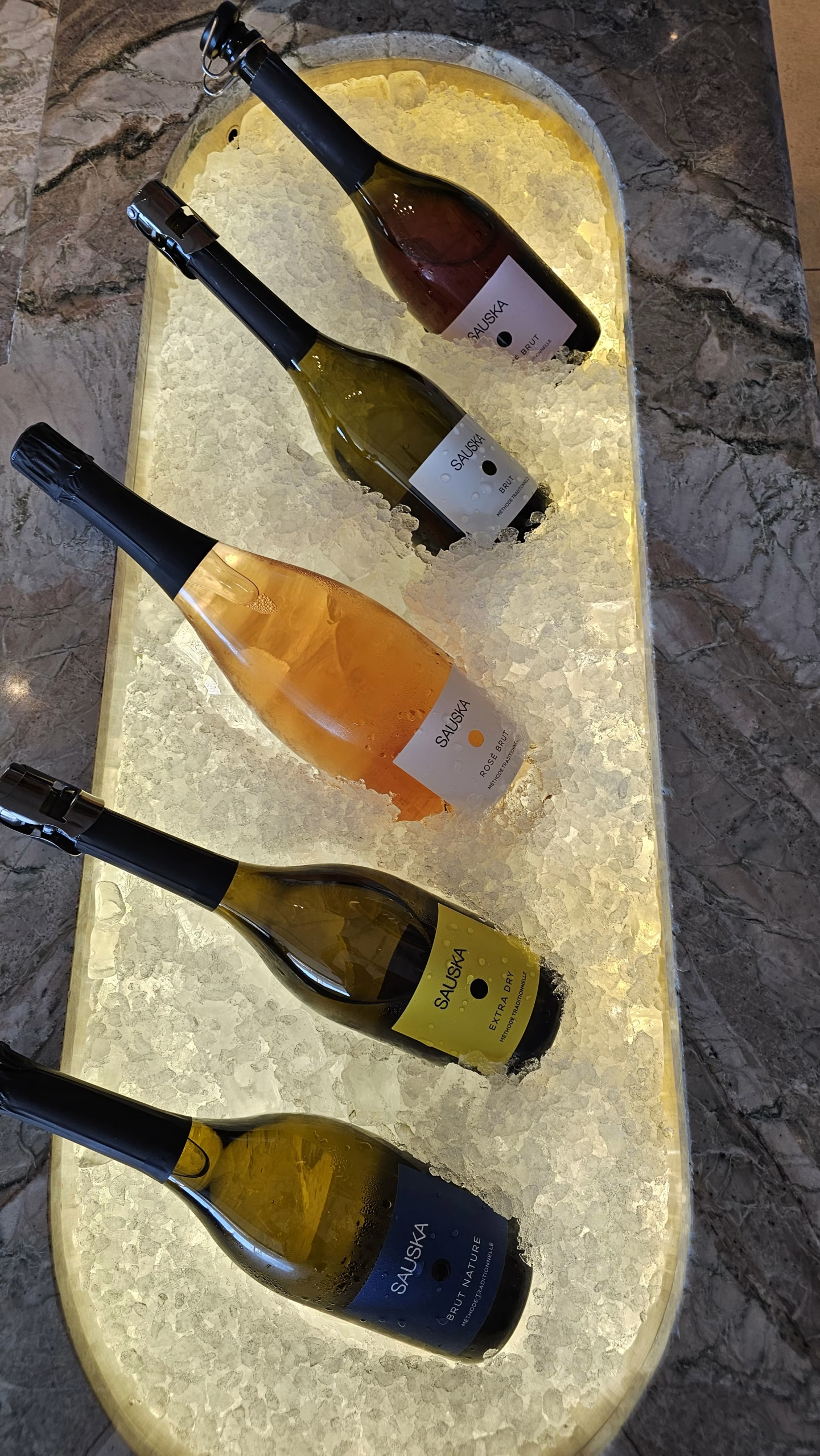
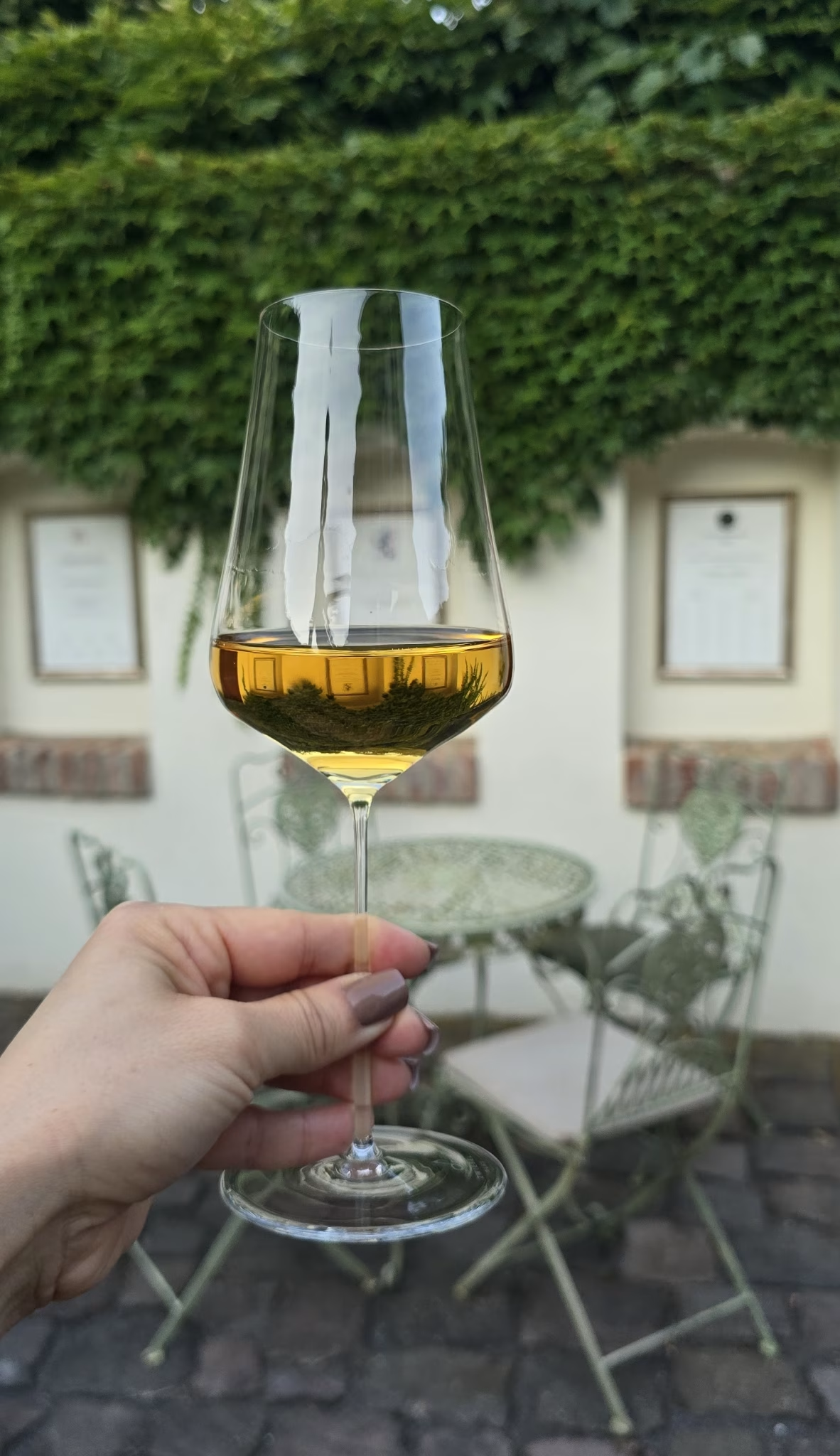
The profile of the winery suited us perfectly. Demeter Zoltán is a true visionary, his name is practically synonymous with the minimalist renaissance of dry wines in Tokaj  . We tasted a traditional-method sparkling wine (he was the first producer to receive a license in Tokaj), a bone-dry 100% Furmint that was mineral to the core, and a very serious orange wine that honestly brought us to our knees.











Restaurants You Must Not Miss
Anyukám Mondta – Translation & adaptation: “That’s what my mom said” / “My mom said so”
Tucked away in a very isolated location, this restaurant originally started as a pizzeria, thanks to the background and culinary expertise of the two owner brothers, the Dudas, who trained in Italy. The menu remains somewhat Mediterranean with a beautiful mix of local and Italian ingredients, paired with what can only be described as out-of-this-world bread I received the recommendation from a friend in Budapest and I’m deeply grateful to him. It’s an absolute must-visit, even if it feels far from everything. You’ll notice the Michelin Bib Gourmand recommendation right at the entrance (awarded since 2022).
MICHELIN Guide – Anyukám mondta
Sauska Padi
In an almost paradisiacal setting (see the photos above), the bistro of the Sauska winery will delight all your senses. From the design and stunning panorama to the service and the à la carte or wine-pairing menus, everything was exceptional. It’s no surprise it won the Michelin Guide’s “Opening of the Year” award
Dereszla Bisztró
It was in my top 3, but due to time constraints we didn’t manage to visit. From what we’ve seen and heard, it looks impressive and is also included in the Michelin Guide.
MICHELIN Guide – Dereszla Bisztró
Wineries Worth Visiting
- Himesudvar
- Demeter Zoltan
- Erzsébet Pince
- Rakoczi Pince
- Sauska
- Holdvölgi
Other Activities …(in case you get tired of wine tastings )

Bike rides / eBike along the banks of the two rivers that cross Tokaj (Tisza and Bodrog) or on the dedicated cycling path between Tokaj and Bodrogkeresztúr.
(Bike rentals → Borbringa Tokaj – E-bike kölcsönző or from the reception of Mercure Tokaj hotel)
Boat trips, kayak or canoe → Hajókirándulás (near Mercure Tokaj hotel)Hiking
Although there are many trails in the area, the most scenic one is Borostyán, which starts right from the small train station in Tokaj and takes a maximum of 1 hour.
Hercegkút
A village near Tokaj that looks like it came straight out of The Shire in Lord of the Rings. Famous for its unique triangular earthen houses used as wine cellars.
Museums
Even though they’re a bit old-school, both the Tokaj Museum and the World Heritage Wine Museum are worth visiting.
Also consider the ruins of the two medieval castles: Rákóczi (in Sárospatak) and Boldogkő.
INFO: Tokaji Aszú Hierarchy
3 Puttonyos (Category removed from legislation in 2013)
Sugar: ~60 – 90 grams / litre4 Puttonyos (Category removed from legislation in 2013)
Sugar: ~90 – 120 grams / litre5 Puttonyos (Current classic standard)
Sugar: Minimum 120 grams / litre6 Puttonyos (Top of the standard range)
Sugar: Minimum 150 grams / litre

