
Tuscany
Chianti Classico, Montepulciano, Montalcino
 8 min
8 minThe Holy Trinity: Chianti Classico, Montepulciano, Montalcino
We blasted through the Apennine Mountains via its endless tunnels on the E25 highway (hence the nickname “autostrada dei trafori” – central tunnel ), then dropped down toward Genoa, giving our eyes a good rinse with the gorgeous Ligurian Sea, and just like that, four hours later, we’re right in the beating heart of Tuscany. We broke new ground because sure, it wasn’t our first time in Italy, but Tuscany? Total virgin territory for both of us.
I’d sketched out two itineraries to pack in as much as humanly possible in our (you guessed it) super short timeframe: just two nights in the iconic Chianti region of Tuscany.
Thankfully, we locked in one stay, and like with Piemonte, I hunted down agrotourism spots on Booking.
Score! In the quaint but oh-so-strategically placed town of Greve in Chianti, we nabbed an Italian chateau that’s pure magic  … only 20km from Florence… perched atop a hill and wrapped in, you know it, vineyards everywhere!
Dropping the link here so you can drool over the killer location yourself and… get this, the whole trip cost less than a weekend in the region of Dealu Mare- Romania  (https://montemasso.ruffino.it/).
Back to the plan, I mentioned two options, and without much back-and-forth, the champ crammed all this into a day and a half:
- Florence (super quick pit stop + Uffizi Gallery dash + dinner)
- Montepulciano – town stroll & tasting
- Val d’Orcia (Gladiator fans, you know exactly what I’m talking about)
- Pienza – quick visit & lunch
- Montalcino – tasting at a hilltop vineyard
- Greve in Chianti (Chianti Classico) – dinner & tasting
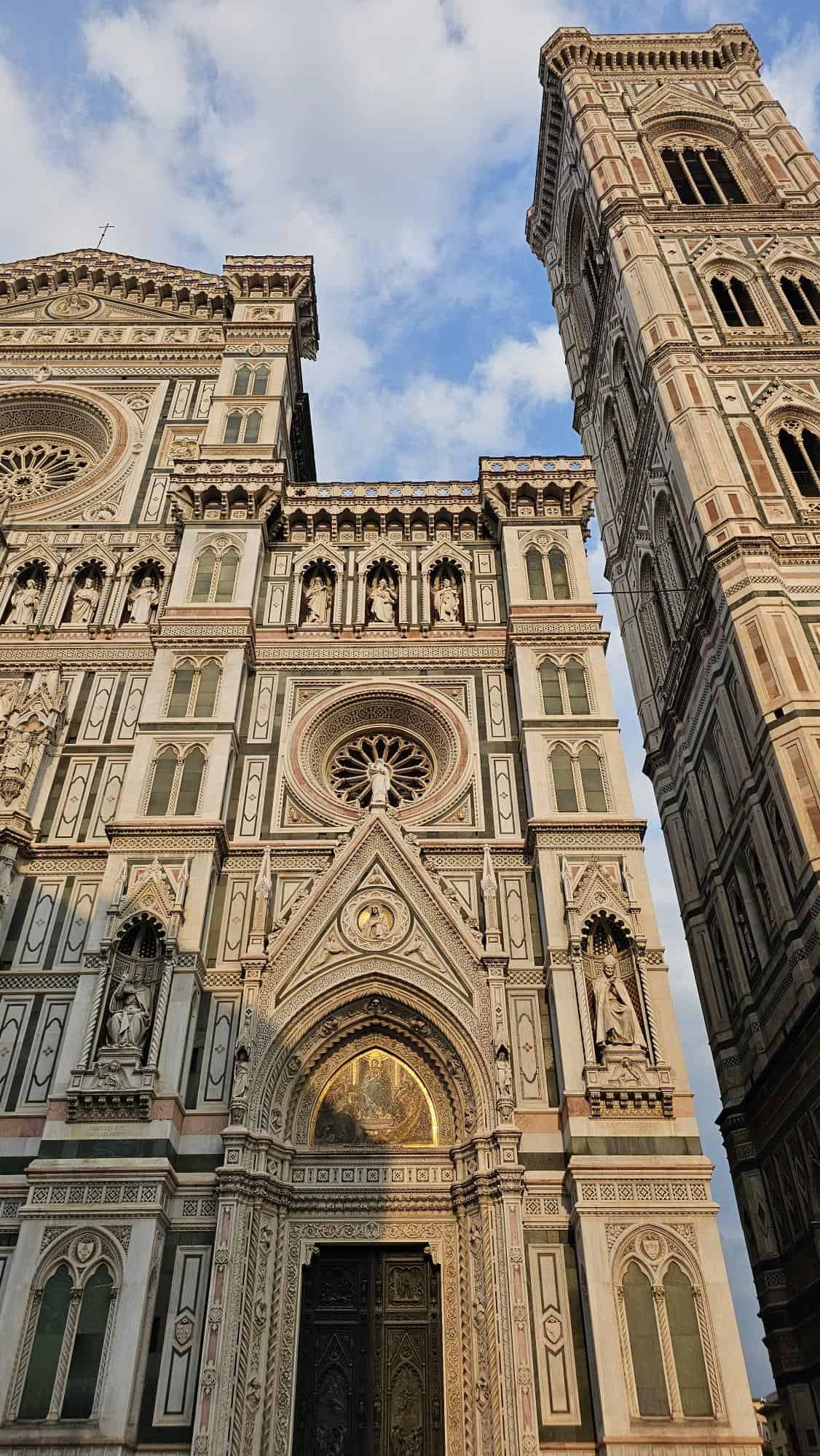
As for Florence, we’re not diving deep right now because we wouldn’t do it justice.
It was a whirlwind 6-hour adventure, at a breakneck (if not downright stressful) pace, and in the end, we only caught glimpses and snippets of the iconic landmarks. Definitely one for the revisit list.

Let’s Kick Off with… Chianti Classico
If you ask any Italian, they’ll tell you straight up: wine and food are inseparable. They can’t imagine sipping a glass solo… without at least some antipasti to keep it company (with a few exceptions, of course). And that logic totally clicked after we dove into Tuscany’s grapes and wines for the first time.
Hello Acidity!
When we talk Chianti Classico, we’re dealing with a blend… but one that’s laser-focused on a single star grape: Sangiovese (80% to be exact), with the rest filled out by other reds, local gems like Colorino and Canaiolo, plus internationals such as Merlot, Syrah, Cab Franc, and Cab Sauvignon.
Like with other varieties, a quick origin story: Legend has it a monk improvised the name “Sanguis Jovis” (that’s “Blood of Jupiter” in English) after a guest was blown away by the burgundy-red elixir.
It’s officially Italy’s most planted grape  , ruling Tuscany with demands similar to Pinot Noir: thin skins, big seeds (we were shocked at how many in one berry; hello, sky-high acidity and tannins), late ripener, and it thrives at elevation (loves those slopes, and Tuscany is literally all hills and valleys).
Footnote: Confession, I pocketed a few grapes and saved the seeds, hoping for a mini Sangiovese back home in Romania… I’ll keep you posted  .Wine’s been flowing in Italy since Etruscan days, but Chianti stands out as one of the world’s first officially delimited regions, recognized back in 1716 (tight race with Tokaj and Douro for the crown).
Picture 14 municipalities between Florence and Siena, with soils blending clay and limestone packed with iron, giving that signature hue plus aromas of red fruits like cranberries and sour cherries, layered with leather, pepper, balsamic vinegar, and dried herbs.
It’s an aromatic profile that pairs like a dream with pizza, lasagna, prosciutto, pretty much anything tomato-sauced  .
.
And that’s exactly what we did at Tre Rane, the restaurant and enoteca at Casa Ruffino, smack in the heart of Chianti Classico since 1877, right by Greve in Chianti (yep, next to our castle stay  ).
).
We matched zucchini flowers on a hummus bed with a super mineral Aqua di Venus, a wild Chardonnay-Sangiovese blend that reminded me of a tropical Chenin, thanks to that deep minerality.
The showstopper? A 2021 Chianti Classico Riserva aged 24 months in French barrique. Elegant, fragrant notes of cherries, violets, and chocolate, finishing with leather, tobacco, and black pepper. Unlike the younger Chiantis we’d tried before, Ruffino showed us what Chianti is truly capable of.Quick must-know on the three aging tiers for Chianti Classico, it cleared up a bunch of mysteries for me.
I keep harping on Sangiovese’s acidity… well, the older and more matured the wine, the softer those acids and tannins get.
Here’s the breakdown:
- Chianti Classico Annata – The entry-level everyday Chianti, young and zippy, pretty acidic but pairs like a champ with the dishes I mentioned. Aged 12 months (no specifics on the vessel
 ).
). - Chianti Classico Riserva – Double the aging of Annata (24 months, including 3 in bottle). More structure, body, softer tannins and acidity, with fancier notes of leather and spices.
- Chianti Classico Gran Selezione – Top of the pyramid, like a grand cru, strict rules on aging (30 months + 3 in bottle), quality, and traceability (handpicked grapes from a single vineyard).
 ).
).And… the big one: How do you spot authentic Chianti Classico?
Easy: Look for the black rooster on the bottle.
The backstory is hilariously epic, save it for the footnotes at the end  .
.




Montepulciano
I’ll own up to the newbie blunder: I totally mixed up Montepulciano d’Abruzzo with (Vino Nobile di) Montepulciano  . It wasn’t until I dug deeper that I realized we’re talking two completely different wines, grapes, and even regions.
Quick cheat sheet (so you don’t repeat the same mistake):
- Montepulciano is a town in the Siena area, famous for Vino Nobile di Montepulciano, a blend built mostly on Sangiovese (at least 70%).
- Montepulciano d’Abruzzo is a wine from the Abruzzo region (about a 3-hour drive from Montepulciano), made from… guess what… the Montepulciano grape (min. 85%), with the rest usually Sangiovese.
 So: The Montepulciano grape doesn’t come from the town of Montepulciano
No biggie, we set off to uncover the secrets of this noble wine and landed at Poderi Boscarelli, a “young” estate by Tuscan standards (founded 1962) but with seriously aristocratic roots.
Those roots are what really put Montepulciano wine on the map… plus its proximity to Pienza, of course  .
.
Quick detour: We have to talk about Pienza, just 20 minutes from Montepulciano. It shot to fame thanks to a local, Silvio Piccolomini, who became Pope Pius II in the 15th century. A big Renaissance fan, the Pope dreamed of turning his hometown into an architectural utopia and hired the top craftsmen to make it happen. Sadly, he passed before it was finished, but the central area got done in time, and the whole masterpiece snagged UNESCO status in 1996. It’s not as hyped as Florence, Siena, Lucca, or San Gimignano, but the town casts a spell instantly, I highly recommend at least a quick stop for an espresso. Pienza isn’t just known for its “utopian” vibe; it’s all about aristocracy, blue-blooded families, and old-school nobility. And what were they sipping back then? Especially the elites? Wine… from where? Right nearby in Pienza’s backyard, naturally. Enter stage left: The wine from neighboring Montepulciano, which became the papal sommelier’s fave, he even dubbed it “perfectissimo.”
This lords’ elixir got tied to high society, exported worldwide, and cemented its legendary status.At Poderi Boscarelli, we picked up some of these tidbits during a short vineyard and cellar tour (where we first munched on Sangiovese grapes, locally called “Prugnolo Gentile”) followed by a tasting of six wines.
- Prugnolo – Rosso di Montepulciano 2024 – The “junior” version (just 6 months in concrete vats), kicking off our lineup: fresh, fruity, and super easy-drinking.
- De Ferrari 2023 – Scene shift: Sangiovese gets tamed a bit by Merlot. A balanced duo meant for enjoying in the next 4-5 years.
- Vino Nobile di Montepulciano 2022 – From younger vines (min. 10 years old) aged in Slavonian oak barrels (ring a bell from Piemonte? ) – Lively and packed with personality; I could already picture it with lasagna …
- Vino Nobile di Montepulciano Riserva 2021 – From Sangiovese vines over 20 years old, replanted on prime soil with a dash of Colorino for extra color. The first red we tried with real mineral notes—truly standout.
- Sotto Casa Riserva 2021 – Like a grand cru: full-bodied and insanely fragrant from a three-grape blend of Sangiovese, Merlot, and Cabernet.
- Boscarelli IGT Toscana 2021 – Another bold blend, deliciously spiced Bordeaux-style with Sangiovese, Merlot, Cabernet Sauvignon, Syrah, and Petit Verdot, aged 18 months in French oak.
 …
…We left as happy owners of a bottle of Vino Nobile di Montepulciano Riserva 2021 and two De Ferraris  .
.
The drive there and back was pure eye candy; we even tried to hit those iconic “Elysian fields” from Gladiator, but got there after the wheat was harvested (dang…).


(Brunello di) Montalcino
We switch gears, clock about 35km from Montepulciano, and go from blends to pure single-varietal glory, that’s 100% Sangiovese (with a little asterisk, since we’re still talking the same grape but different clones depending on the spot).
Montalcino Sangiovese, aka Brunello or Sangiovese Grosso , is a famous clone not just for nailing the region’s terroir but for its insane aging potential (10 years easy, often way more).”Brunello” loosely means “the dark one” or “little brunette,” thanks to the deep color of both the grape and the wine. Just like that sassy black cat from WineNot  in Sibiu, Brunello’s got serious character: rich, full-bodied, tannic, acidic, and some swear it might just be… maybe… Italy’s best red
  (step aside, Barolo).
So good that it snagged DOCG status in 1980, one of the first, despite being a “youngster” compared to big siblings Chianti Classico and Vino Nobile di Montepulciano.
If the original creation owes everything to Clemente Santi, owner of Biondi Santi estate (we totally wanted to visit, but no reply to our emails  ), who experimented like crazy with Sangiovese clones and elevated Brunello to VIP status, it was his grandson Ferruccio Biondi Santi who took it further.
Ferruccio refined the winemaking with those classic “botti” (yep, Slavonian oak again) and became the sole Brunello producer for a while.
The wine ended up on royal tables (hello, Queen Elizabeth II), fame exploded, and there you have it.
The sacred principle behind Brunello? Honoring tradition, terroir, and the now-holy Sangiovese Grosso. Anything else? Straight to the court.
I’m spotting tons of parallels with Piemonte’s drama, remember the “Barolo Wars” from the last post?
No joke, it’s real here too: Check out “BrunelloGate” for the full scoop – 》here
Italians don’t mess around with their wines, huge emphasis on classic methods, but lately, we’re seeing more small, local producers going all-in on sustainability, organic vibes, and approachable bottles.
That’s exactly why we picked a different kind of spot to cap off our Tuscany adventure: Podere Le Ripi – a 100% organic and bio-dynamic estate. Not run by banks, consultants, or suits, but a crew of friends obsessed with viticulture, farming, and Eco-living. Podere Le Ripi started as an experiment but, 14 years in, it’s a full-blown self-sustaining community, an ecosystem churning out wine plus veggies, honey, and more.
Unlike any tasting we’ve done, the passion and buzz here at 800m elevation were off the charts.
After touring the farm, olive groves, fruit trees, and beehives, we hit the 35ha of vines (spread over more like 60ha total, with forests and pastures too).
Soils mix clay with marine sediments on the east side and sandy-clay on the west, both influenced by the ancient sleeping volcano Amiata.The cellar’s a stunner: Built in a spiral shape, following ancient principles for aesthetic harmony.
In the “pantheon,” you’ll find botti, barriques, but mostly concrete vats where the wines chill with minimal meddling.
We sampled whites, rosés, and reds, paired with a farm-fresh charcuterie platter, and what stole my heart? The honey.
Lord, that honey… If you’ve never tried chestnut honey, but Podere Le Ripi’s version? Next-level paradise 
On the wine front: A white blend of Vermentino, Malvasia, and Trebbiano from 2023, mineral, honey, honeycomb, acacia, chamomile vibes. Then a fresh Rosé Cappuccetto from Sangiovese with cherry and hibiscus pops. The reds came with stories attached, each wine and label has its own tale Sogni & Follia 2021 – A Rosso di Montalcino aged 4 years in French barrique (nod to the new school), followed by Amore & Magia – 2020 Brunello di Montalcino bursting with tertiary leather notes, Riserva Lupi & Sirene 2019 – another Brunello DOCG, heavy on red plums, black pepper, and tobacco, and we wrapped solemnly with Cielo d’Ulisse 2019 – Brunello loaded with cranberries, balsamic vinegar, and leather again. The finale surprise? A niche tasting from their Bonsai line (an experiment with goblet-trained Sangiovese vines for tiny dwarf leaves … hence the name), specifically a Red (Brunello) Toscana Rosso – insanely rich, round, spiced, reminding me of an Apogeum but with extra mineral kick. A premium experience, literally and figuratively 


Accommodations ★★★★★ We’d book the exact same spot if we went back, no question… who wouldn’t want to crash in a legit castle?
The Wines ★★★★☆disclaimer: wines and tastes are totally subjective; just like in Piemonte, we weren’t fully prepped to always pair our Chianti with food, which led to that initial “whoa, extra acidity” vibe; we figured out we lean toward the more matured ones with softer tannins
Food ★★★★★an average pulled up by the royal breakfasts at our stay, that epic Florentine steak, dinner at Ruffino, lunch in Pienza, and all those heavenly snacks in between.
Would we return: Absolutely, now that we’re finally getting it… plus we’ve got that second itinerary still on hold.
 Tanti Auguri

The journey doesn’t end here…
 The journey doesn’t end here…
Final Notes:
- Basically, all Chianti DOCG wines need at least 70% Sangiovese, Chianti Classico bumps it to 80%, and so on.
- Up until 2006, white grapes (like Malvasia) were fair game in Chianti blends.
- The Chianti Classico symbol, the Black Rooster (no, not talking about Licorna’s Fetească Neagră )—aka “Gallo Nero,” stems from the epic showdown between Florence and Siena. To settle their beef over the disputed Chianti turf, they went with this wild scheme: Each side picked a rooster (Siena went white, Florence black), and whichever crowed first would win the land. Siena picked the fattest, best-fed bird, while Florence starved a black rooster in a dark cage for days. Released, the hangry black guy belted out first (hunger wins, I guess…).
- All the tastings at the estates we hit required bookings at least a week ahead, all via email, and ran about 35€/person (note: Not every winery replied or had slots open).
- As always, double-check national holidays, closures, etc.
- You’ll need a car for winery visits, enotecas, and the like, but heads up on traffic rules and that 0.5g/L blood alcohol limit.
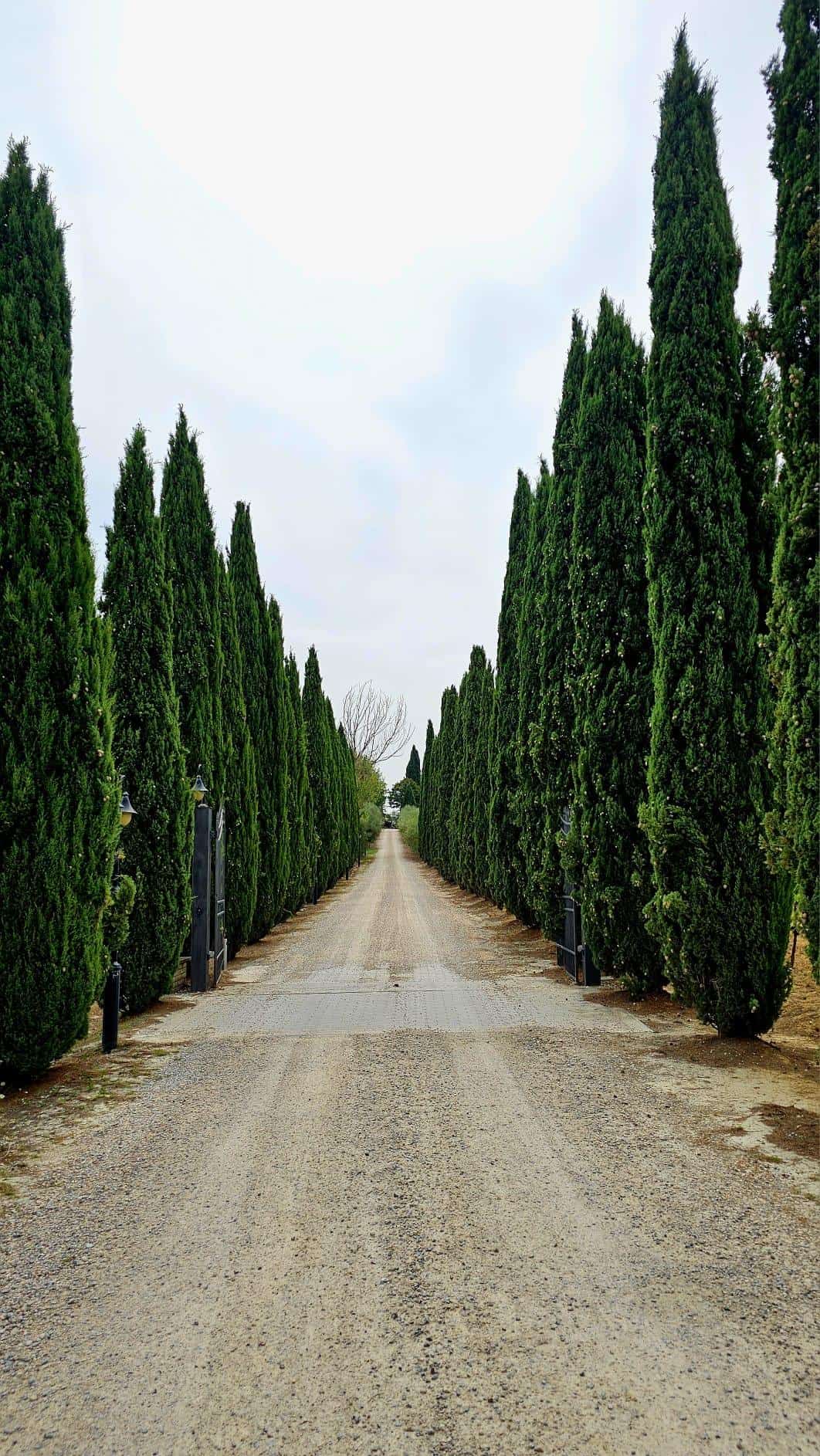
- Like anywhere else, there’s some regional rivalry in Italy, here between Chianti and Barolo, especially as Barolo’s fame skyrocketed over the last 20-30 years, while Chianti got pegged as more of an everyday pour. Tuscany fights back with hordes of tourists swooning over those dreamy cypress-dotted hills, charming medieval villages, top-tier olive oil, gourmet eats, and so much more.
- The upside? Italian wine is everywhere on shelves back home, but what kind actually makes it there? And how’s it drunk? Maybe that’s why we started out thinking Sangiovese was too acidic (kinda like our first Barolo vibes in Piemonte), but… we left with a ton of insights, mysteries solved, and I’m thrilled we got to dip our toes into enchanting Tuscany .
