
Alsace
adventures in 3 acts 

 15 min
Alsatians say they took the best from France and the best from Germany…true or false?
Let’s see! 
With or without wine, Alsace is a fairy-tale land that enchants you on the spot (no wonder it inspired the sets of Beauty and the Beast  )
If you want to spend a few days staring in awe at brightly colored houses, some over 500 years old, picturesque villages, medieval castles and centuries-old culinary traditions, Alsace ticks all the boxes.
With a rich and tumultuous history, “Alsace” or “Elsass” appears to us like a toy two brothers are fighting over, in this case: France and Germany.
It changed “teams” 4 times in a period of just 74 years  and this is deeply felt both in the community speaking both French and German, the dual names of towns (e.g.: Riquewihr / Reichenweier), the first and last names of Alsatians (Etienne Muller or Francois Schneider etc.), gastronomy (flammkuchen aka tarte flambée) and especially in:….the wines.
From French savoir-faire sprinkled with predominantly German grape varieties (adapted to the weather) mostly grown on terraces to capture as much sun heat as possible, elongated wine bottles inspired by local culture (flûtes) result in wines with a dual personality of rare complexity.
Geography 🗺
Up on the map of France, we see a strip of land next to the border with Germany, almost on the same parallel as Champagne, which means it is…chilly  .
Alsace has an average temperature during the growing season of the vine of 13.7°C but…thanks to the famous Vosges mountains, which act as a natural shield against the rain-bringing winds from the Atlantic, we have moderate influences, more clear skies and more recently, due to global warming, slightly higher temperatures.
We learn at school (wset) that lack of rain + clear skies = sustainable / organic viticulture. When the rains appear, inevitably you also get mold, pests and you have to bring out the heavy artillery of methods to combat them.
Thanks to these rather rare conditions in France, Alsace is very proud of its sustainability label, with almost half of the total vineyards being organic and biodynamic.
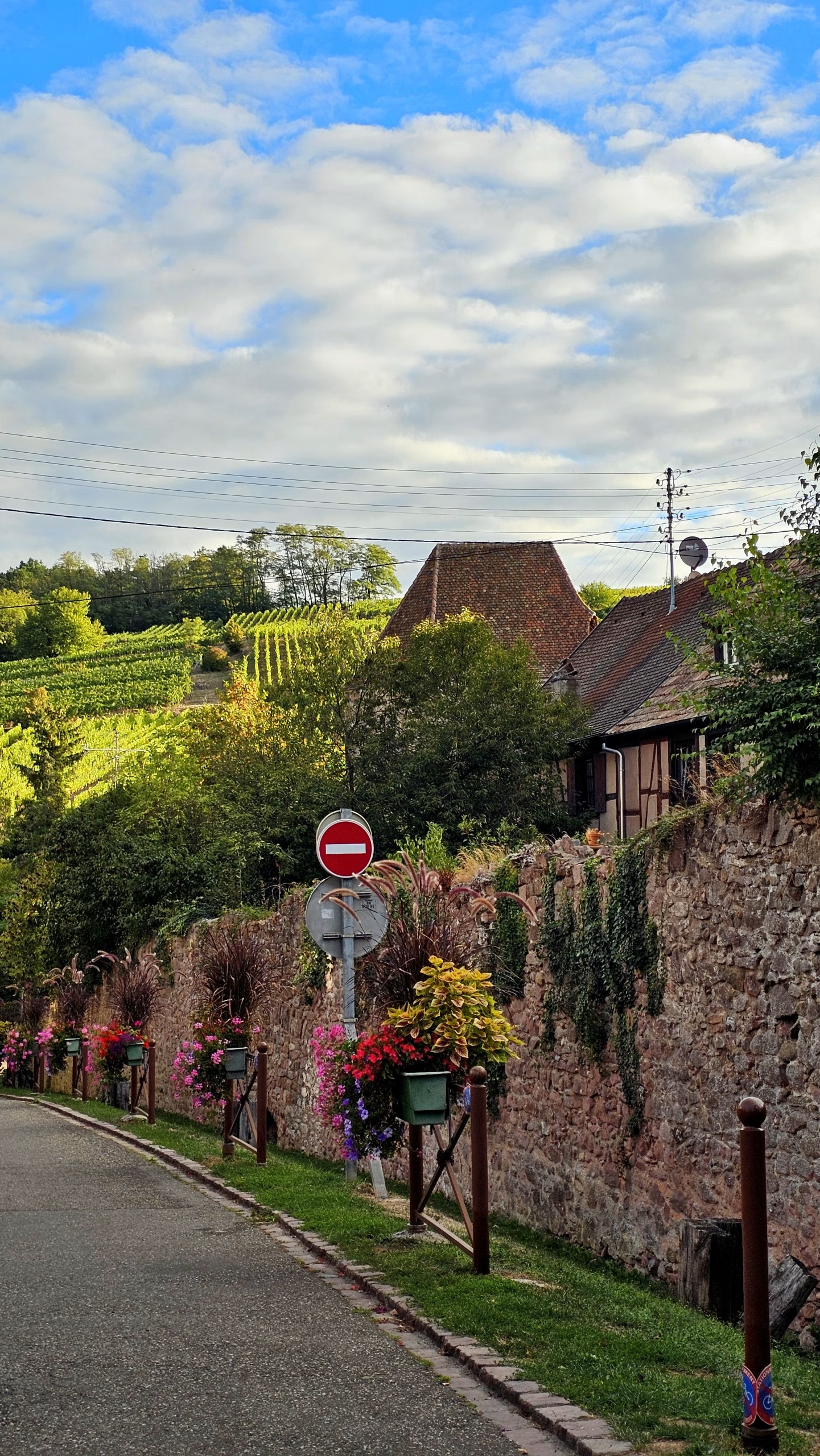
If you venture on a hike or even if you look carefully at the edge of the villages, it’s impossible not to notice the terraced hills and the vines planted somehow “backwards” – that is, vertical rows and not horizontal as we are used to seeing. We can once again put it down to German influence (we see the same planting style in Mosel, Rheingau etc.) or maybe who knows…adaptation to weather conditions. As a rule, terraced hillside and vertical planting means greater sun exposure and heat absorption. Add next to it a watercourse (like the Rhine) for extra heat (mirroring effect) and you have perfect conditions for grapes  .
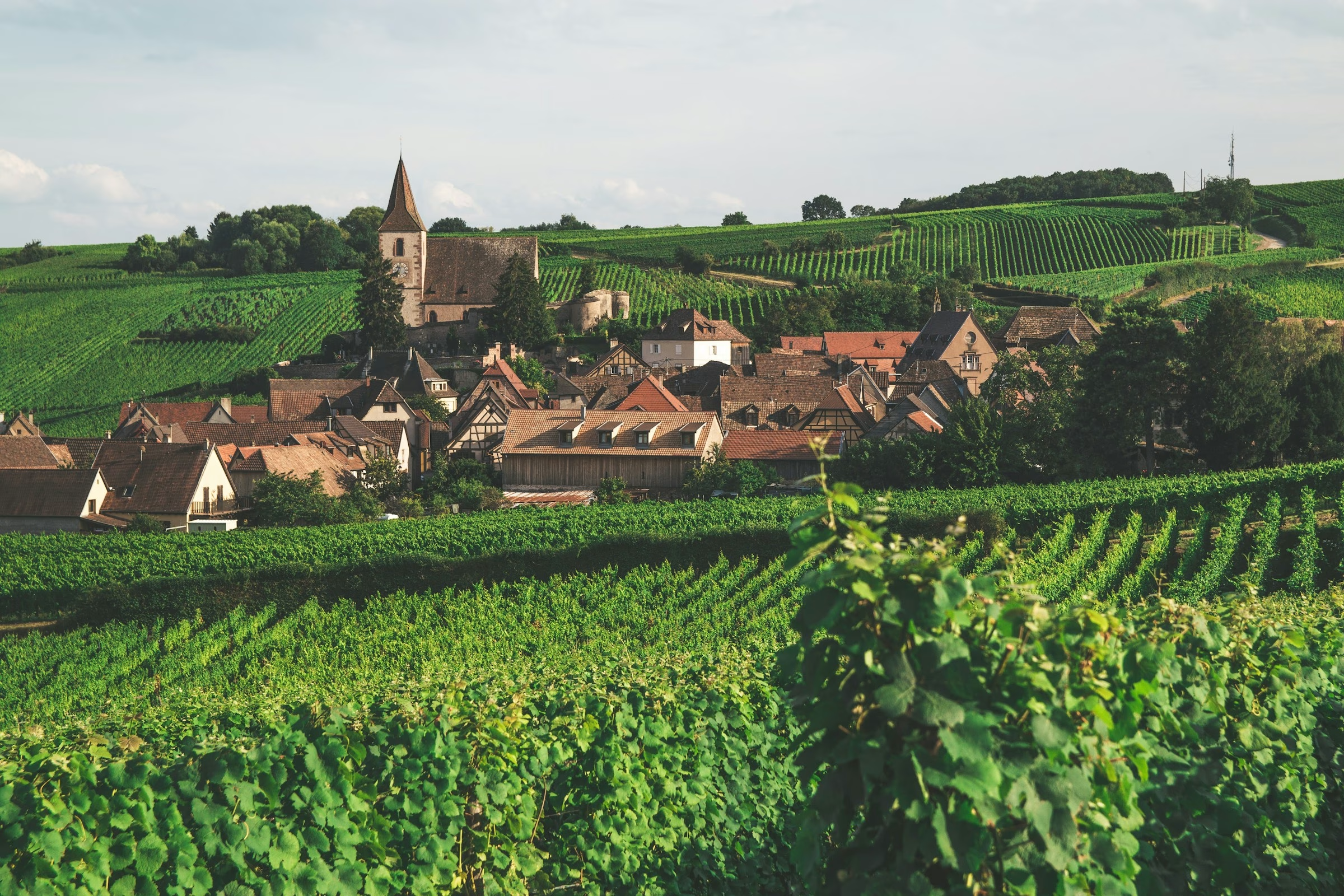
⚲ Alsace, France
1) Colmar
Even though it is ultra-touristy and you have to arm yourself with patience to get through the endless waves of visitors (especially Asians), it is still worth ticking off at least once.
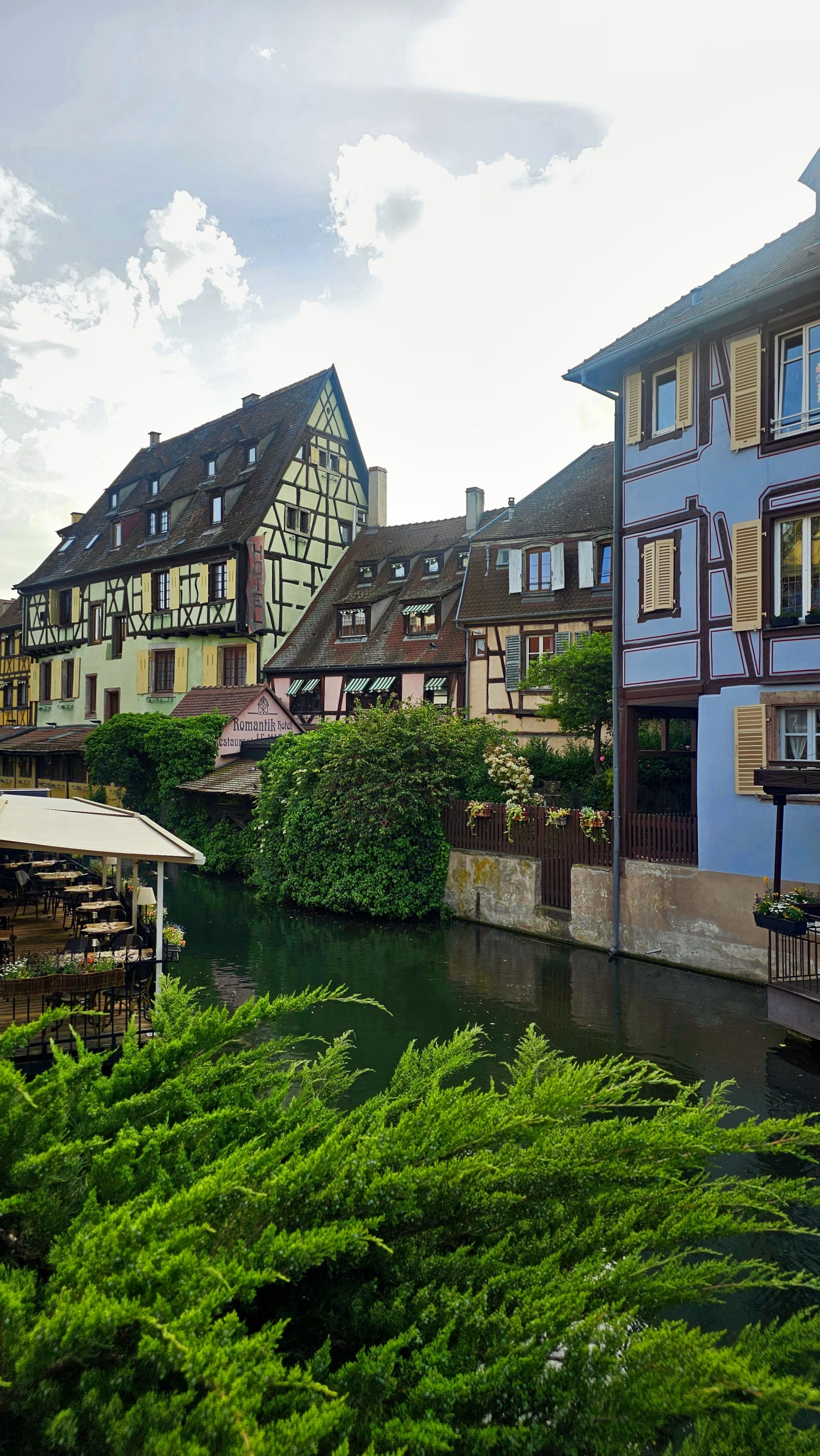
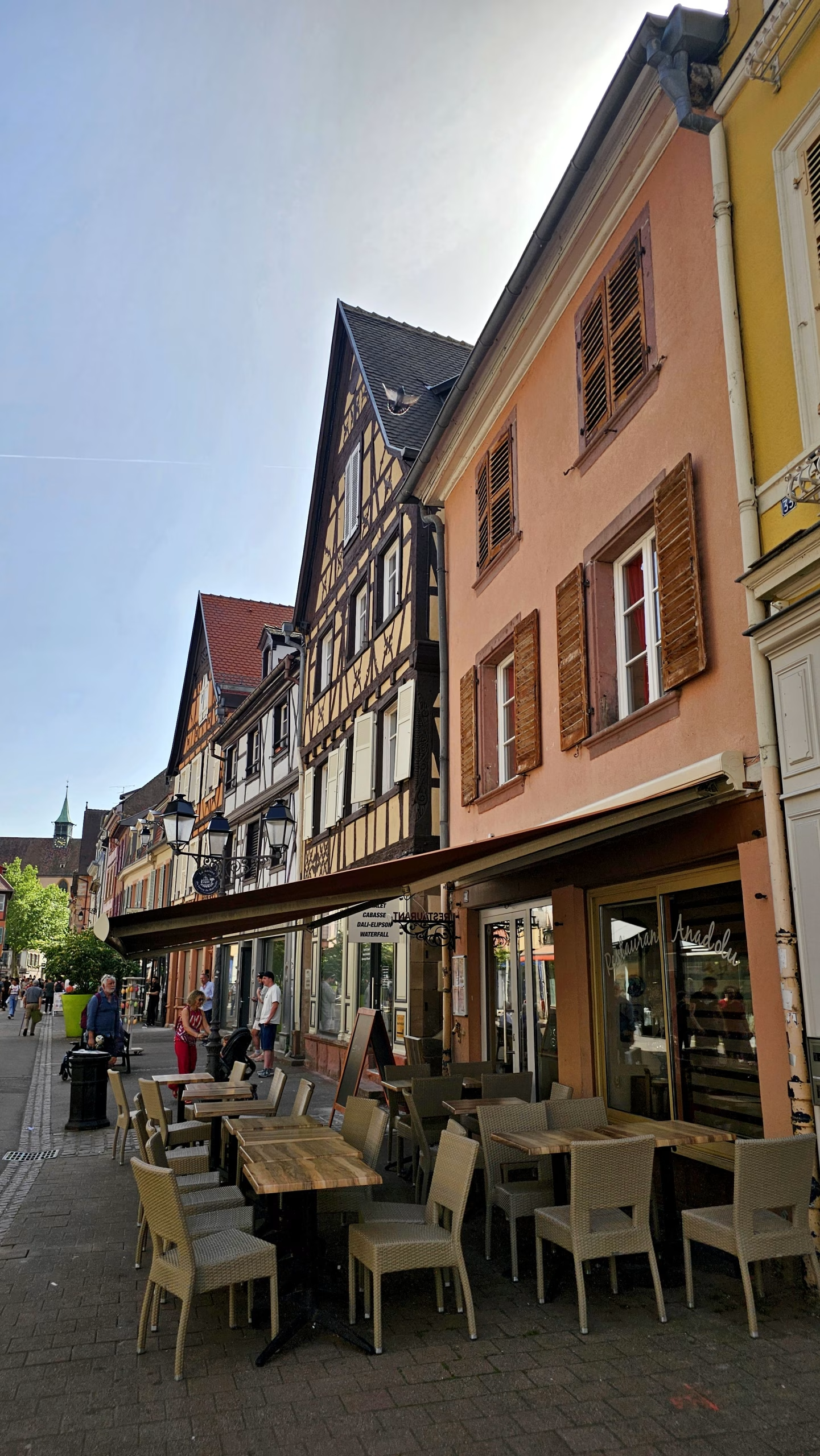
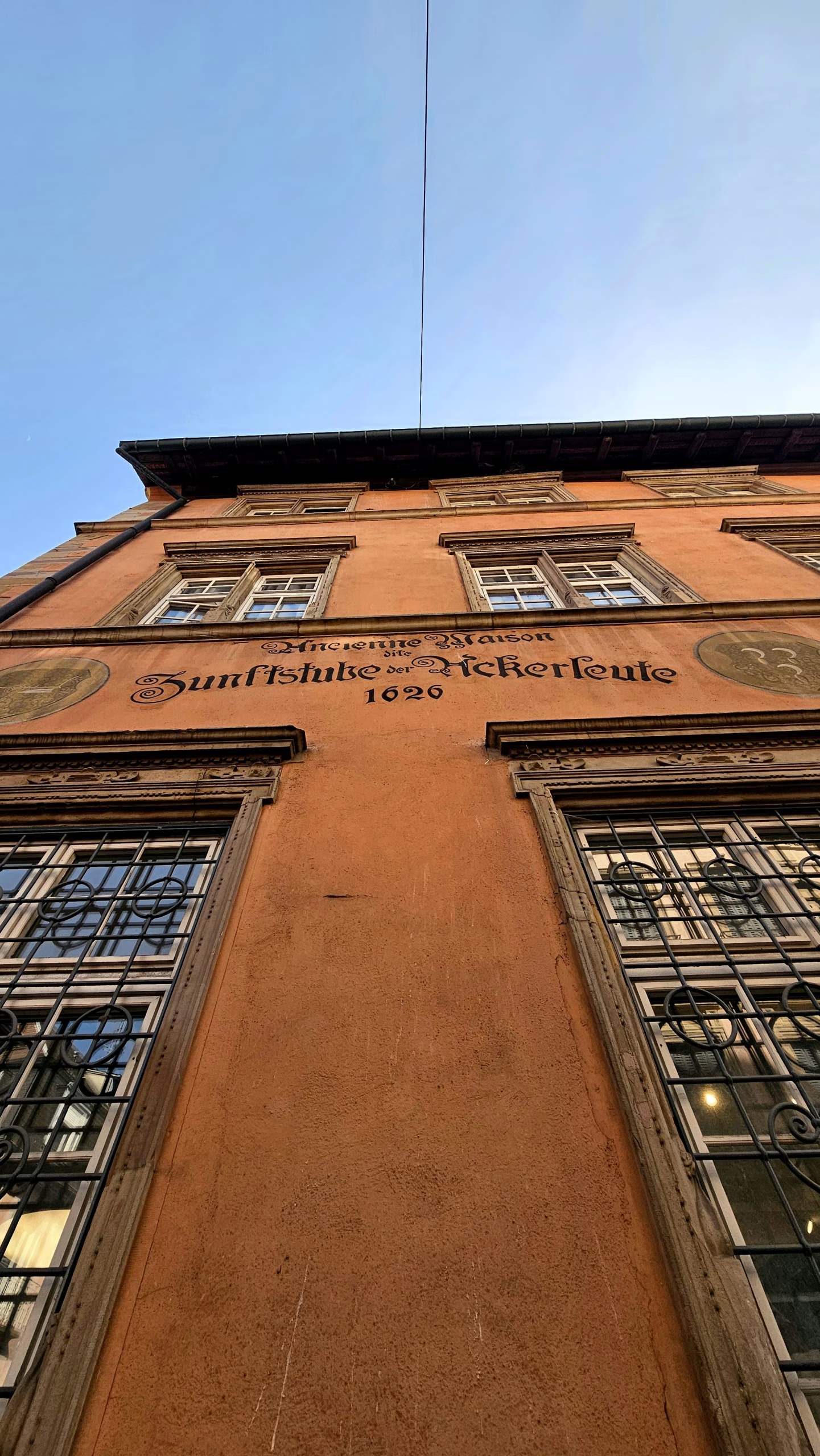
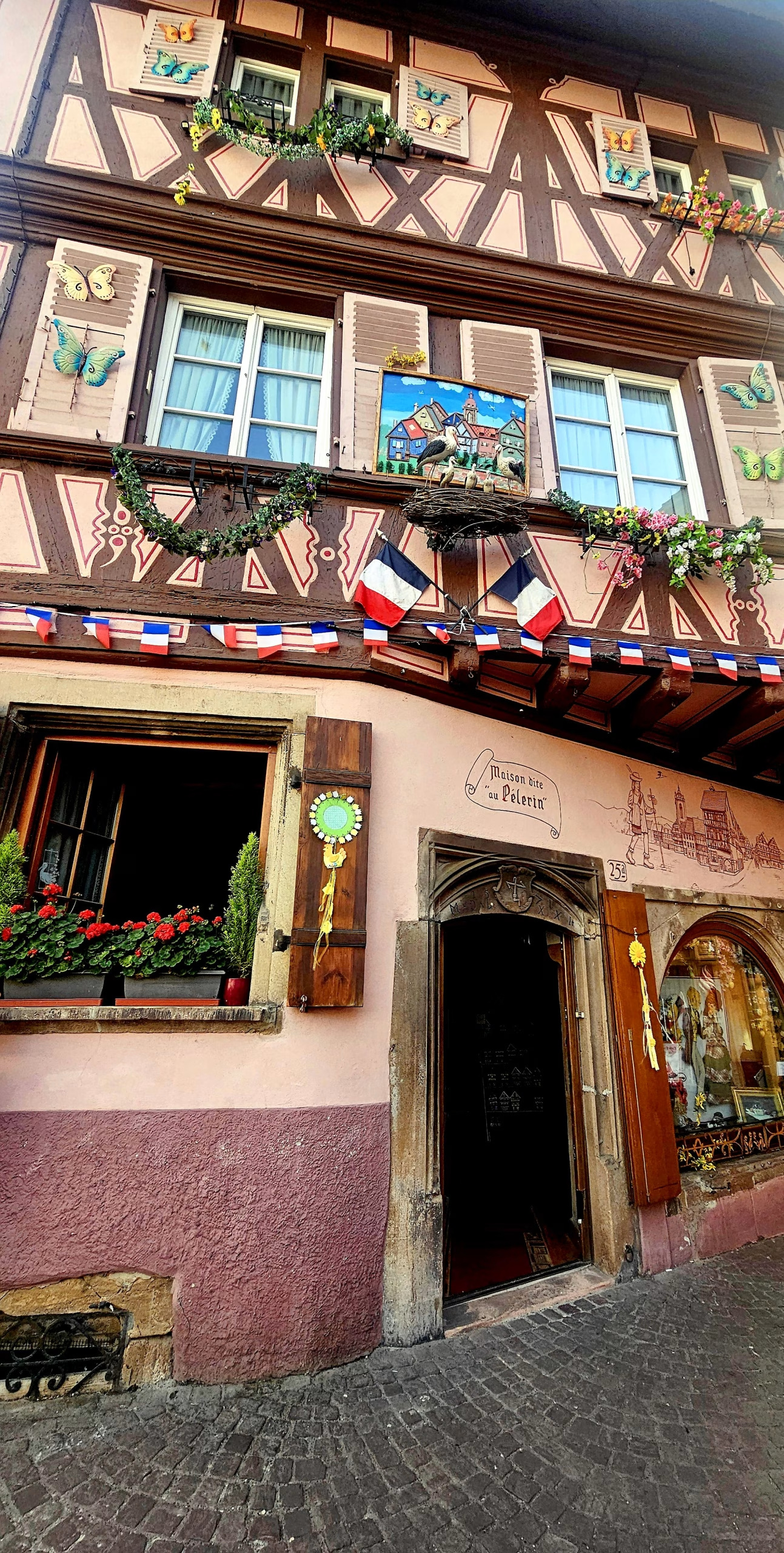
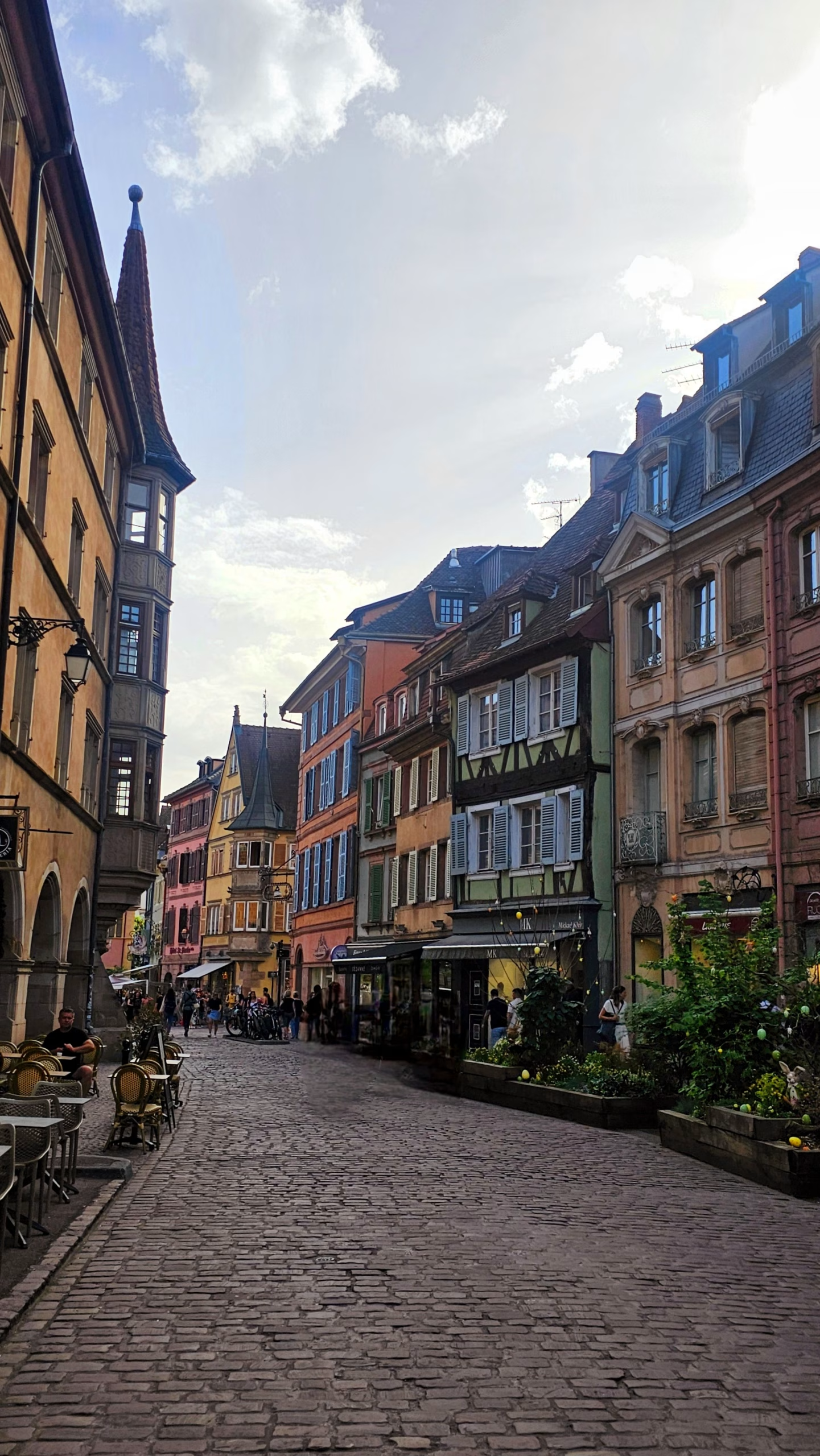
In the capital of Alsatian wine – by the way, intact from an architectural point of view, having been “saved” by Hitler from bombings because of its beauty  he says – you will find adorable houses with the famous half-timbered “fachwerk” beams, German orderliness and a gastronomy that is at least interesting: I called it German cuisine – that is, rather hearty dishes – with a French twist
 .
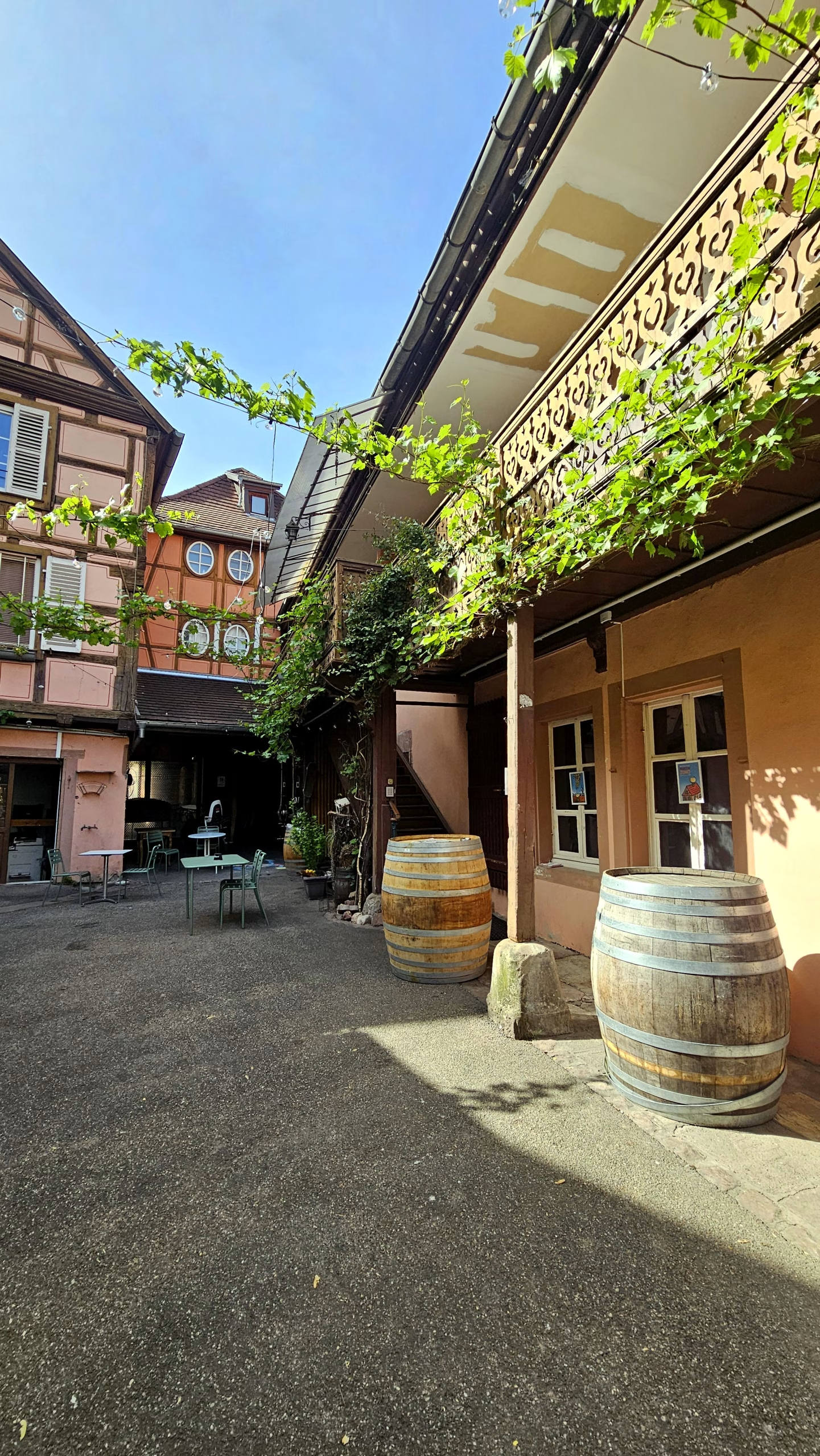
We recommend at least a walk along the canals of Colmar, and for wine tastings you don’t need to rent cars or get too worked up because many of the wineries are inside the old town.
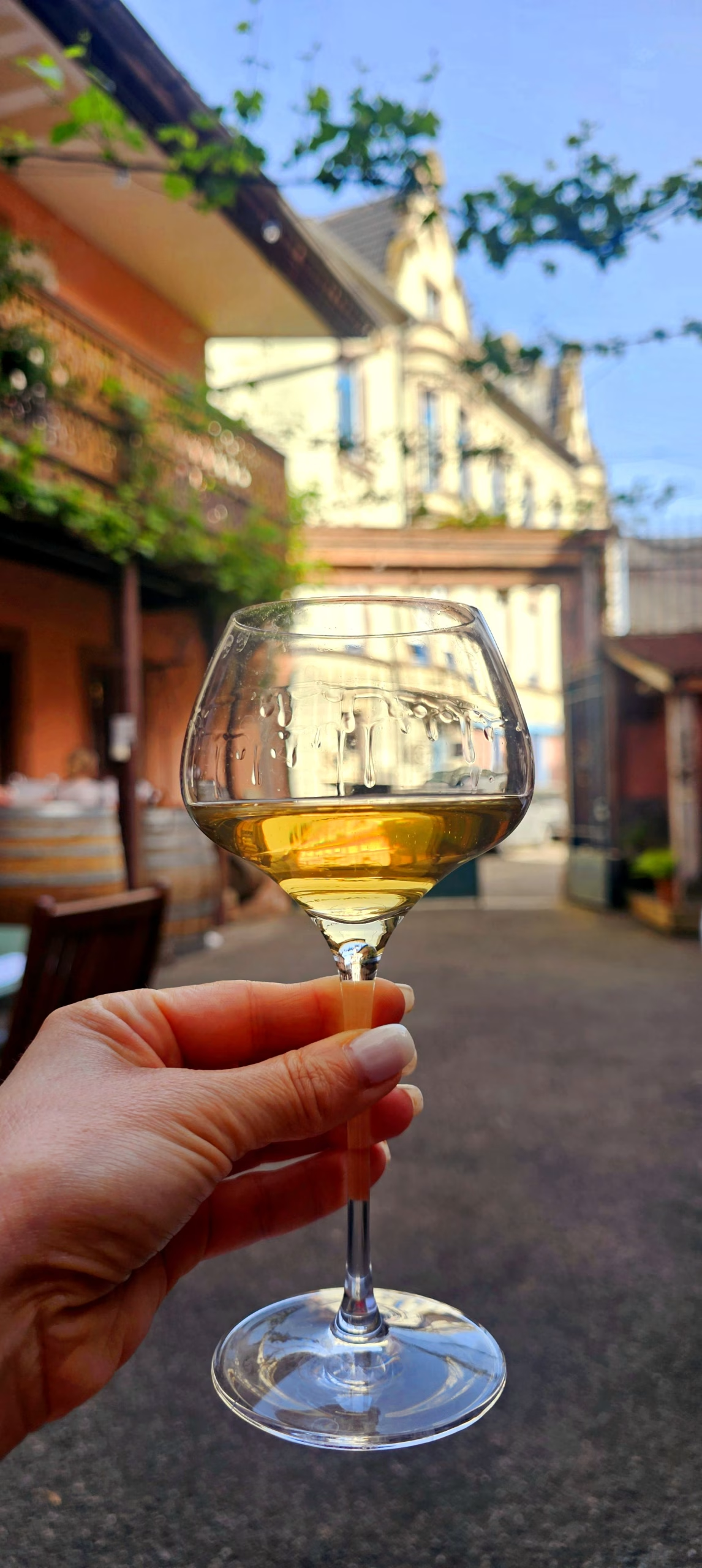
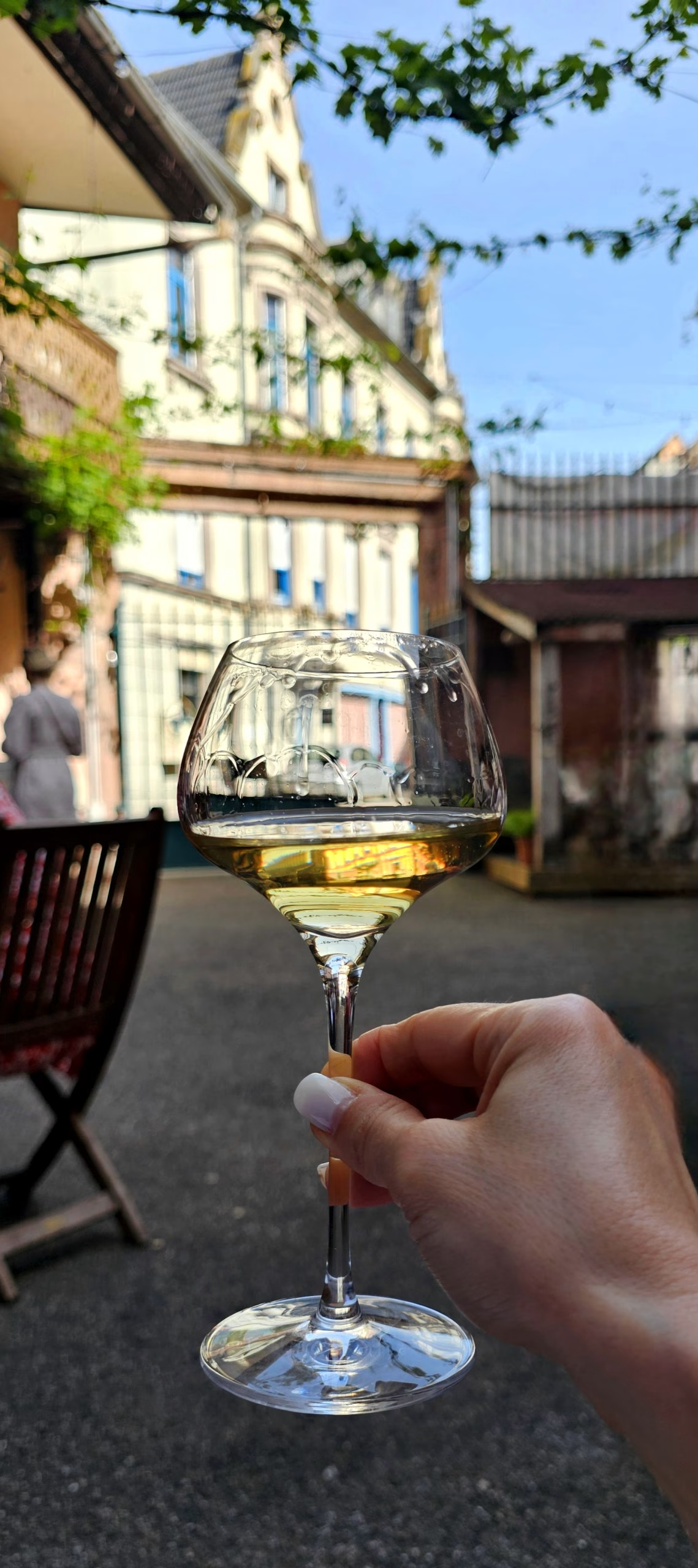
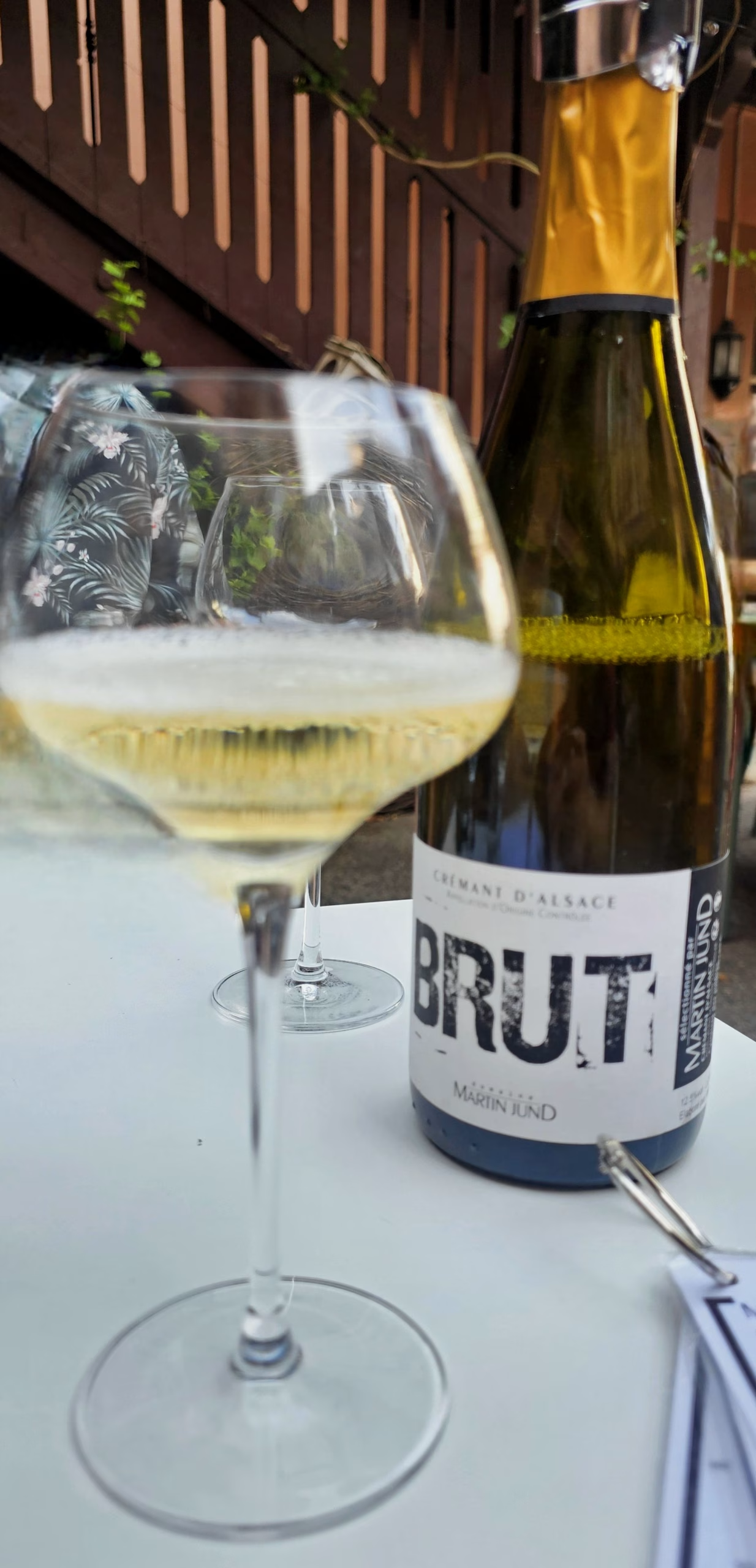
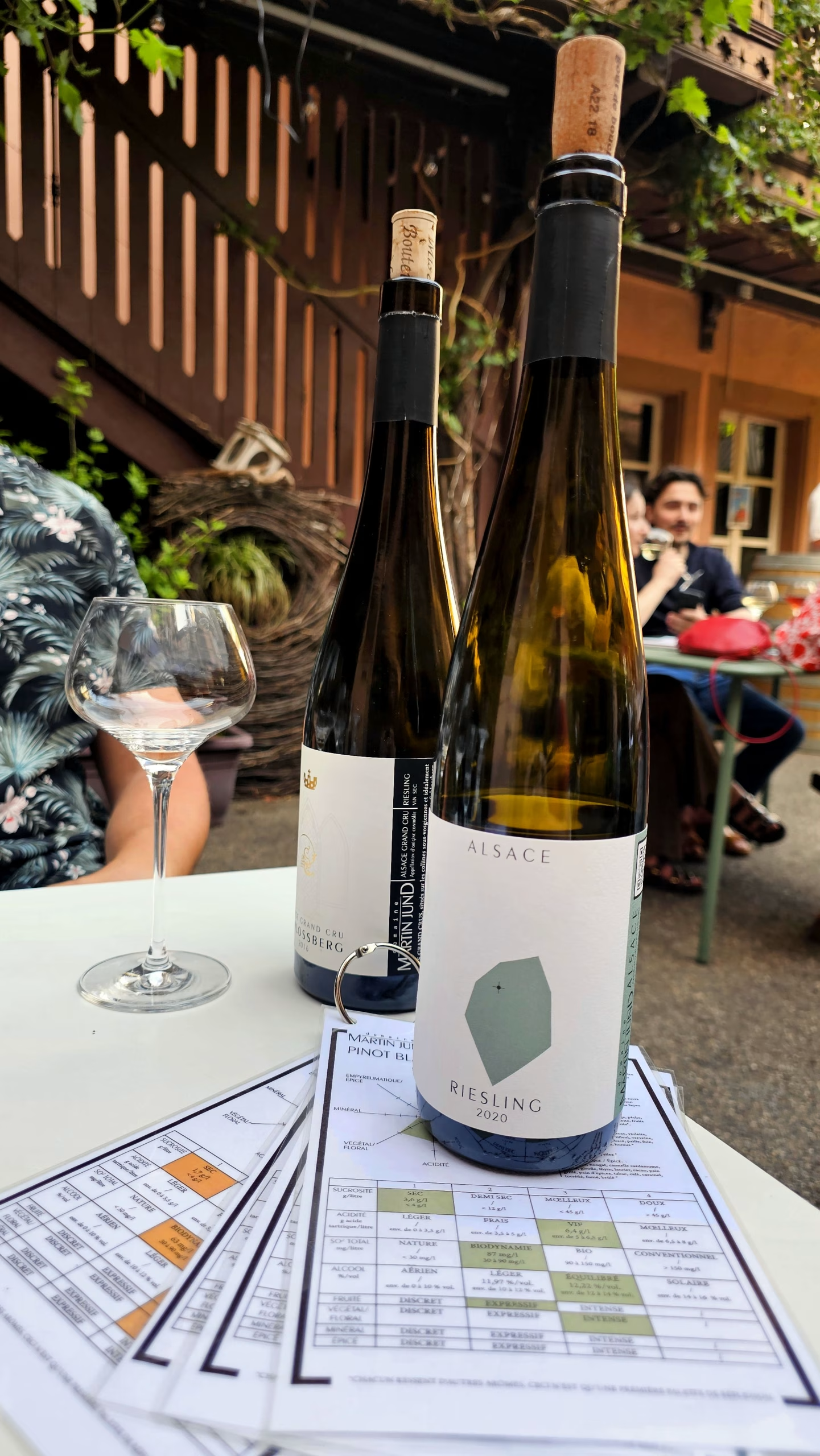
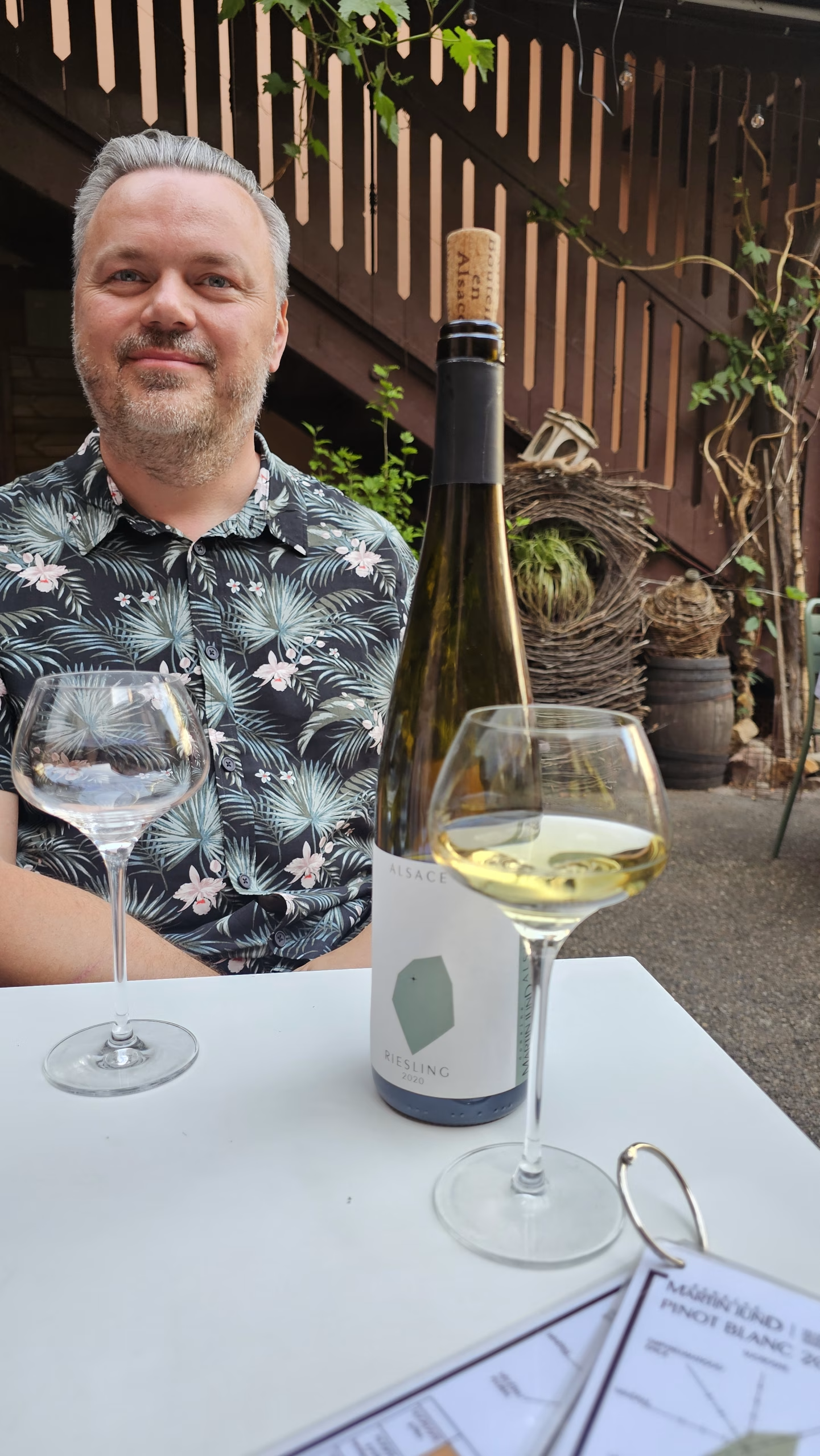
We tested 6 wines from Martin Jund: Crémant, Pinot Blanc, Pinot Gris, Gewurztraminer, Riesling and Pinot Noir.
We were really happy to find that we could finally do walk-ins (i.e. spontaneous tastings), meet nice people and a very friendly atmosphere, and SPECIALTY COFFEE (how much we suffered in other French cities  but what can I say: if you have everything it’s not good because it’s too touristy and if it’s authentic you don’t have one thing or another… c’est la vie)
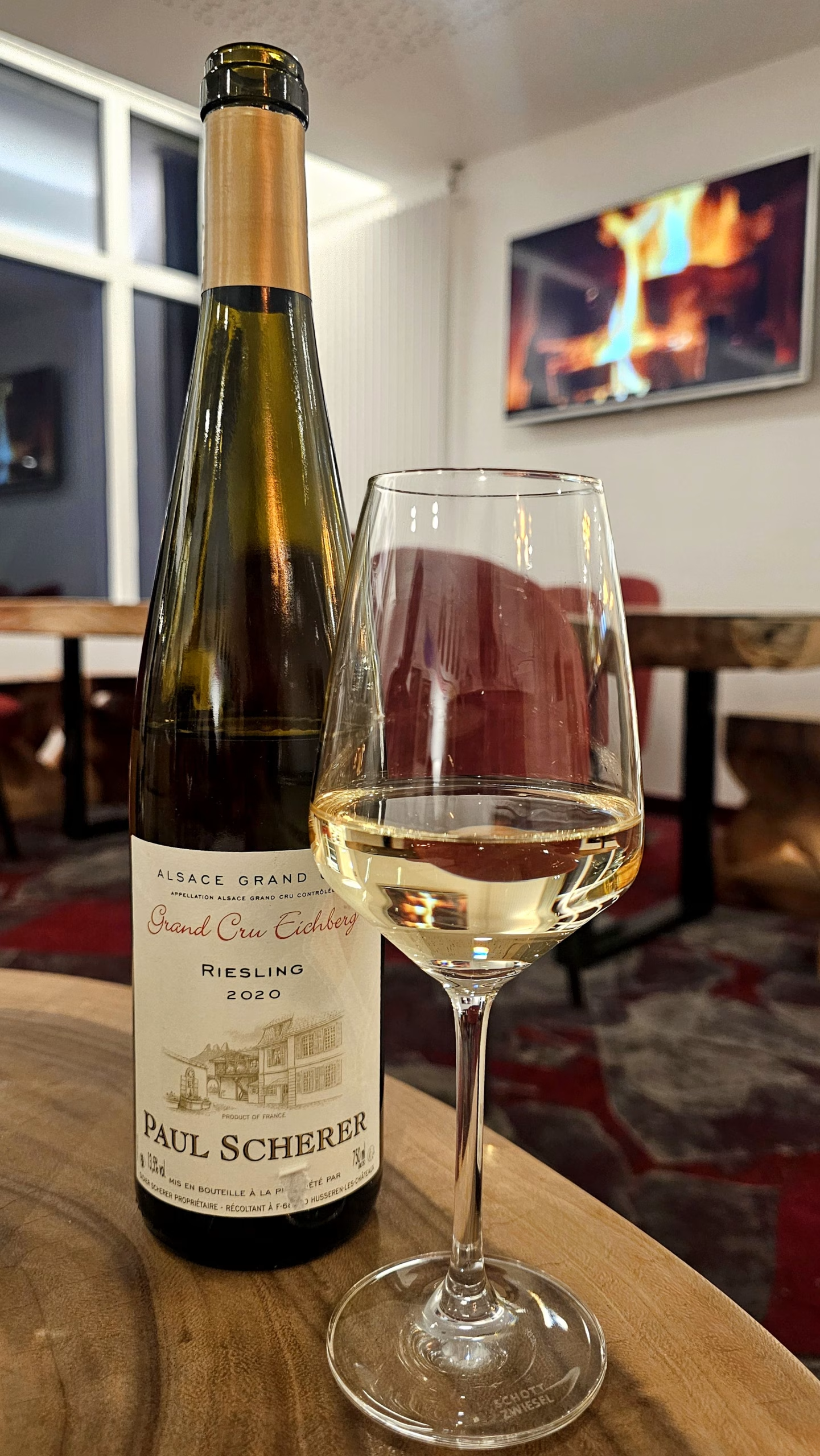
We chose accommodation in a small town 10 minutes from Colmar because: budget and because: parking → Hotel SPA Restaurant Husseren Collections…and here, good people… drum roll, we discovered, of course purely by accident, the absolute best Riesling that both of us have ever drunk to date  .
I don’t think I can describe how hard I fell for it. Such precision and elegance I have never encountered before in any wine or any Riesling.
Introducing Paul Scherer…. a winemaker from Husseren-les-Châteaux Husseren-les-Château, an adorable little village on the Route des Vins d’Alsace, the village with the highest elevation in Alsace if I’m not mistaken.
A boutique-type vineyard that probably no one has heard of but they should. 100/10, crowns and statues, candles in church and lanterns on the water because we were literally speechless at the Riesling we drank from the Grand Cru Eichberg area.
We tasted it in the hotel restaurant and tried to take a bottle or two with us but they only sold them in boxes of 6. Now we bitterly regret not taking the box  .
What do we do the next day? We get in the car of course and obsessively search for Mr. Scherer’s winery. We find the winery but nobody in the yard. We see a sign that said “Andre Scherer” and start making all kinds of scenarios. We walk left and right because we didn’t want to leave empty-handed and suddenly a gentleman appears who asks us what we’re looking for. At the sound of the name “Paul Scherer” he kind of startles and quickly chases us away in French saying it’s not open. Hmm… okay. We leave disappointed but with the hope that maybe, just maybe, we’ll get back to the area and clearly try again.
2) Mulhouse
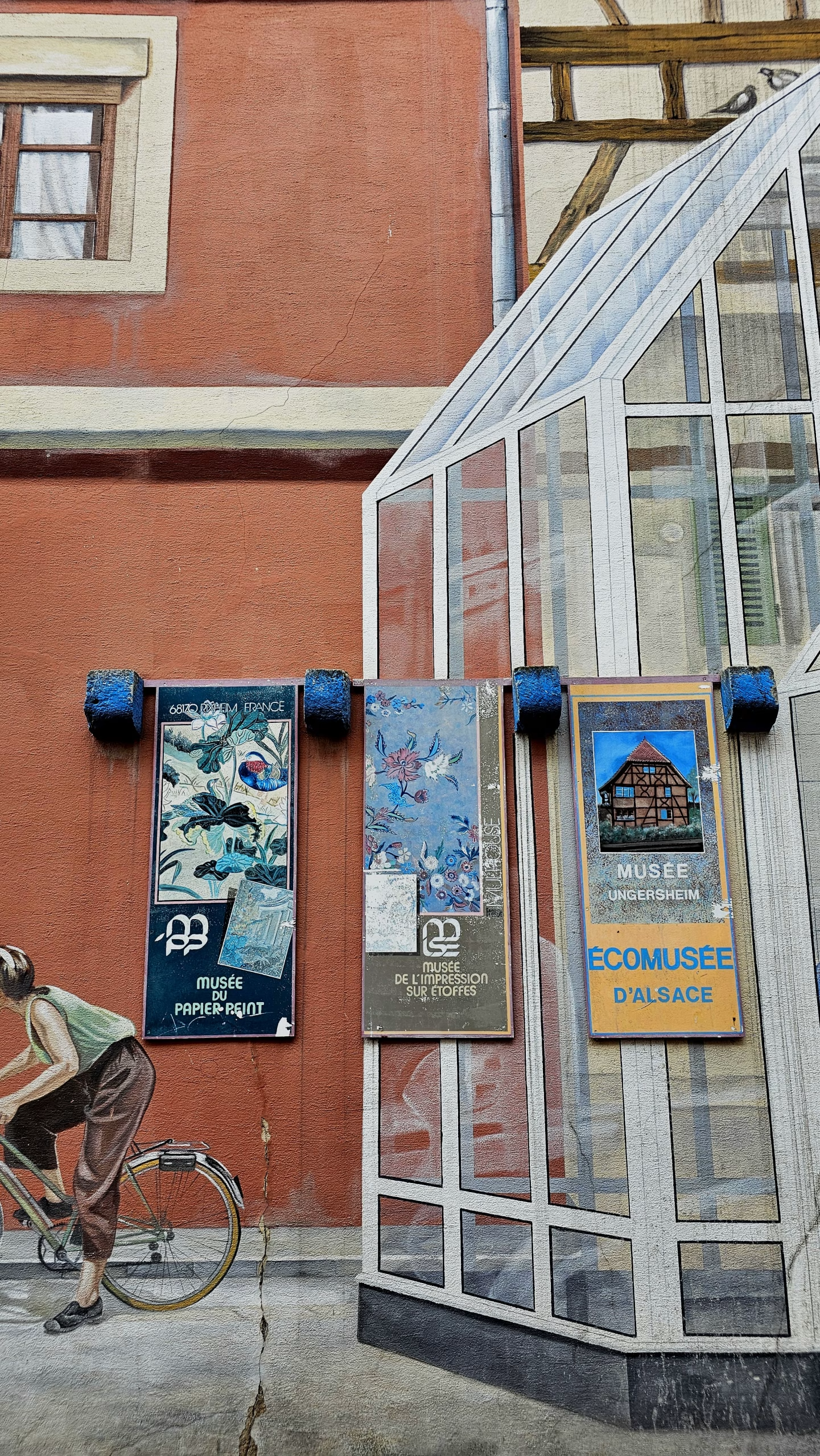
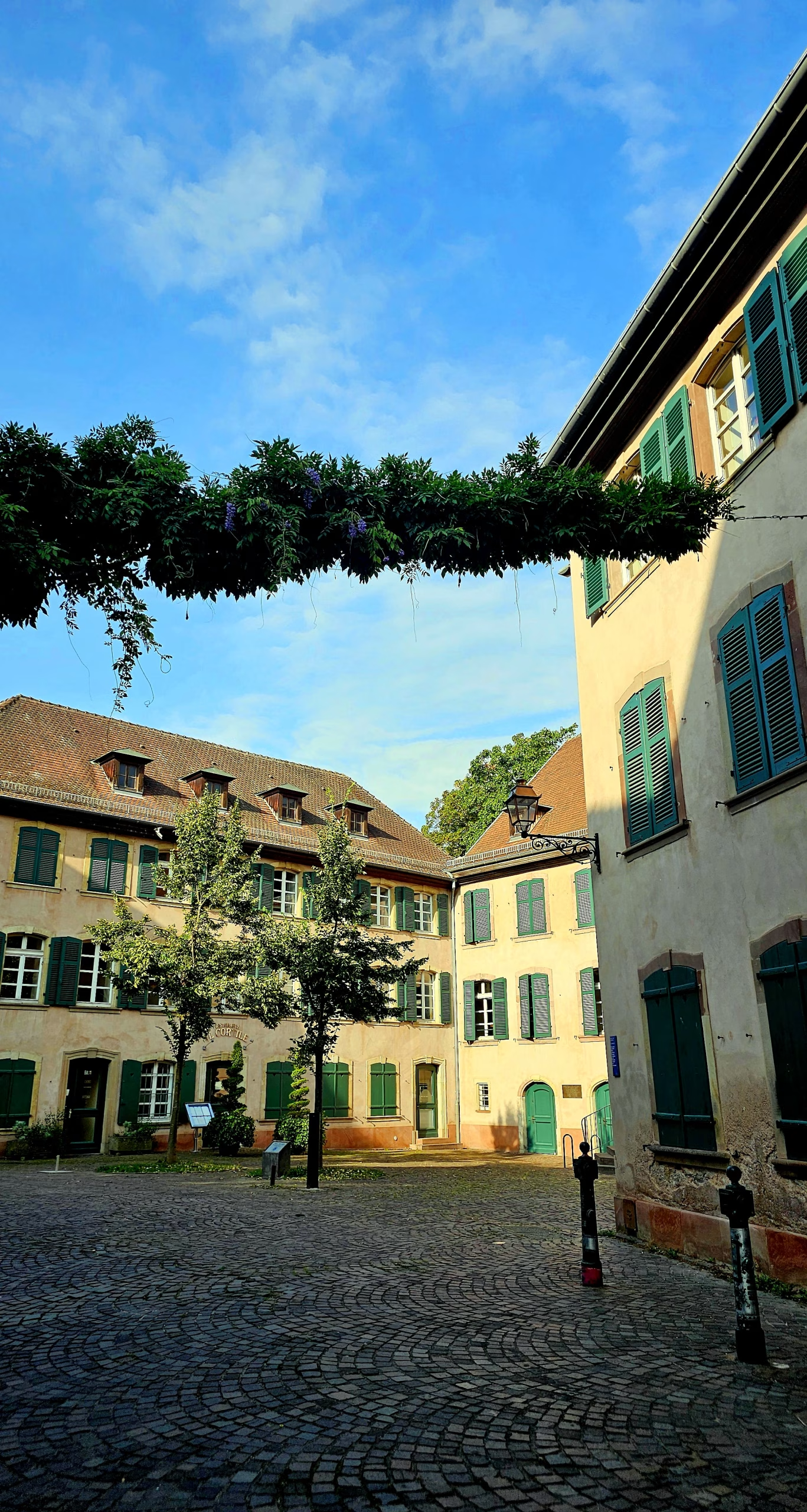
We admit that we chose it more for logistical reasons. We needed a transit city when heading towards northern Italy, so part of another wine trip.
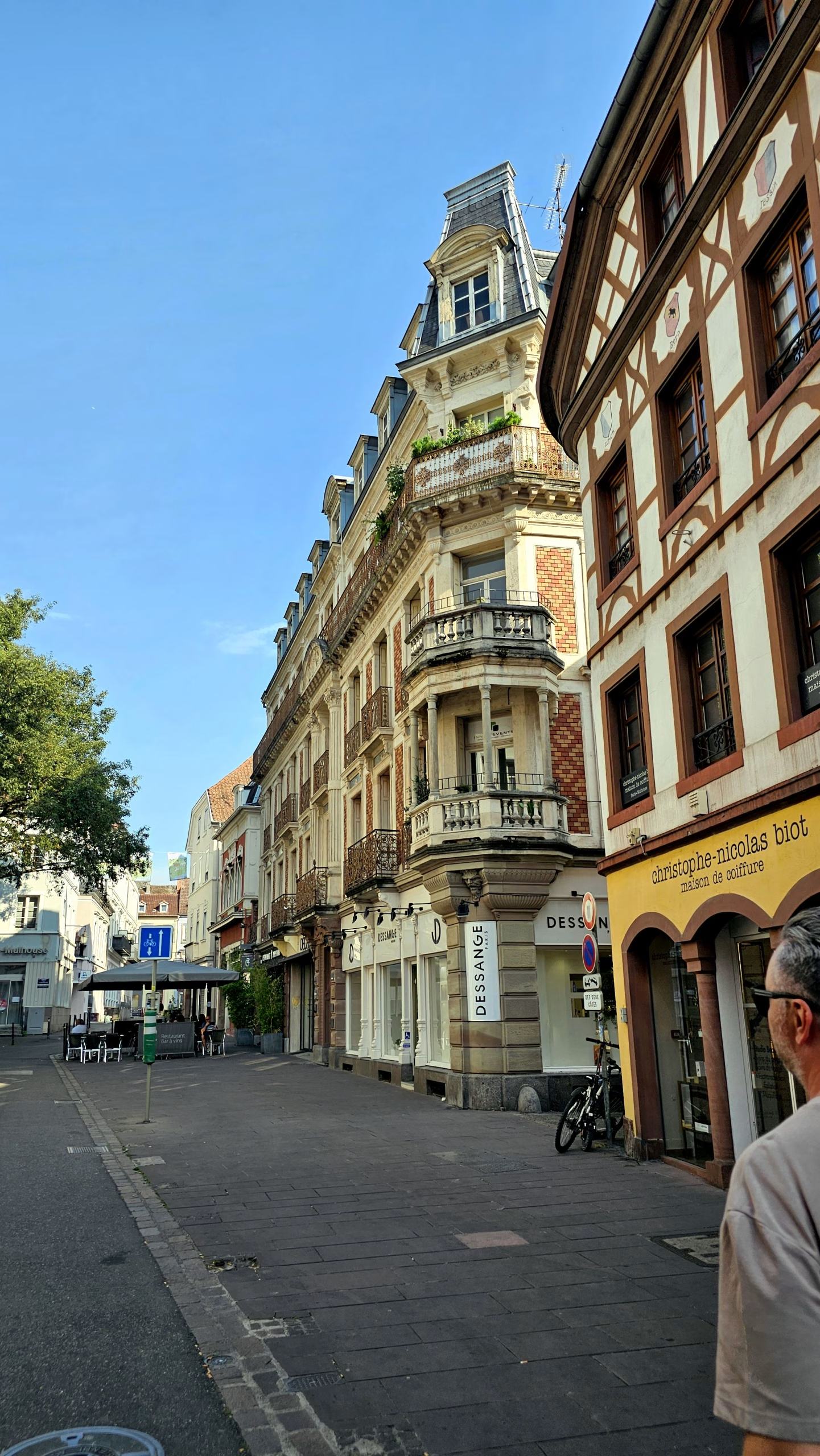
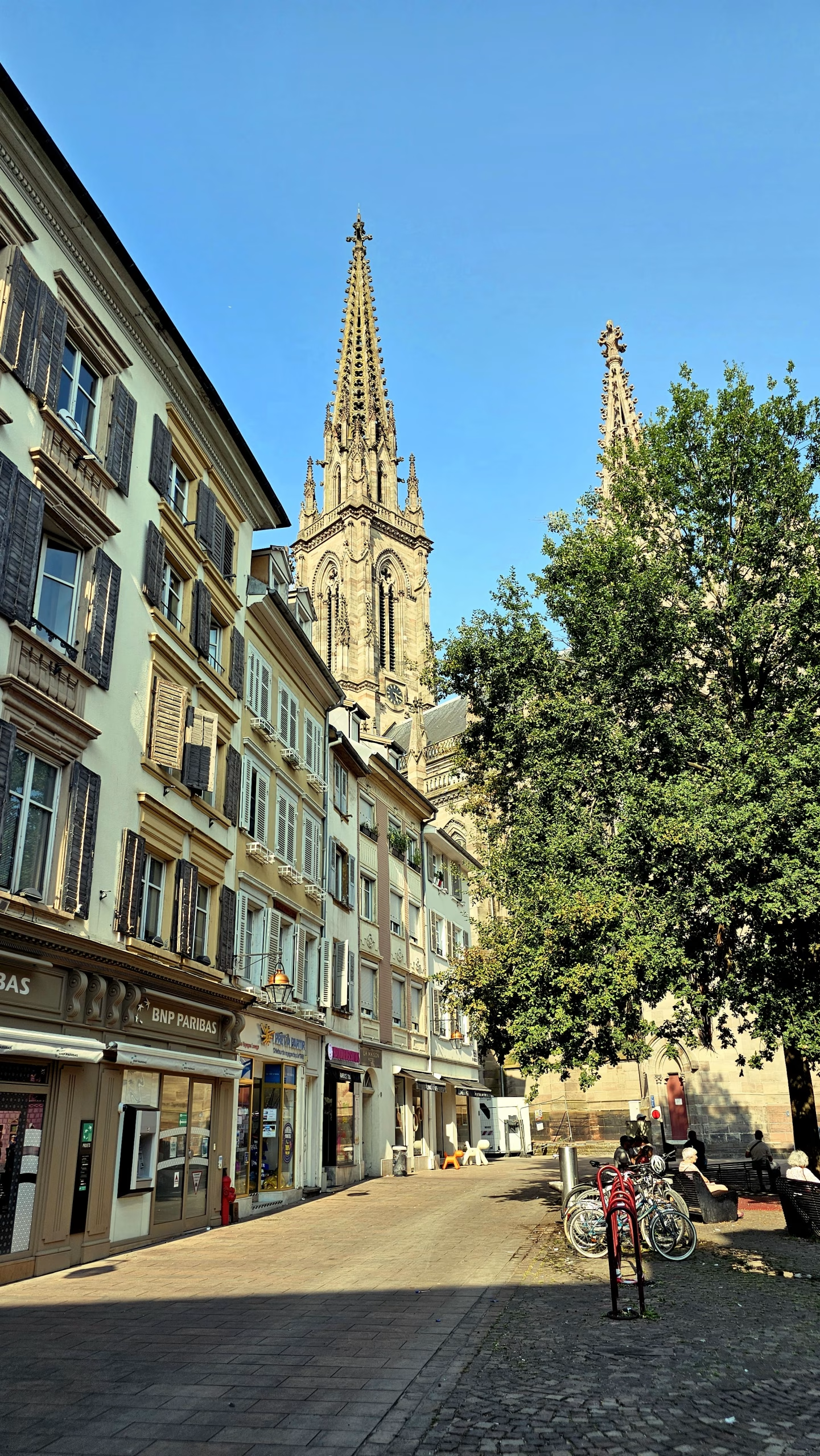
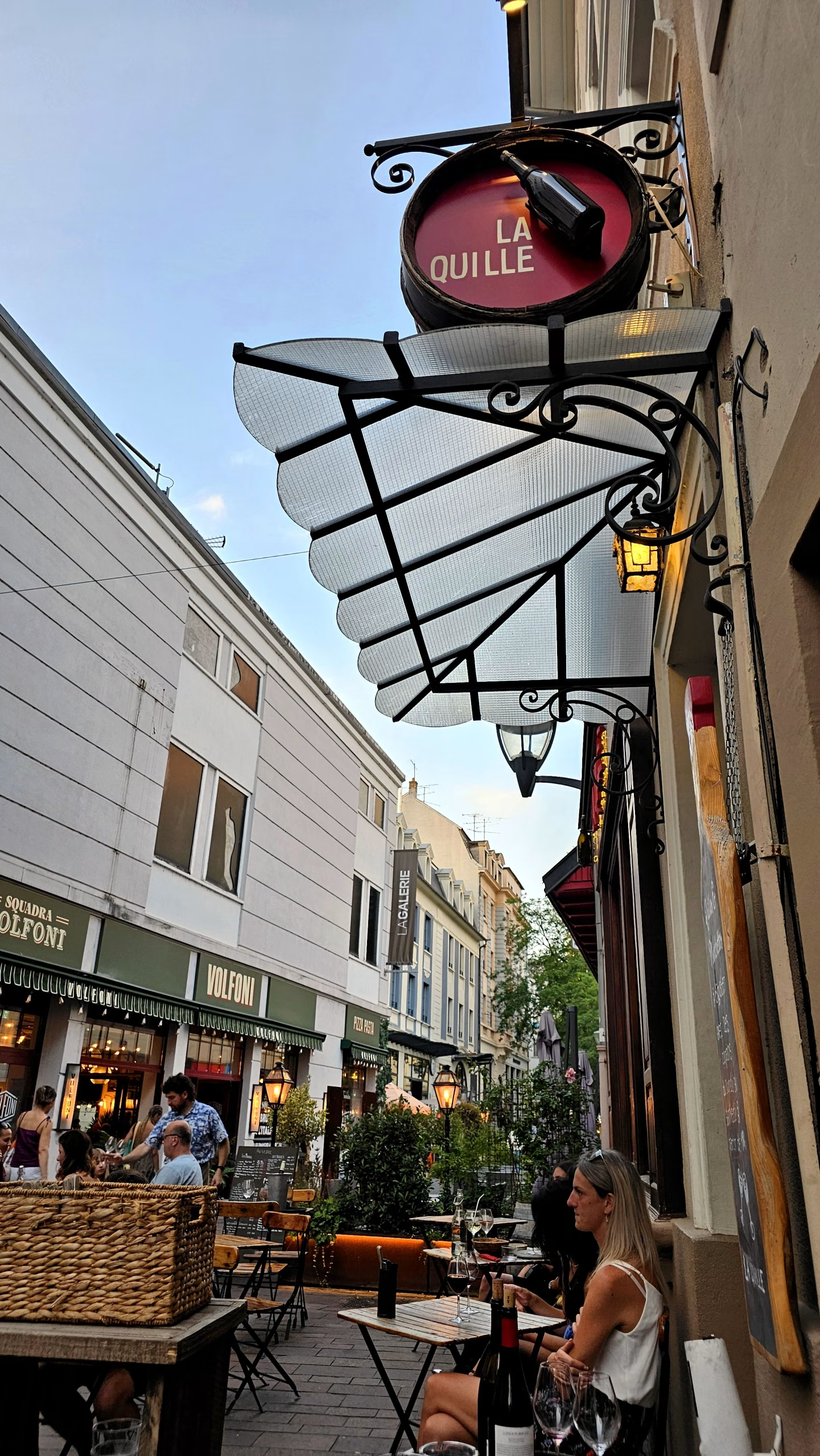
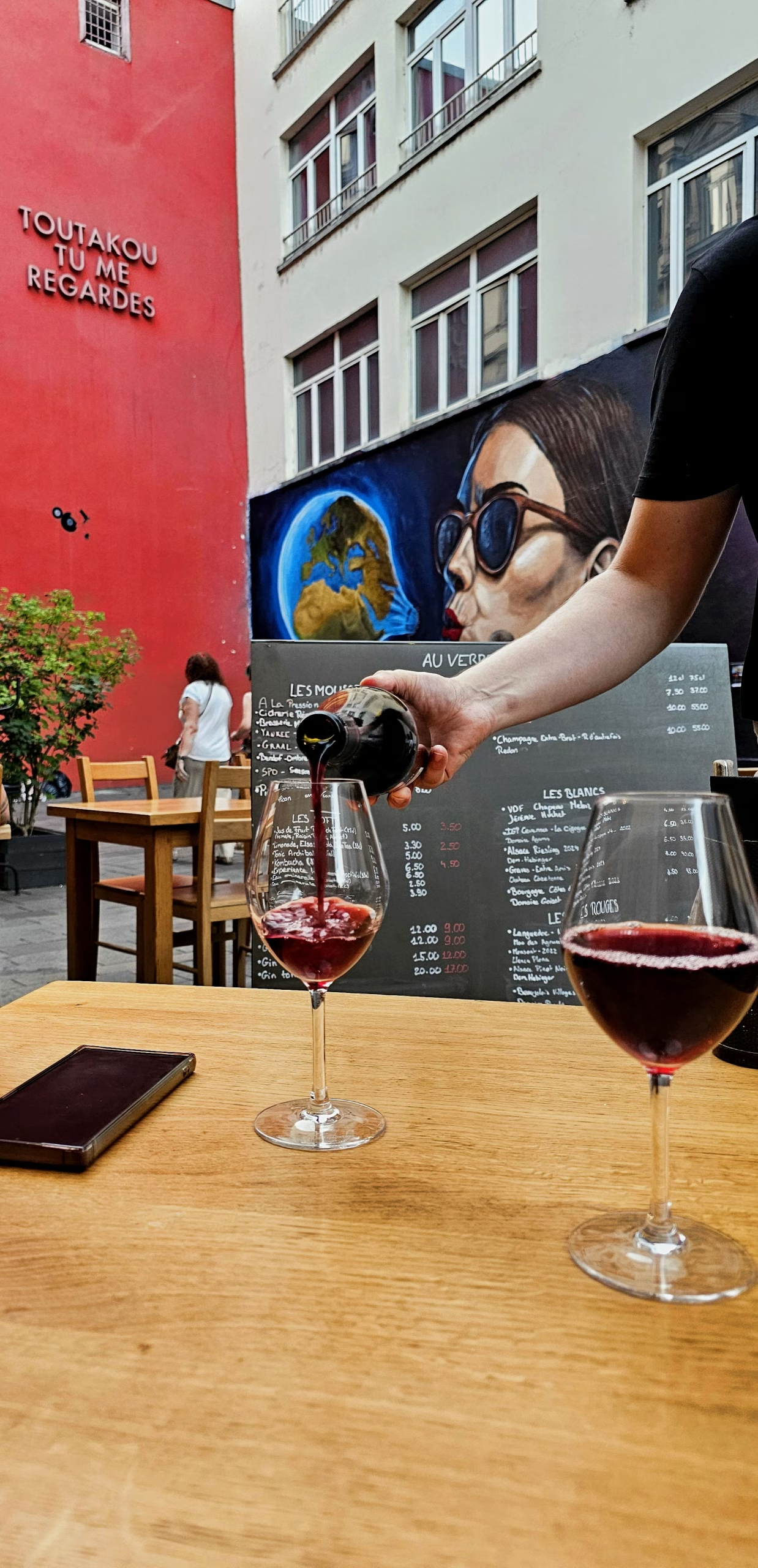
Different vibe, a much more urban atmosphere but still with a well-developed wine culture. We find wine bars with decent prices and a much “younger” and more relaxed clientele – must try – La Quille.
The accommodation unfortunately did not live up to expectations but for 1 night we survived in a pseudo-Lilliputian space at Hotel Berti.
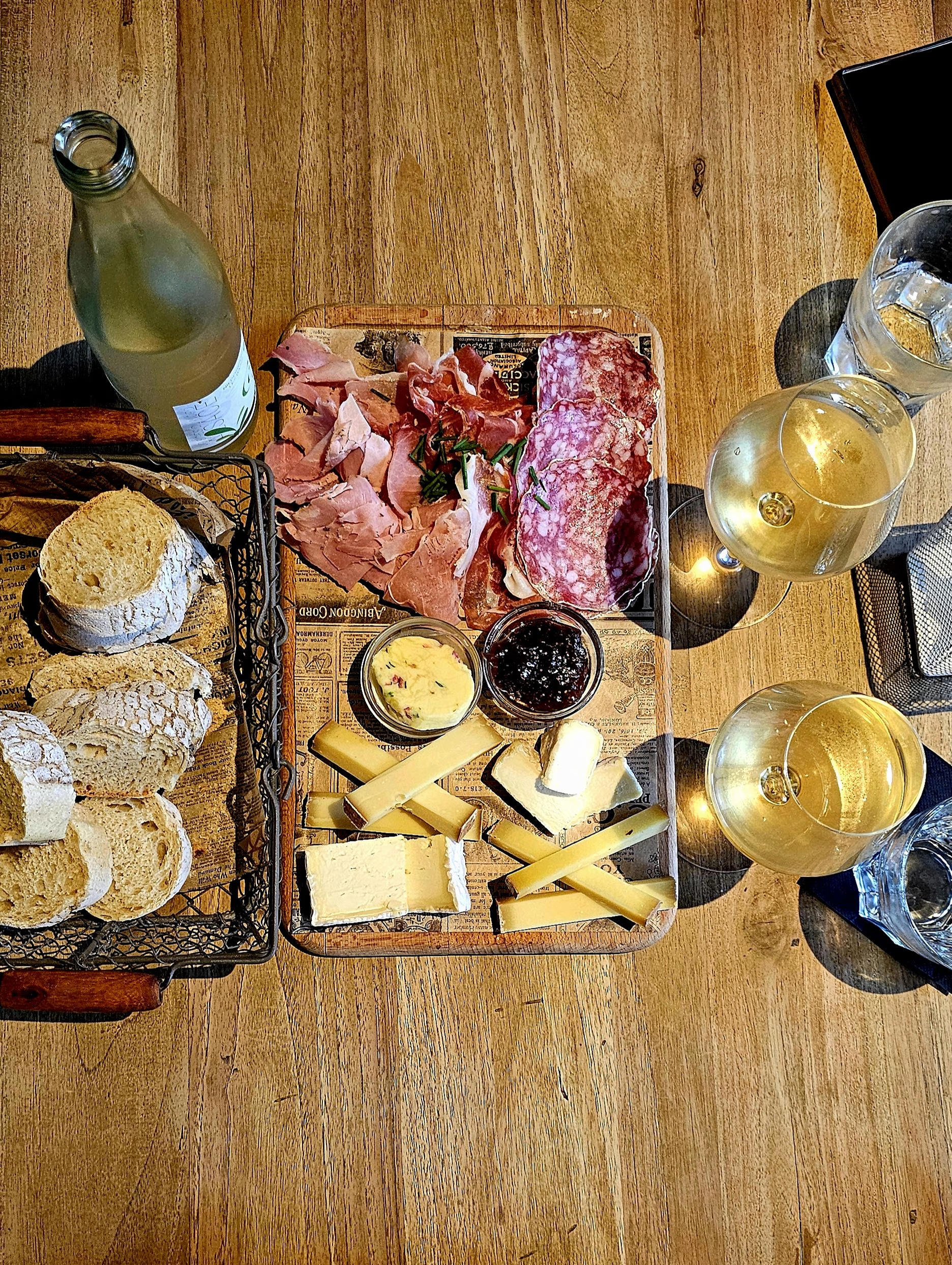
3) Riquewihr
For the most authentic Alsatian experience, this is the best choice.
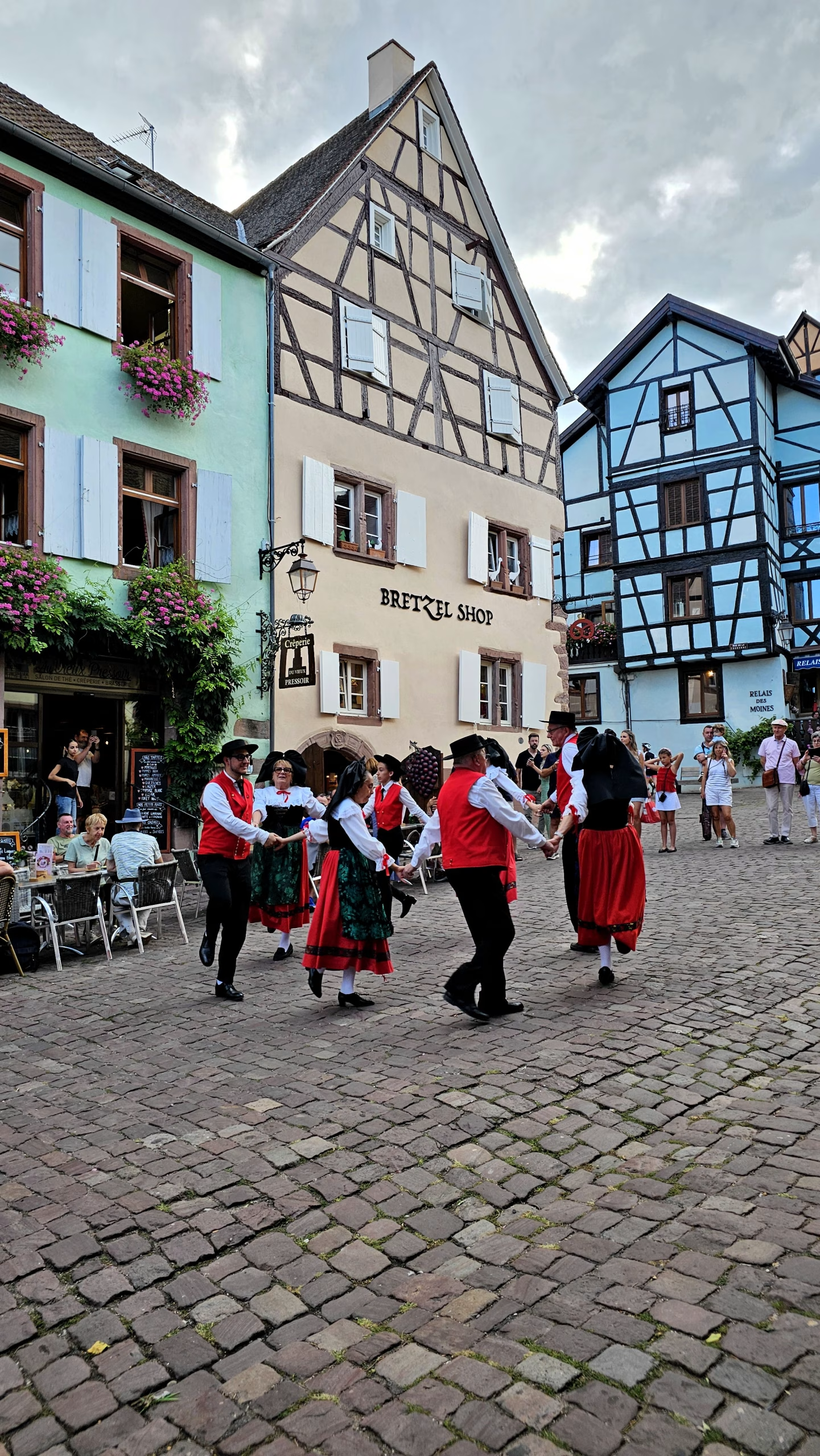
Winner of the title “most beautiful French village” together with 5 other villages (let’s say they were tied  ), Riquewihr is a medieval little village with only 999 people that feels like Disneyland.
Once again we find ourselves staring up and down, analyzing every beam and corner, and realize that in maximum 30 minutes you’ve pretty much seen everything.
But wait… there’s more  . We find almost from house to house in the village, wineries with cellars that lure you in with tastings… you guessed it: spontaneous ones.
we checked off many of them but the ones worth mentioning:
- Dopff – a winery with tradition since 1574 … which we find out moved from the Champagne area to Alsace in order to establish the first Crémant d’Alsace appellation .
A large tasting room with the possibility of doing varietal or vertical tastings. - Hugel – one of the oldest wine-producing families in Alsace (1639) which we only looked at through the window because we arrived during the French “siesta” (merde)
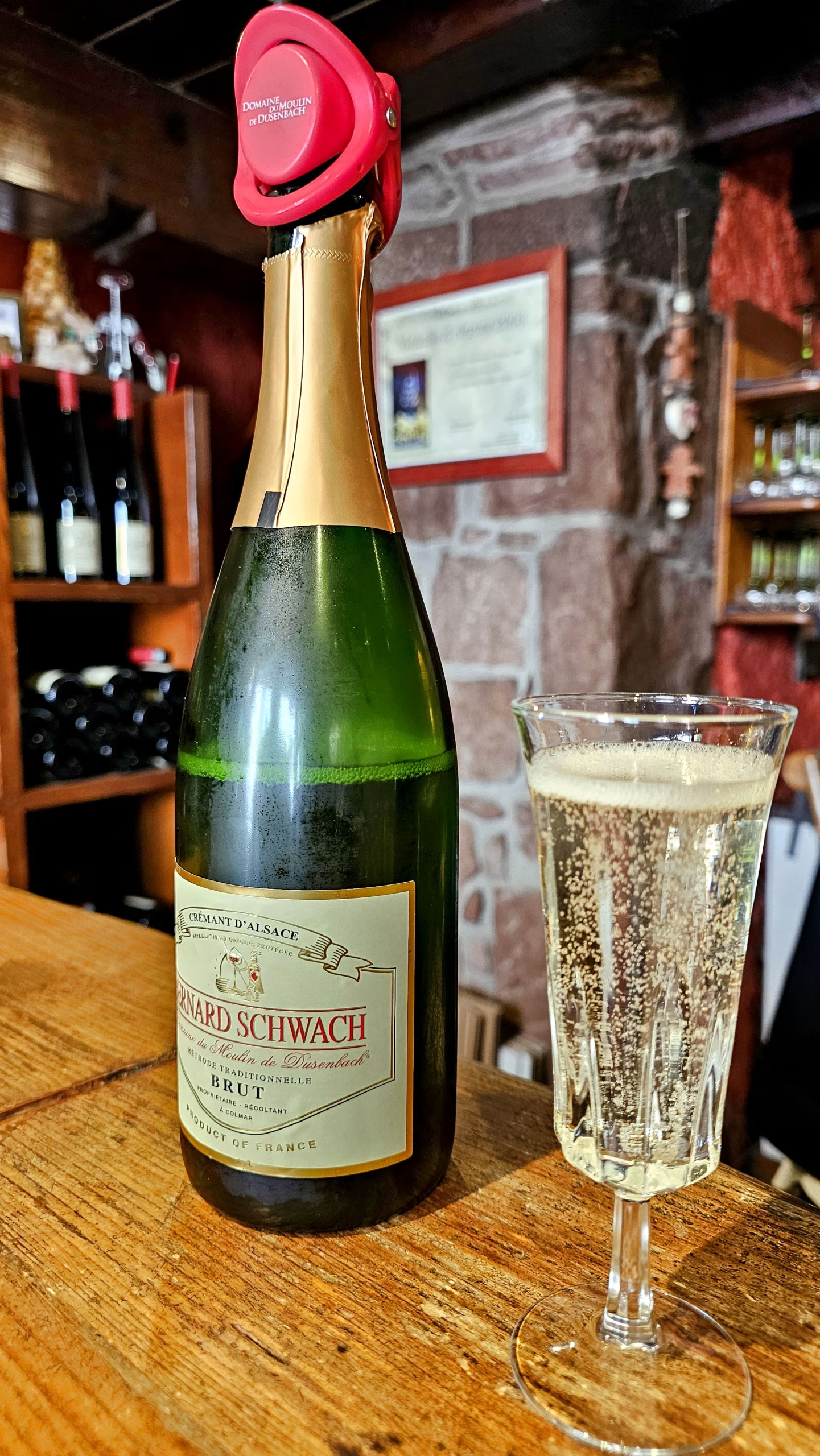
- Bernard Schwach – completely by chance because it was on the way, but what a surprise that Crémant brut was… a delight.
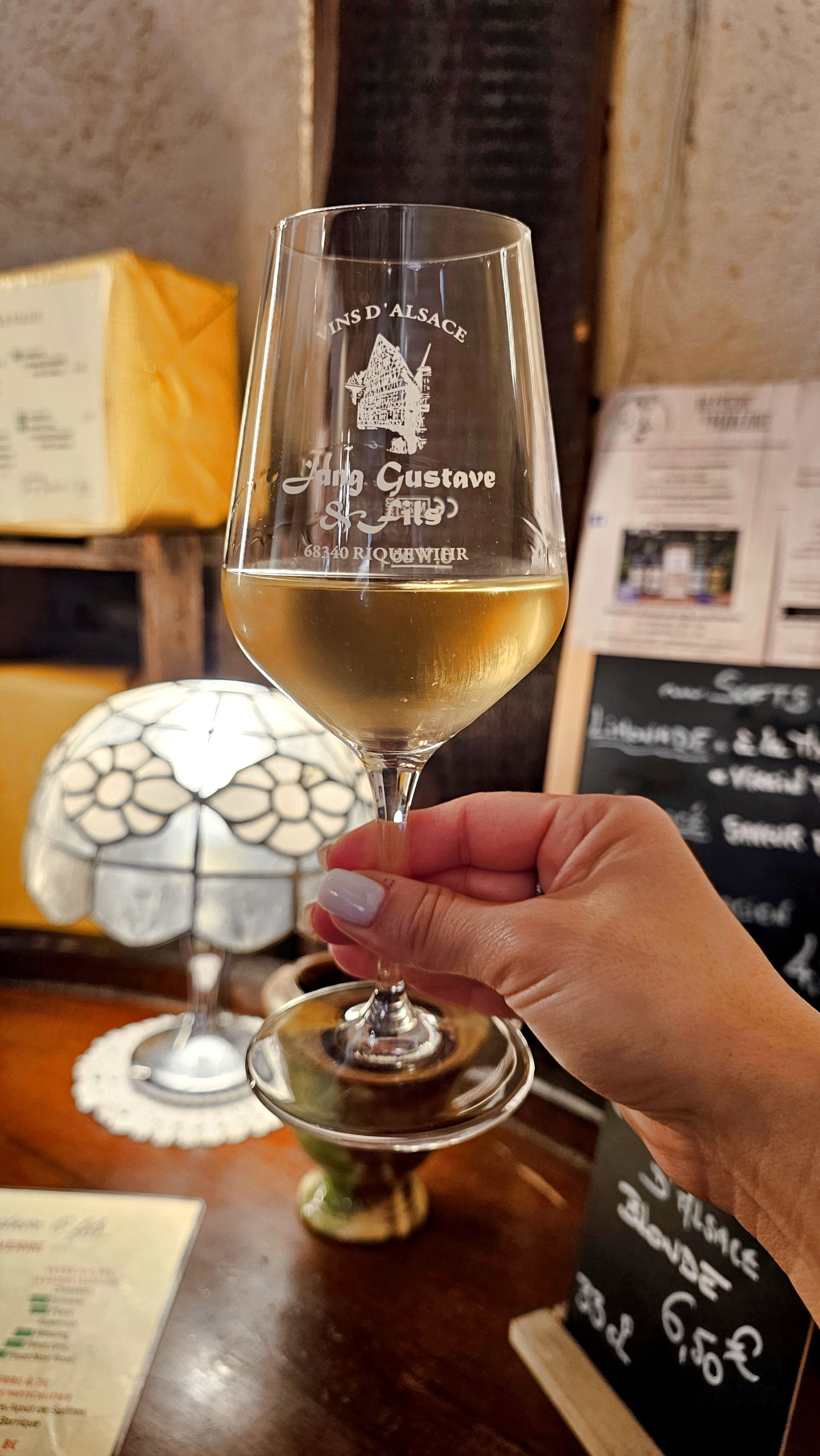
Jung Gustave & Fils – perfect for testing various local varieties by the glass (as a warm-up or intermezzo) plus other wine bars.
 .
 .
And now let me tell you how we actually ended up in Riquewihr for the third time, and why exactly here.
I was telling you that I fell hard for that Riesling from Paul Scherer, so I somehow arrange for us to get back to the area and I also look for some events because usually in the September/October period there are festivals, concerts and they even organize harvests together with passionate tourists.
I find with the help of Gemini a Riesling festival in Riquewihr.
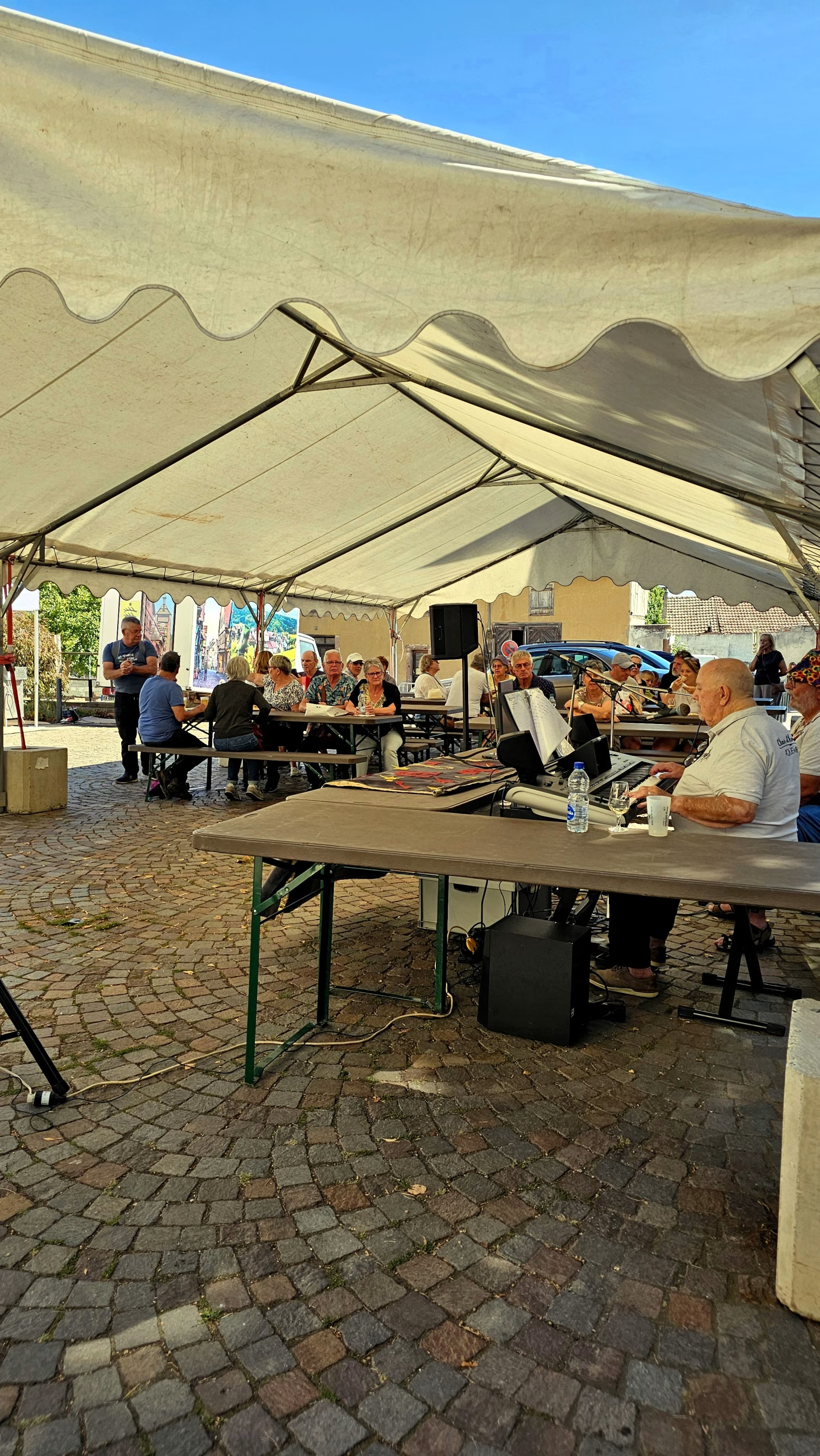
Ah perfect, right on time I tell myself… I look up the details, check the location, book the accommodation and what do you know, we discover that the festival is something… how should I put it: ultra local. A kind of Must Festival from Lower Cucuieți. 5 long tables in German style, a tent and some octogenarians with karaoke attempts.
The stupefaction was maximum… Vino Vidi Vici  ,
We continued our route through the village and said we’d content ourselves with the local wineries and the next day, we make the pilgrimage to Husseren-les-Châteaux once again.
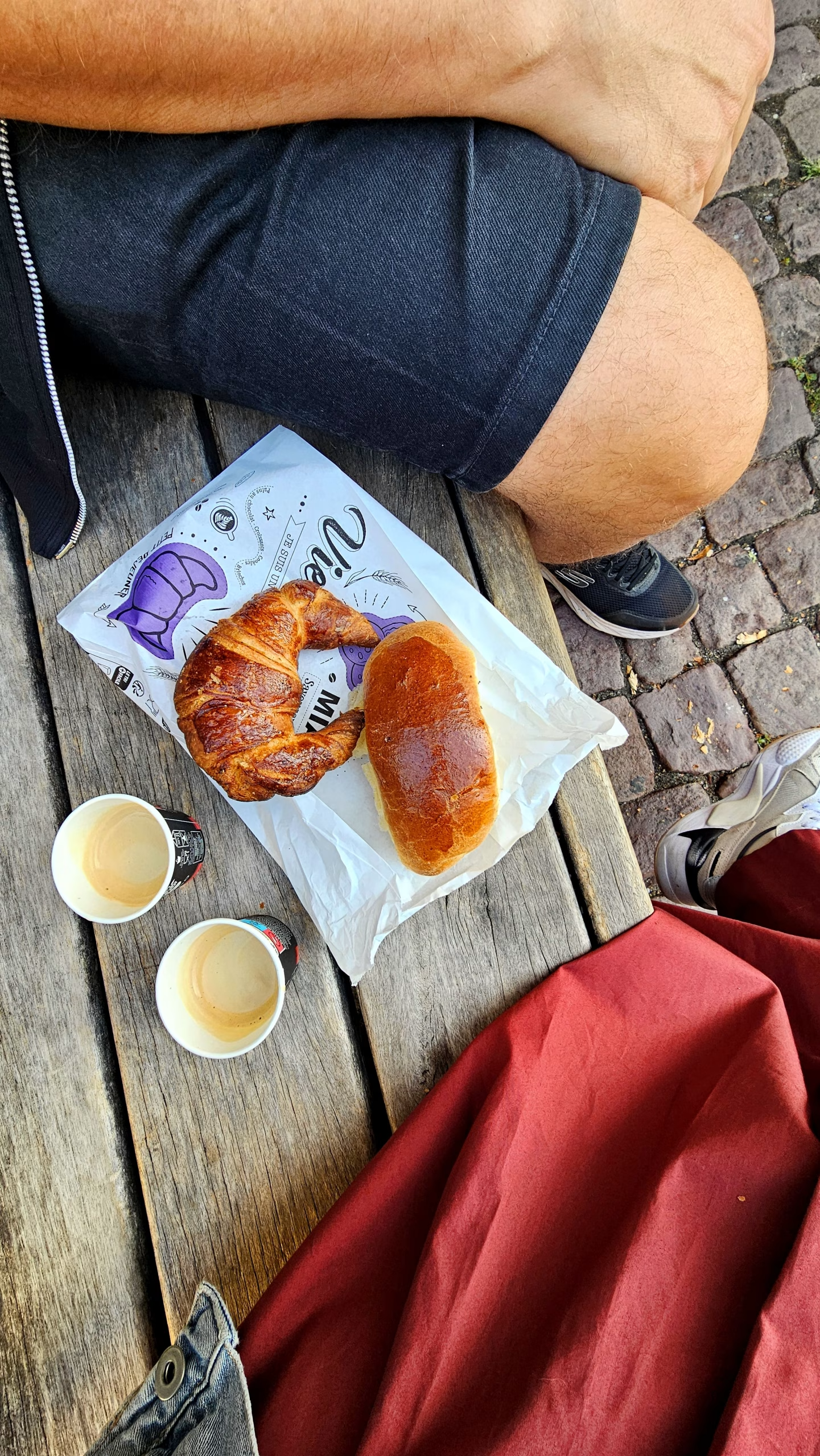
Woke up, drank a coffee rated -20, absolutely terrible, to the point that we seriously debated the idea of opening a café in Riquewihr, ate the holy croissant and after avoiding more waves of tourists, we approach Paul Scherer.
Only to be chased away again, this time by a lady, on the grounds of a wedding. It was closed once more.
Yeah.
Once upon a time there was a divine Riesling. Which we will never taste again.
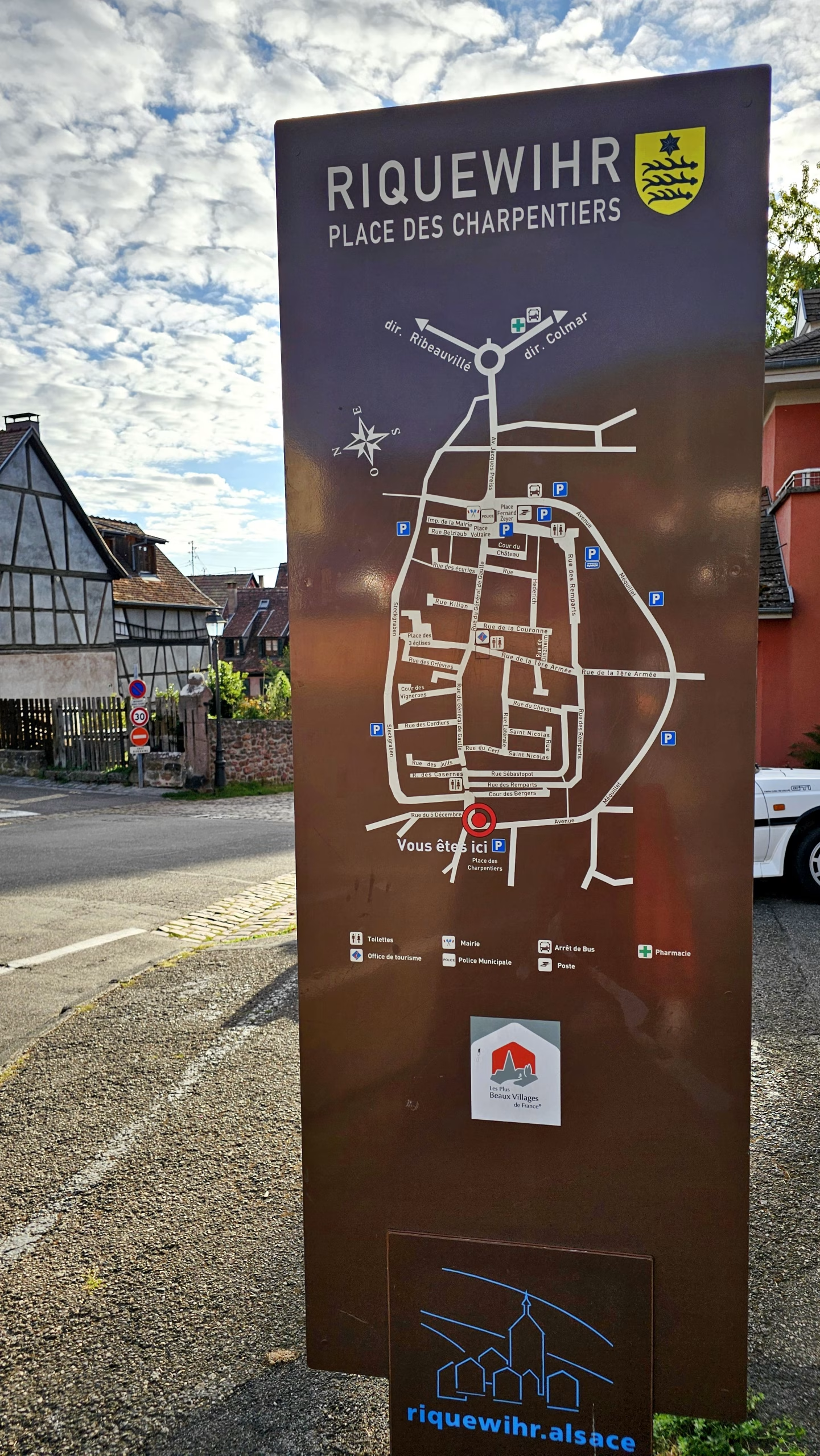
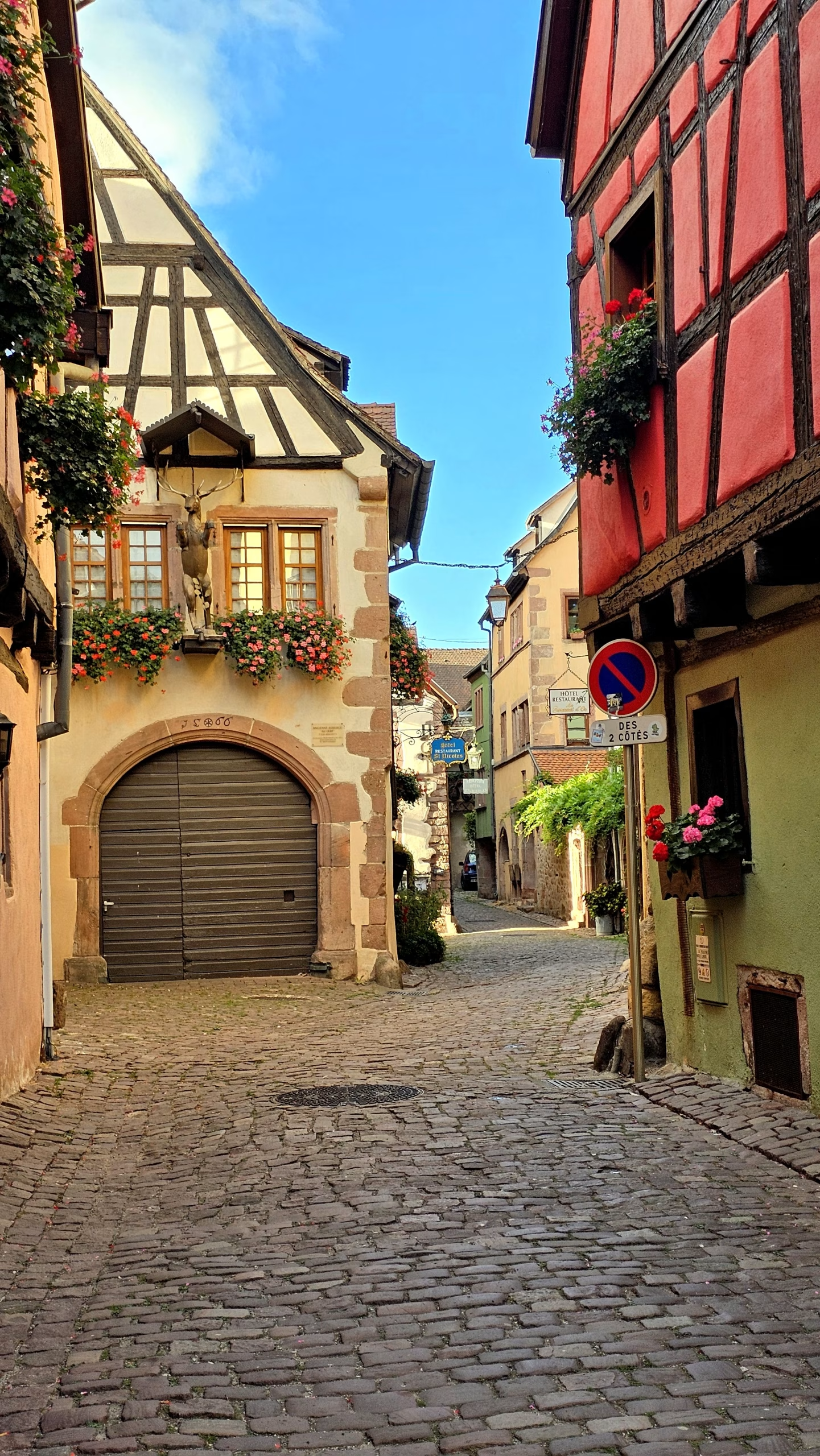
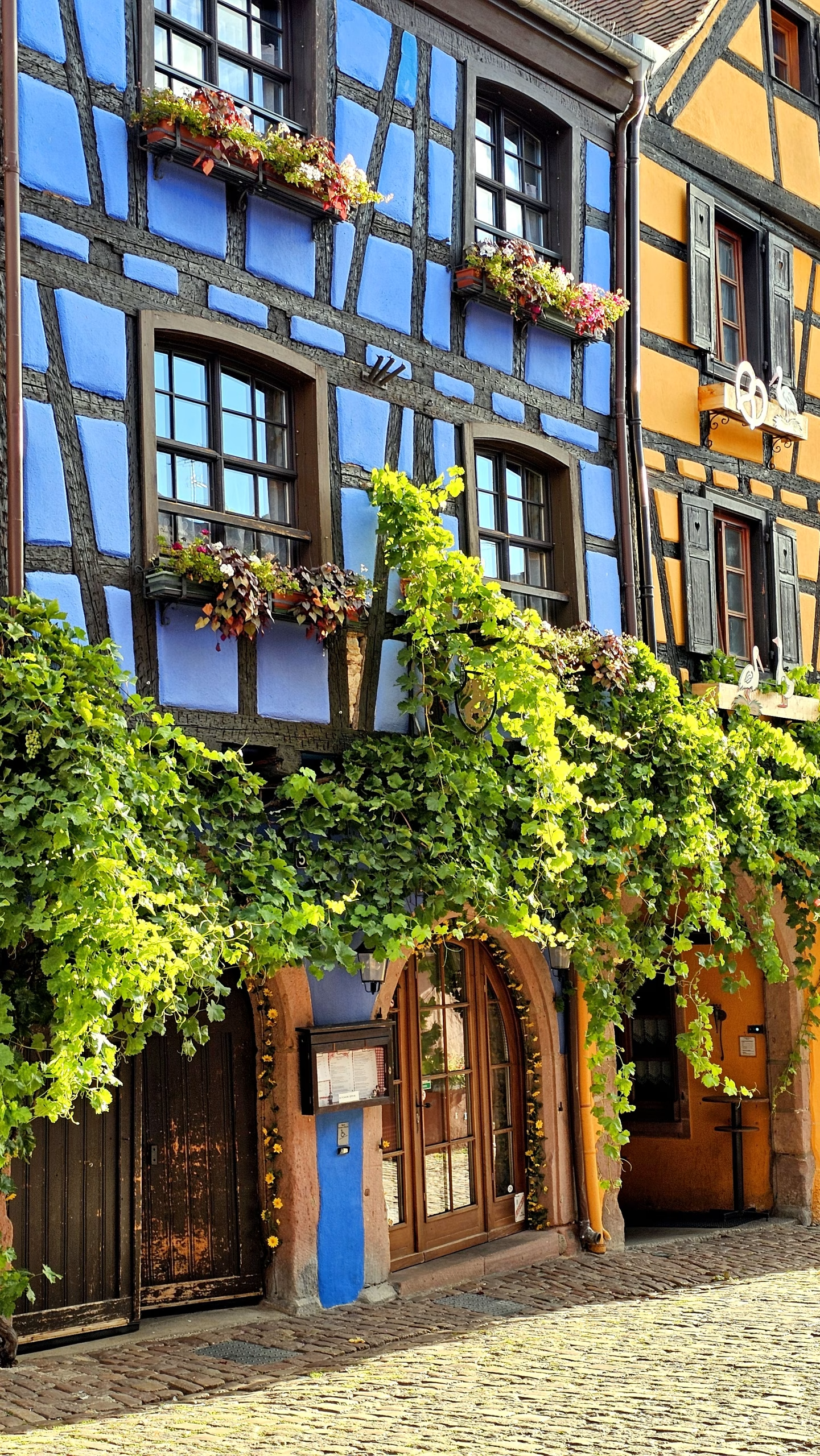


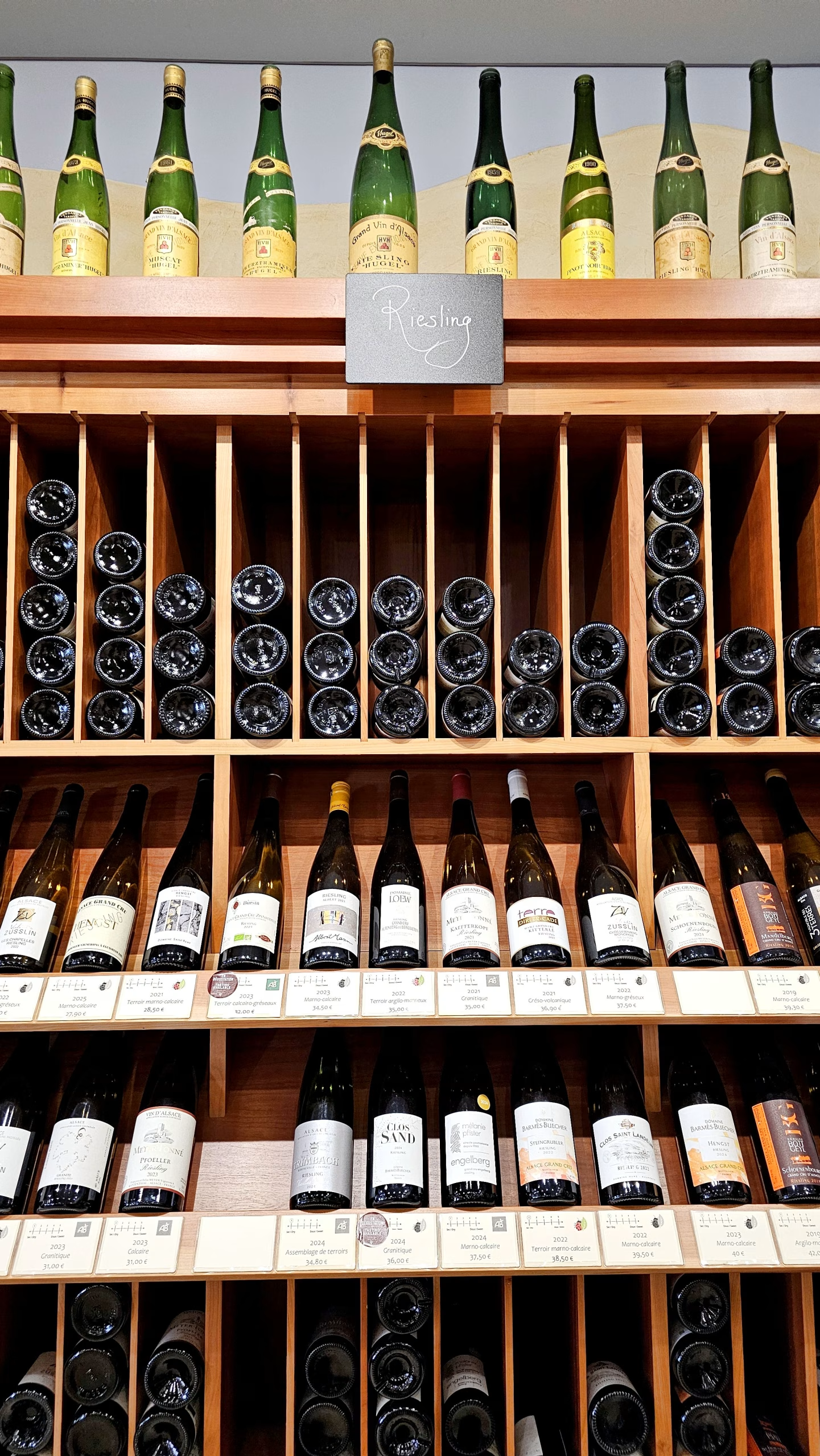
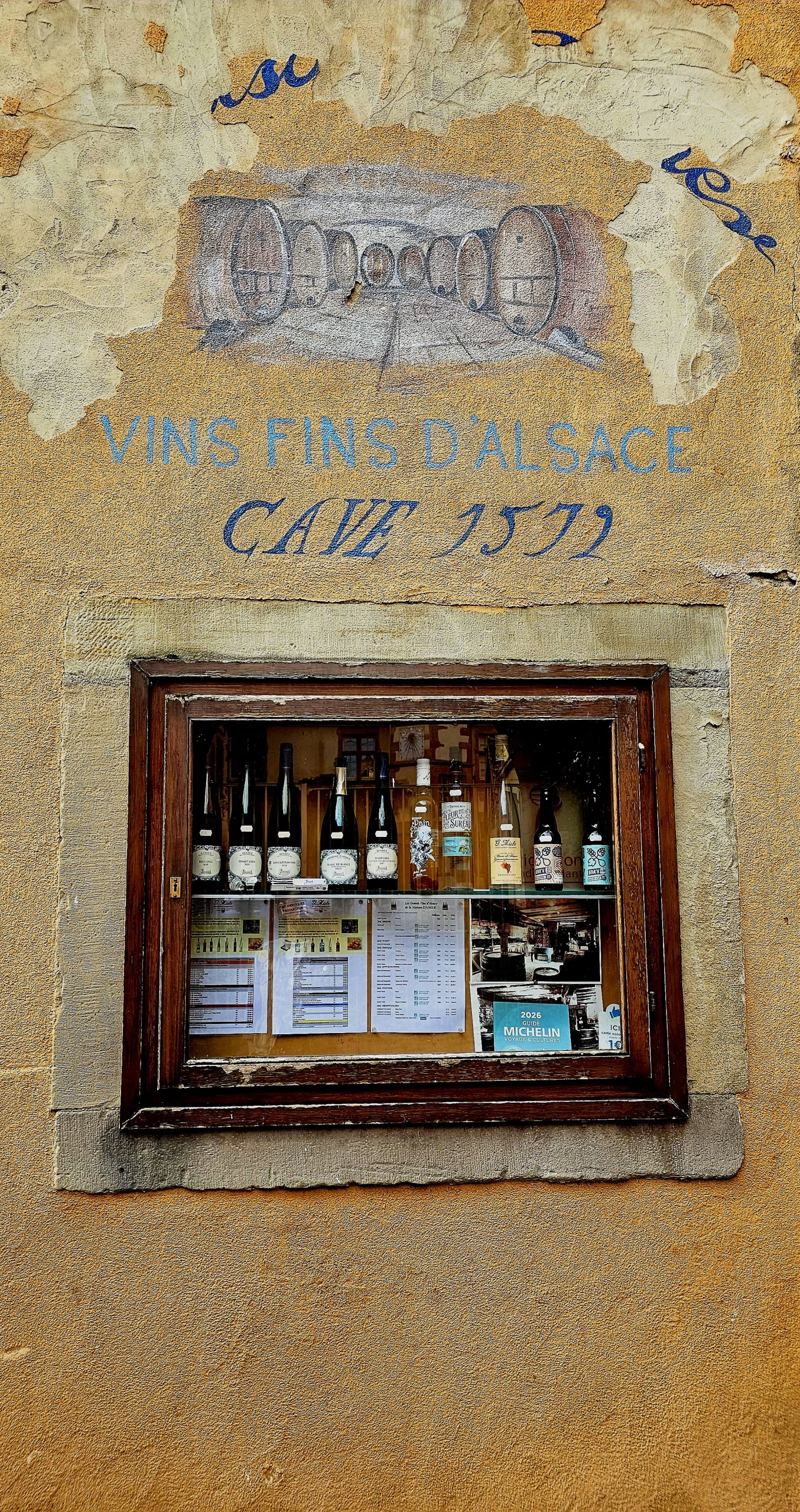
Accommodation ★★★★⯪ – we averaged it for all 3 – the microscopic accommodation in Mulhouse brings it down, but the others were very okay, more rustic styles yet with a lot of good taste and authenticity. We omitted the absolutely insane accommodation in Riquewihr at a wine hotel from 1500 (?!?!) that belonged to several generations of nobles – La Couronne. We were lucky to stay in the oldest room in the hotel with superb Renaissance decorations – we were literally staring constantly at the walls and ceiling. Like a dream 
Food ★★★⯪ – shocking, I know – but as explained above, the style is German-French; heavier food with a twist, I can’t say we were impressed compared to other regions of France, and we tried quite a few locations. It’s an acquired taste as some say.
Tastings ★★★★⯪ – definitely a different kind of experience, with vineyards at the end of the street and wineries on the lanes of villages and towns, dozens of cellars visited more spontaneously. Some more used to tourism, others not so much – note the “characteristic” politeness of the French. Overall yes, complex wines, unique in style, but a more rustic hosting style dominates.

Fin.

