
Sopron
🇭🇺 just around the corner from Tokaj
 10 min
In another life time, I must have been a long-haul truck driver, because I’ve long since lost count of how many trips I’ve made between Romania and Germany and back again  .
Back in the early days, I liked to think of myself as tough and would drive straight from Romania to Germany in one go, but those days are long gone…  .
So these days, the standard routine includes a stop somewhere around the halfway point.
And since we learn from our mistakes, I initially used to pick some random motel or other fairly unremarkable place, until it finally dawned on me that I could combine business with pleasure and choose a wine region or a town famous for its wine scene instead (usually with only about a 30-45 minute detour).
And that’s how, with this new strategy, I’ve discovered gem-like towns such as Brno and Mikulov, Bratislava, St. Pölten, and Austria’s Burgenland region. This time, however, I picked a lesser-known destination that completely won us over: Sopron, Hungary  .
Sopro… what? 

I’ll admit that at first I was looking for a vineyard estate with accommodation, or perhaps a wine hotel somewhere along the terraced banks of the Danube in Austria  . But after seeing the prices, I quickly changed course and started looking in neighboring countries that may be less affluent, yet boast winemaking traditions that are every bit as old.
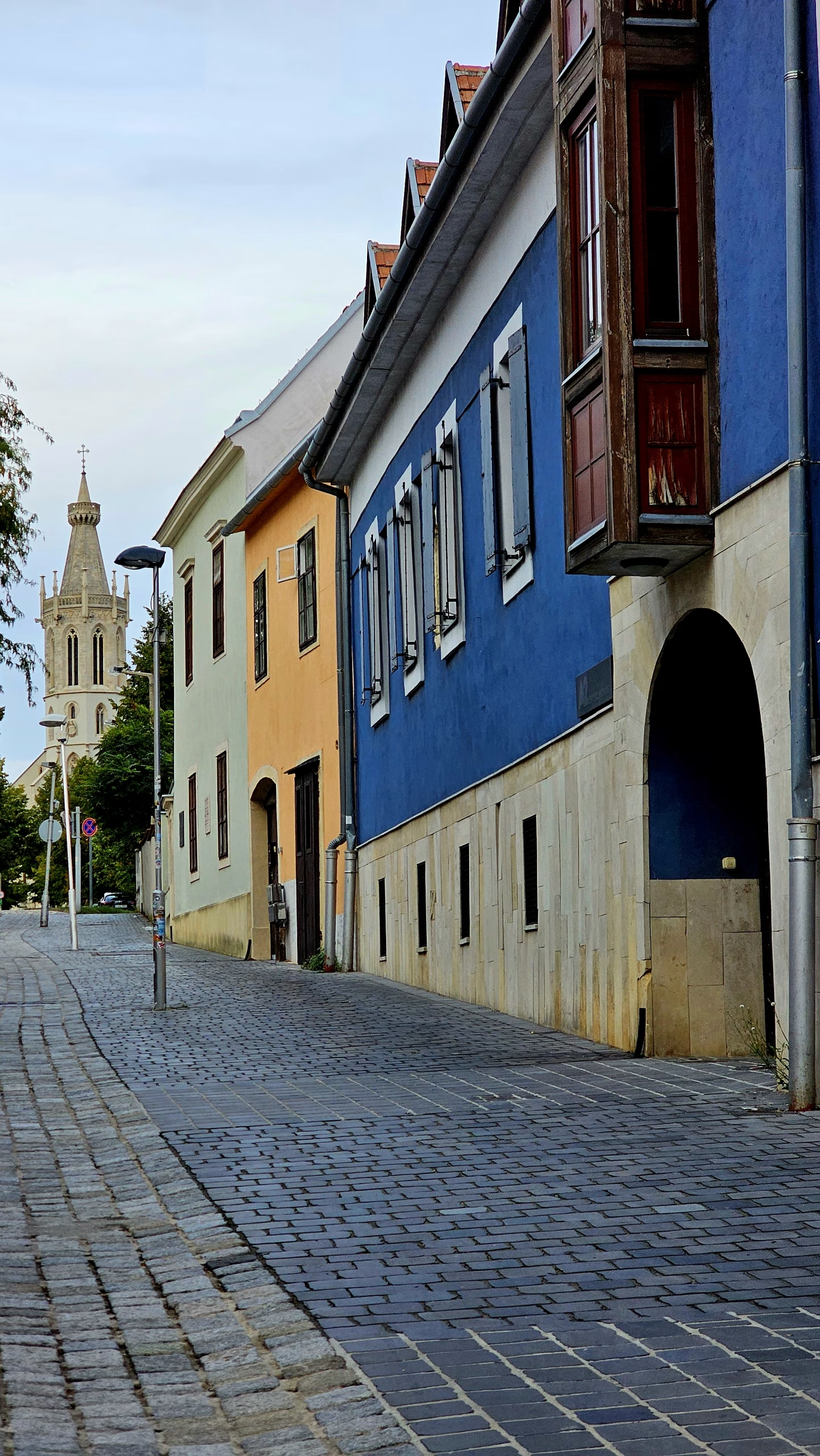
I didn’t have particularly high expectations, but Sopron turned out to be a little Hungarian version of (for those curious about the wine capital of Moravia, you can read more here → Mikulov).
The name is at least amusing for us Romanians because the Romanian word “șopron” (meaning shed or shelter) comes from the borrowed German word “schoppen,” meaning shelter. In this case, however, the town itself, originally called “Scarbantia” by the Romans, was later renamed “Suprun” and eventually “Sopron,” meaning “wise,” after one of its founders.
Once upon a time…
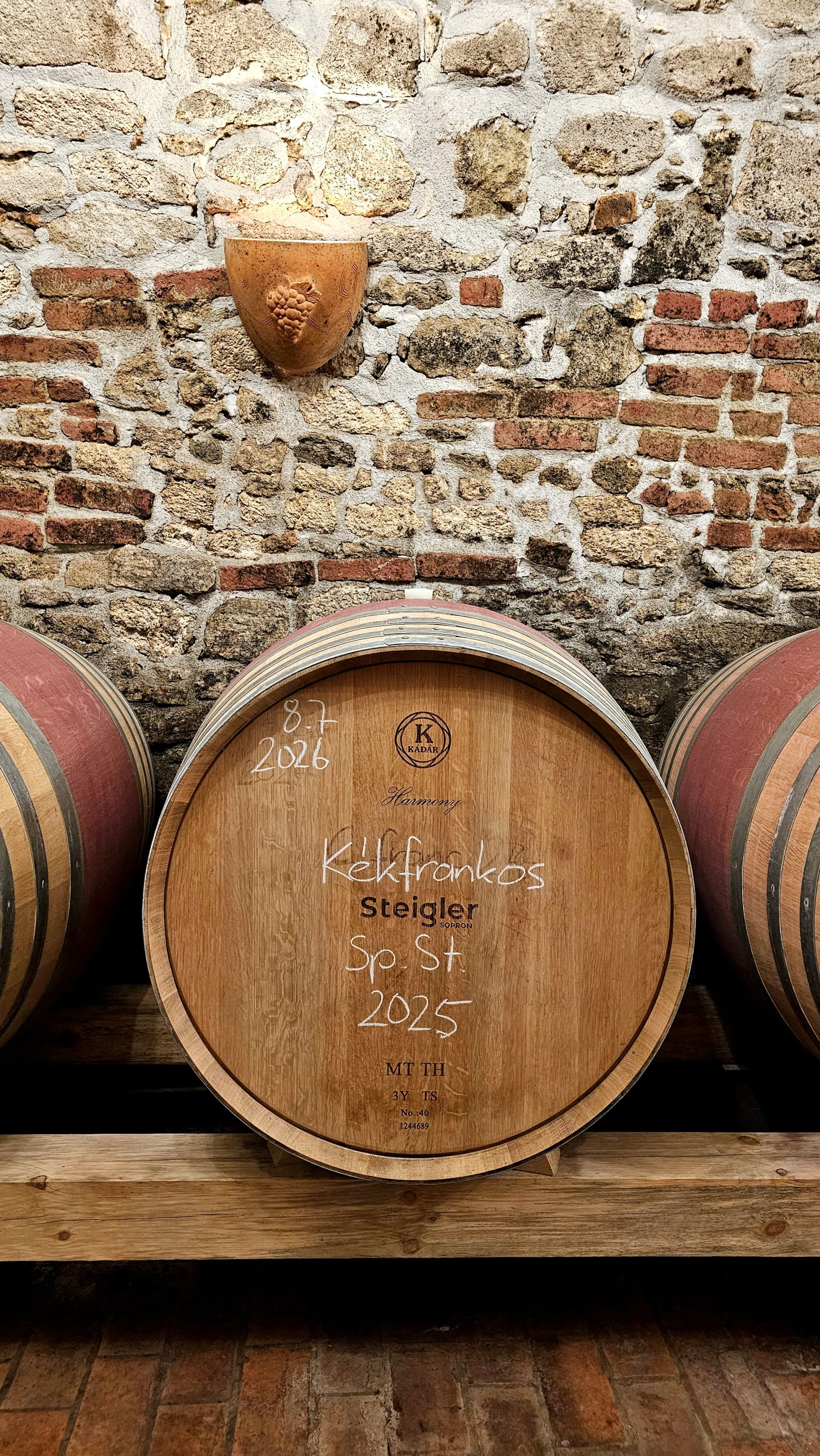
…there was a town of just 61,000 inhabitants, rich in history, adorned with Baroque architecture, and proudly carrying the nickname “The Capital of Kékfrankos” (Blaufränkisch, for those who don’t recognize the Hungarian name of the grape variety).
But… according to the locals, that nickname is actually a fairly recent one, because historically the region was dominated by white grape varieties.
Then Phylloxera wiped everything out, much like it did across most of Europe between 1850 and 1880, and the vineyards were replanted with red grape varieties, including what is now the region’s famous Kékfrankos.
And because history has a habit of repeating itself, we’re now seeing white varieties making a comeback in the vineyards of Sopron, not because of invasive pests this time, but because of… the market.
I’ve mentioned in other articles that consumer preferences are changing dramatically from one generation to the next: Gen Z tends to prefer beverages with as little alcohol as possible, or none at all. And if there is alcohol, they want it light, fresh, natural, less sweet, and… sparkling.
The wine industry is adapting accordingly, including in Sopron: move over Kékfrankos  , make way for Zöld Veltelini (better known as Grüner Veltliner) and Furmint, produced in just about every style imaginable: dry, off-dry, oaked or unoaked, pét-nat, and sparkling.
Sopron has earned a second nickname as well: “The Most Loyal Town” in Hungary, because after World War I, when the map of Europe was being redrawn following the collapse of the Austro-Hungarian Empire, the people of Sopron chose, through a referendum, to remain part of Hungary rather than become part of Austria.
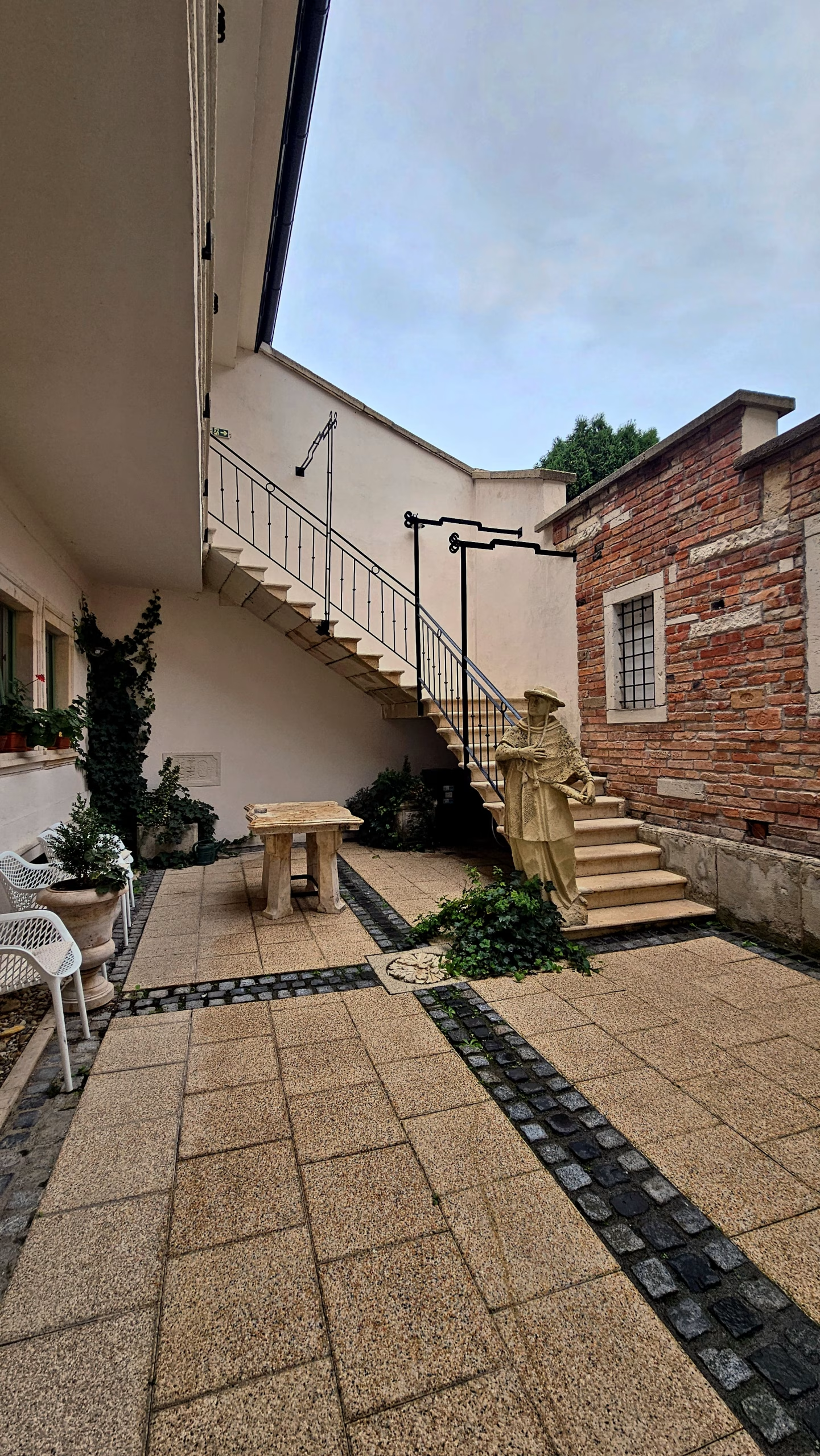
The distance from Sopron to the Austrian border is just 1 km, and perhaps because of this proximity, after exploring the town on foot, we came to the conclusion that it is exceptionally well organized, tidy, clean, and meticulously maintained. German is spoken fluently in many places, and businesses are generally happy to accept euros as well as Hungarian forints.
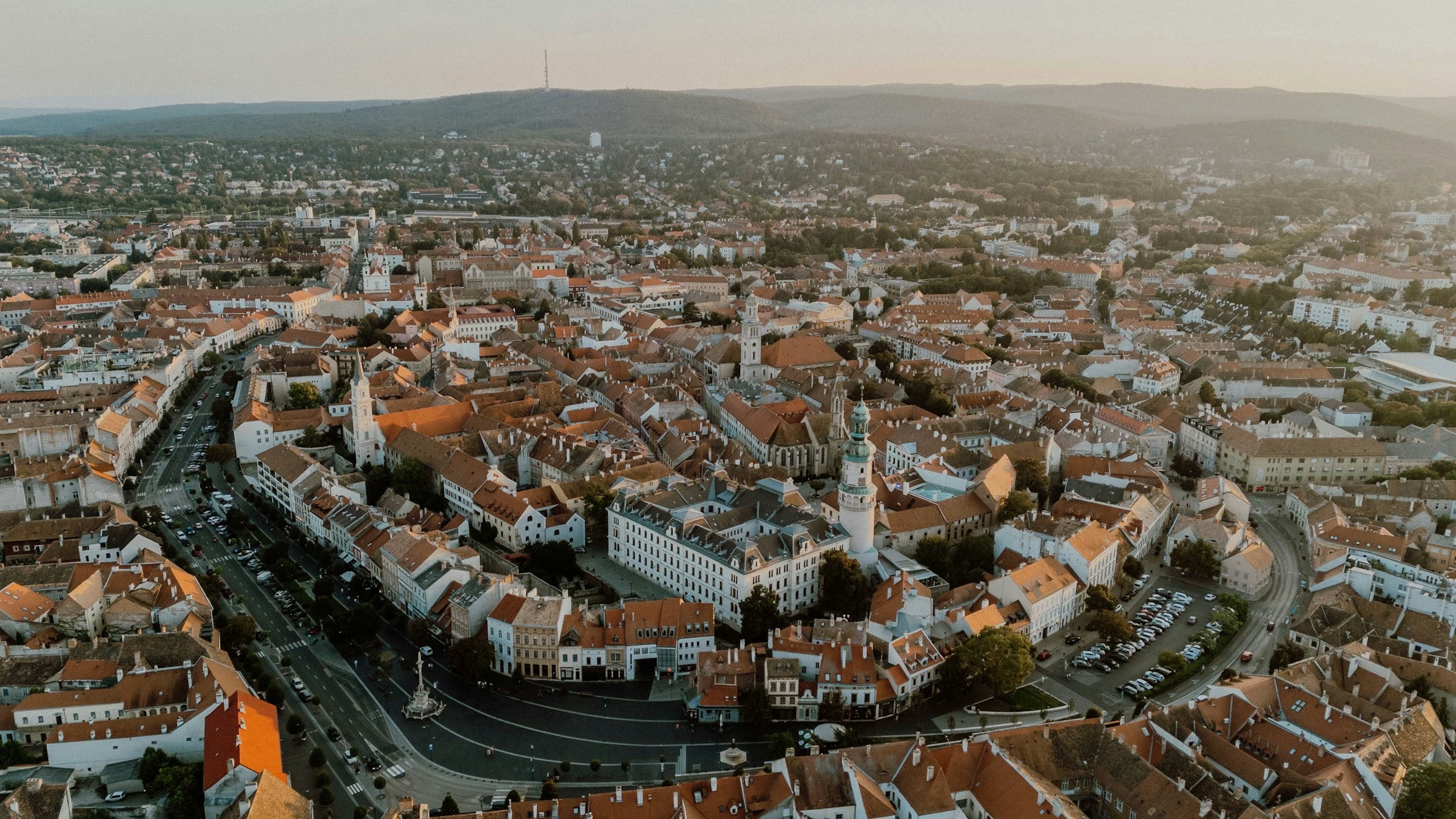
⚲ Sopron, Hungary
Soils and Grape Varieties
As in almost every European country that falls within the wine belt (30°-50°N latitude), it was the Romans who first planted vineyards in Sopron. By now, that’s almost a familiar story. However, Germanic influence has left a particularly strong mark on the region’s wine industry and traditions over the past several centuries.
The Sopron wine region shares much of its territory and heritage with Austria’s Burgenland, which means you’ll find plenty of “Germanic” grape varieties here, including Riesling, Grüner Veltliner, Silvaner, Blaufränkisch, Zweigelt, Dornfelder, and many others.
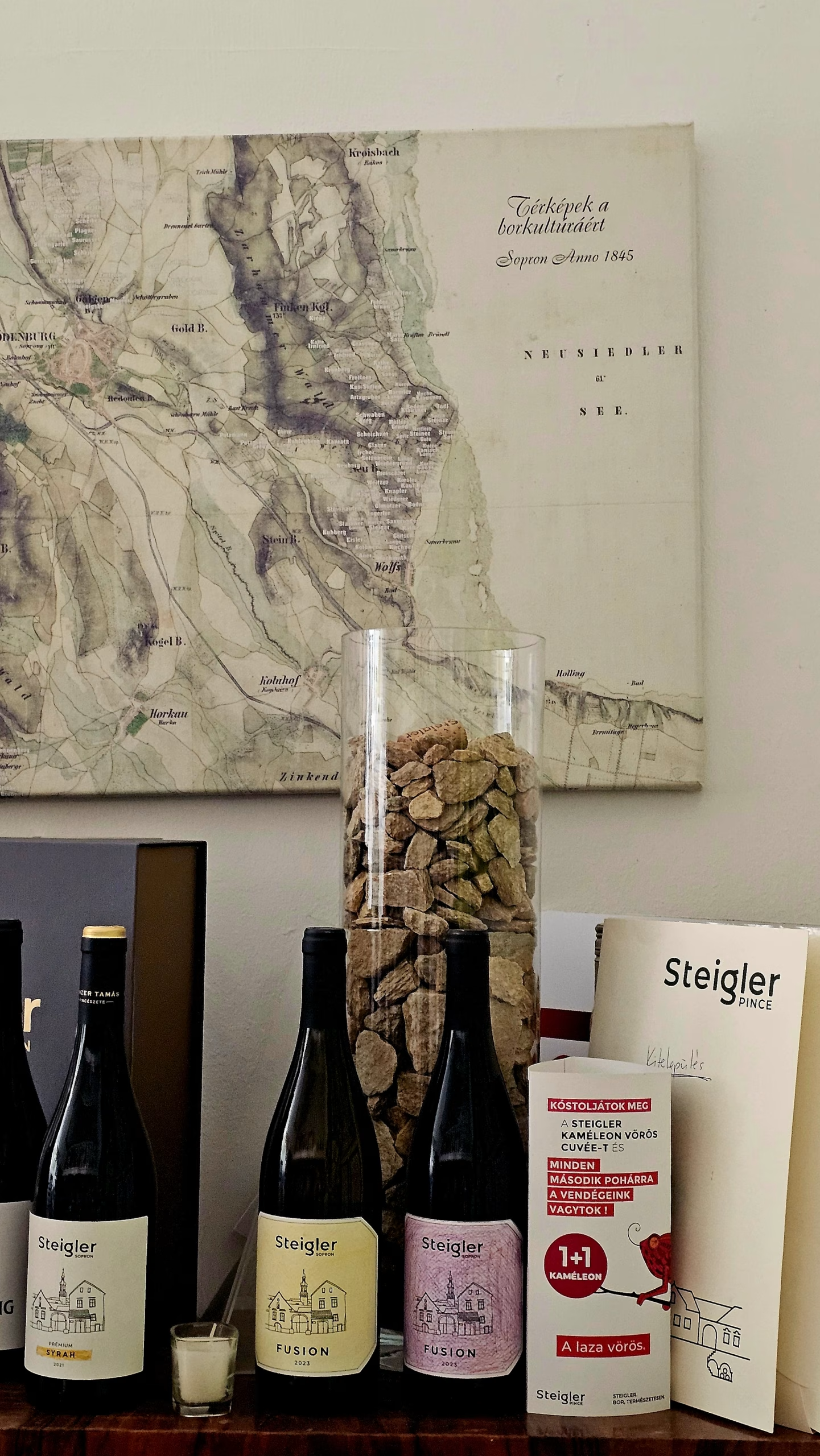
The soils range from limestone and clay to loess, but what makes Sopron truly unique is its foundation of mica schist (slate), which imparts a pronounced mineral character to the wines.
This is particularly evident around Lake Fertő / Neusiedl, especially in the Spern Steier area, where the lake also helps moderate the subalpine climate and encourages the development of noble rot, creating conditions somewhat reminiscent of Tokaj.
Wine Hotels & Wine Bars
Despite being a relatively small town, Sopron offers plenty of accommodation options, so we opted for something centrally located through Booking.com: Florand Rooms & Wine.
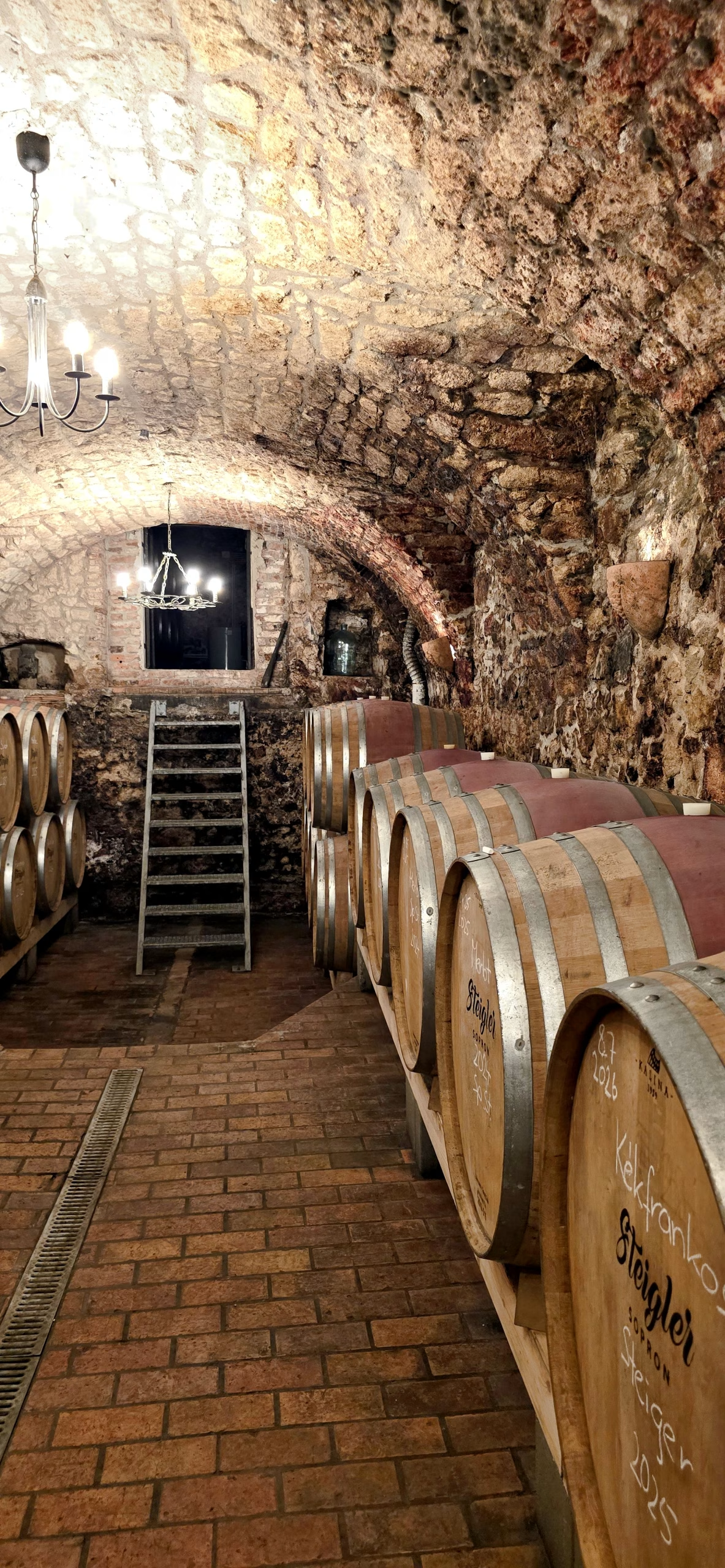
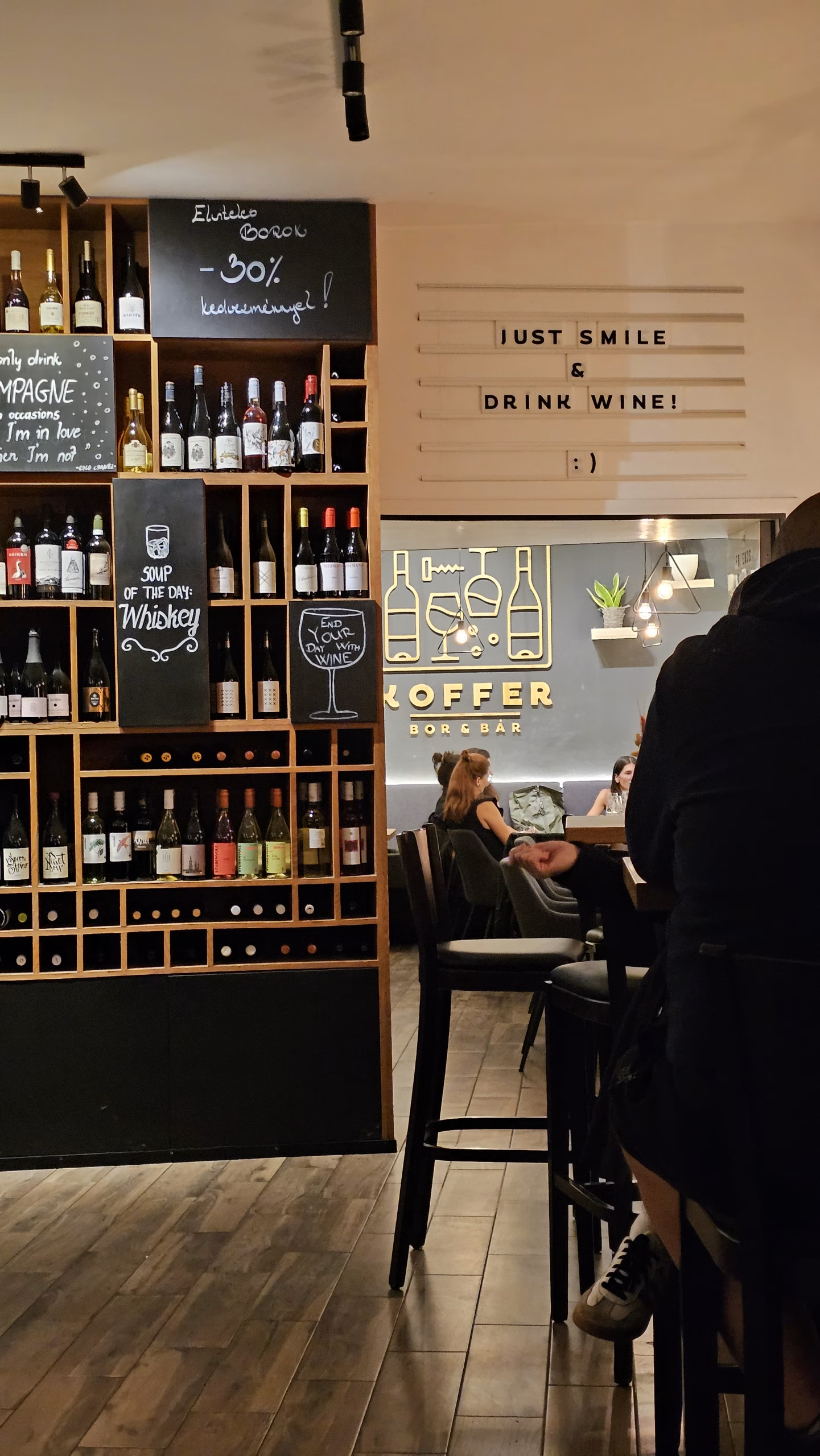
As for wine bars, we particularly enjoyed TasteVino and Koffer Bor Bar, but we’d strongly recommend exploring the entire Poncichter district, famous for its historic wine cellars packed floor-to-ceiling with aging barrique barrels.
P.S. We also made a brief stop at Vinodom, but unfortunately it’s not a place we would recommend.
Wine & Wineries
Steigler
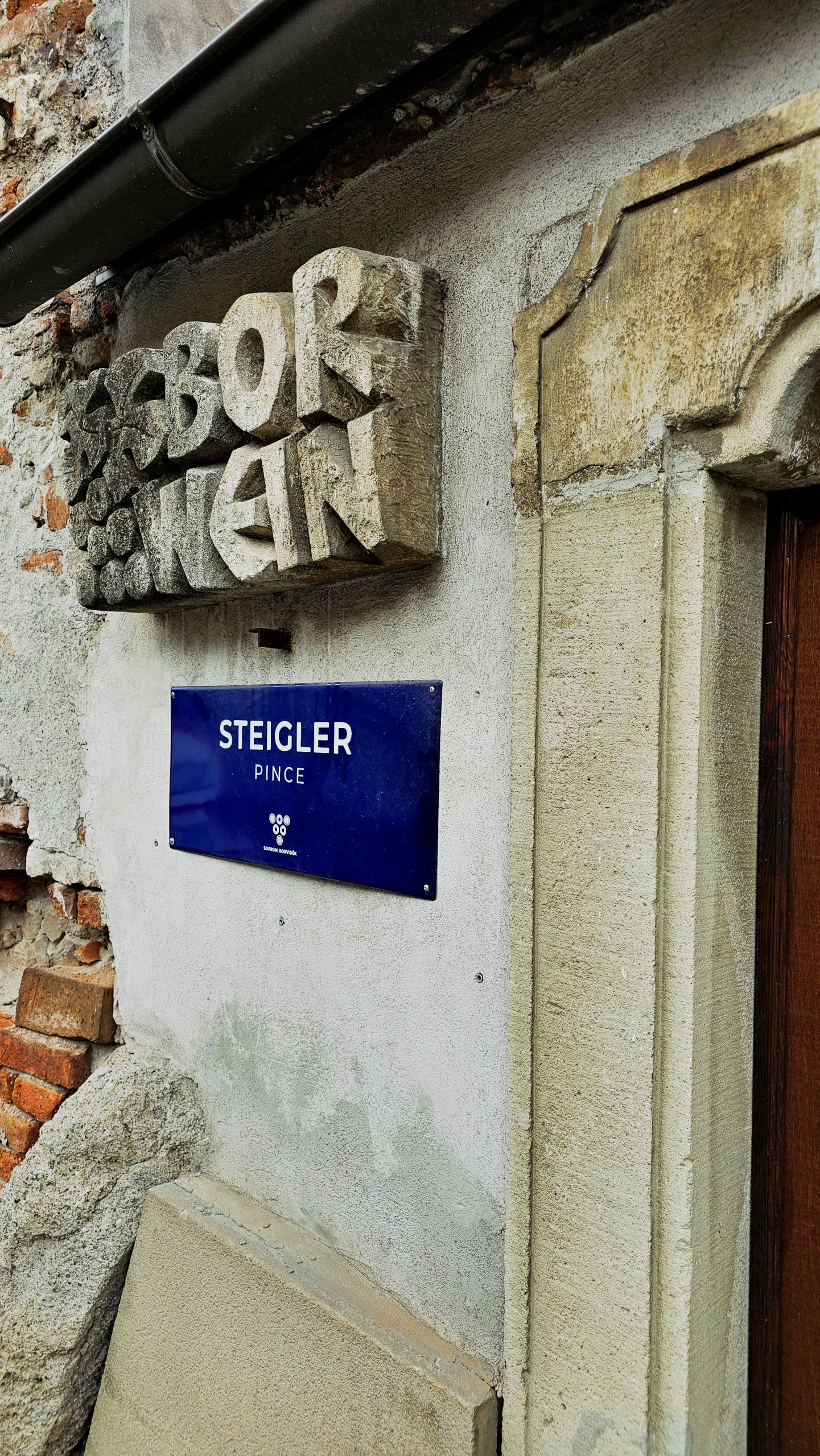
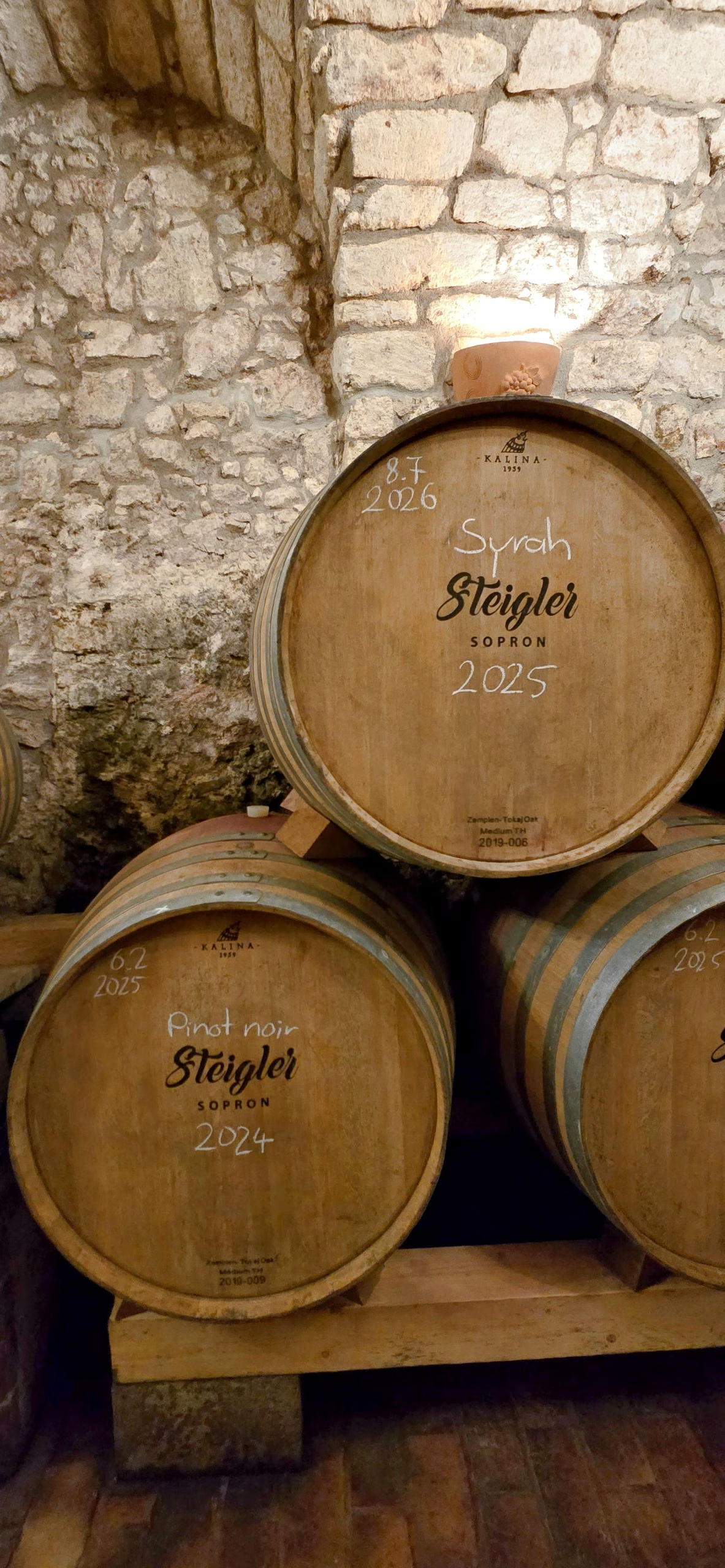
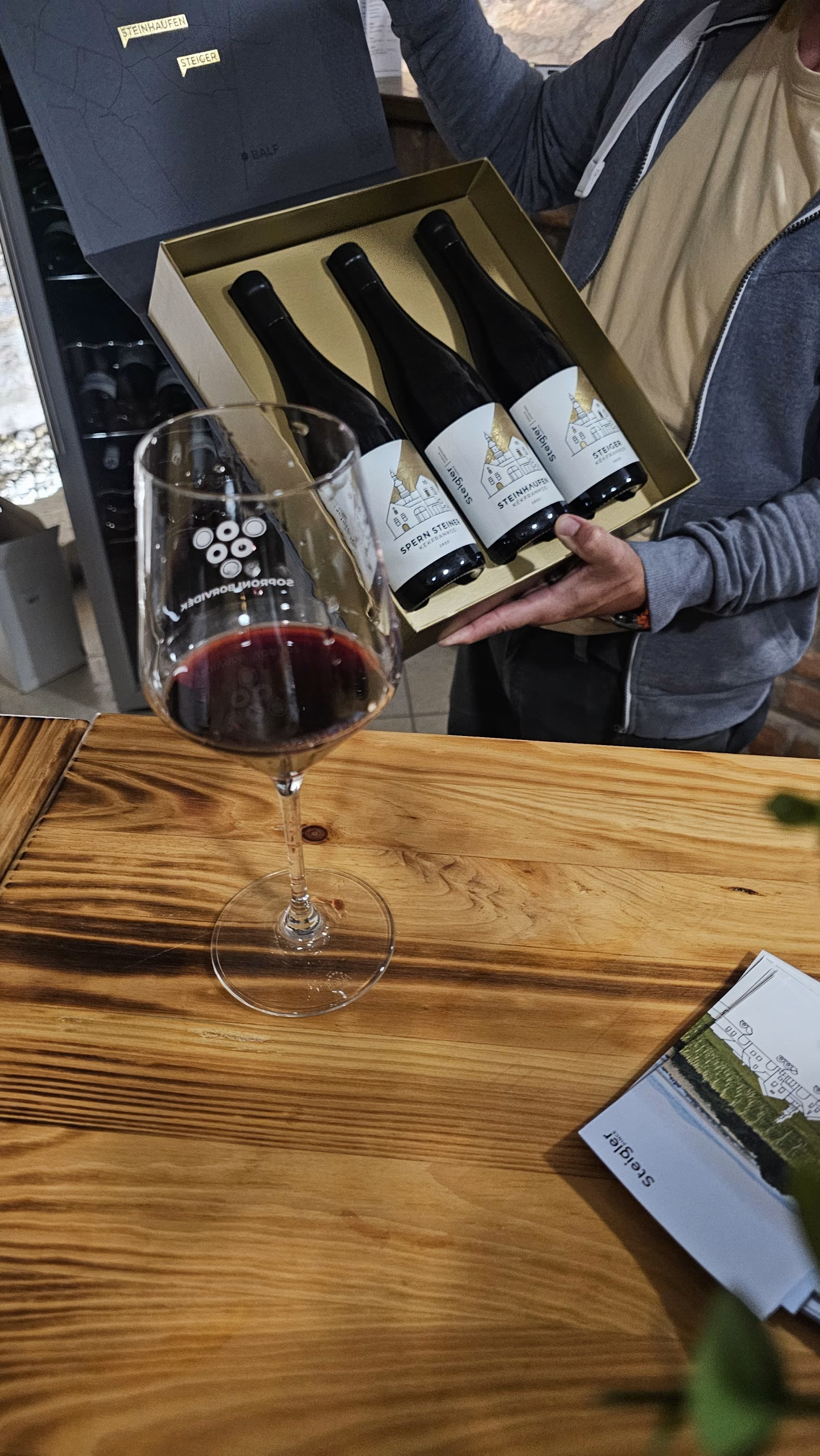
After a bit of research, we eventually found ourselves in the Poncichter district on Balfi Street, where we spontaneously asked whether a tasting might be possible. Not only was it possible, but we happened to arrive just as a scheduled tasting for another group was beginning, and we were invited to join.
There we met Tamás Varga, Steigler’s winemaker, who shared fascinating insights into local traditions, terroir, winemaking techniques, and countless other topics.
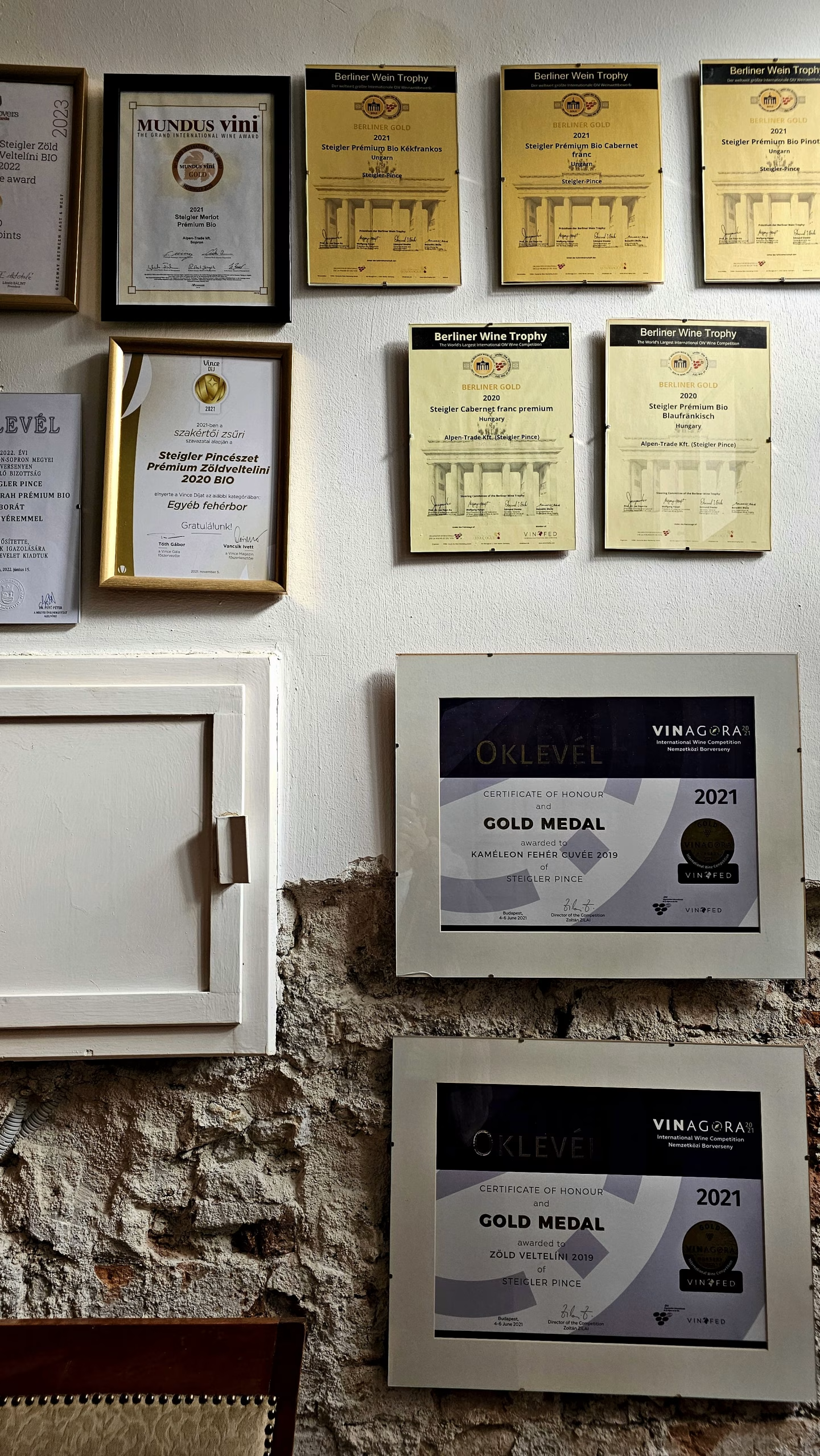
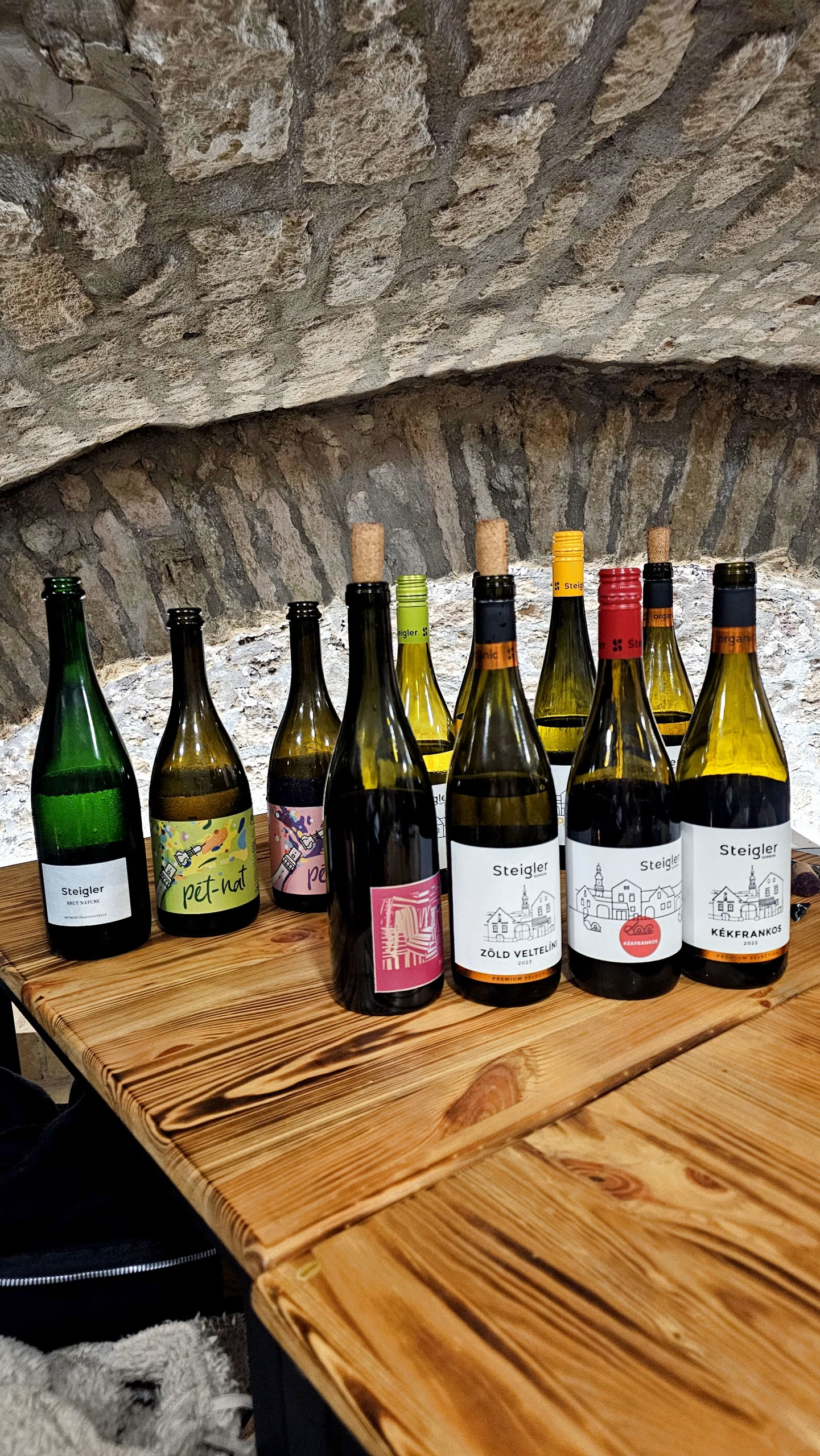
It was the most detailed and passionate deep dive into viticulture we’ve experienced so far, and thanks to him we had the chance to taste no fewer than ten outstanding wines crafted under his supervision.
We started with an excellent Brut Nature sparkling wine, showing notes of green apple, lemon, and toasted bread. From there, we moved on to two different Pet-Nats, tasted Grüner Veltliner in virtually every possible expression, and then encountered a Furmint with remarkable popcorn-like aromas that completely blew us away (three bottles ended up coming home with us ).
The lineup continued with both single-varietal and blended Kékfrankos wines, before culminating in a truly “paradoxical” wine, aptly named Paradox: a Kékfrankos vinified as a white wine.
I spent a good five minutes unsuccessfully trying to identify it in a blind tasting, but I never came close. It’s genuinely difficult to describe. What stood out most, however, was the innovative mindset of Tamás and other local producers, who are placing a strong emphasis on adapting to modern consumer trends while still respecting regional traditions.
Luka Winery was actually at the top of our list, but unfortunately we weren’t lucky enough to find them open for visits due to the harvest season. Still, we didn’t give up and managed to try one of their textbook examples of Kékfrankos at a local wine bar.
A truly magnificent wine, bursting with flavors of plum preserve, ripe cherries, sour cherries, smoke, and oak, complemented by layers of chocolate and spice. Beneath that were subtle hints of forest floor, leather, and coffee, all wrapped into a wine with fantastic aging potential.



Food★★★ from breakfast to lunch and dinner, everything was somewhat mediocre, with nothing particularly memorable
Tastings★★★★★ just one tasting, but it was worth three – an outstanding experience at Steigler. 
Worth It? 

 The journey doesn’t end here…
